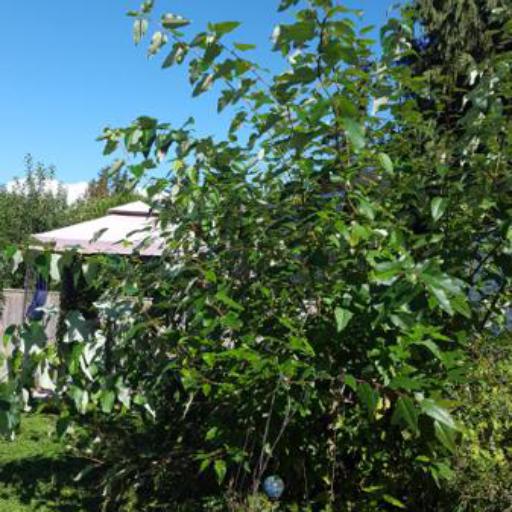
Plant Overview
Known as the 'Tristis' Poplar or sometimes the Sorrowful Poplar, this tree is a hardy hybrid favored for its rapid growth and stately presence. Its Latin name, Tristis, translates to "sad" or "gloomy," likely referring to its slightly drooping branches and the dark, heavy shade it casts. While it may sound melancholy, it is a powerhouse in the landscape, often used to create quick privacy screens or cooling canopies in large gardens.
🔍 How to Identify
- 🍃 The Foliage: The leaves are generally heart-shaped or triangular with finely toothed edges. They are a deep, lustrous green on top and have a distinctive silvery-pale underside that "shimmers" when the wind blows.
- 🍯 Resinous Buds: In early spring, the tree produces large, pointed buds coated in a sticky, golden resin. These buds release a powerful, pleasant "balsamic" fragrance that can perfume an entire yard.
- 🌳 Bark and Form: Young trees have smooth, greenish-gray bark that becomes deeply furrowed and dark gray as the tree ages. It develops a broad, rounded crown with branches that tend to arch gracefully.
🏡 In Your Garden
- 🏗️ Root Awareness: The most important thing to know is that 'Tristis' has an incredibly aggressive and wide-reaching root system. Never plant it near septic lines, sidewalks, or home foundations, as the roots will actively seek out moisture and can cause structural damage.
- 💨 The Ultimate Windbreak: Because it grows so fast, it is a top choice for "shelterbelts" on larger properties. It stands up well to cold northern climates and provides a massive amount of shade in a very short number of years.
⚠️ Safety & Toxicity
- ✅ General Safety: This tree is considered non-toxic to dogs, cats, and horses. It is safe for children to play around.
- 🤧 Allergy Alert: Like many poplars, the 'Tristis' can be a significant source of pollen in the spring. If you suffer from severe hay fever, the "cotton" or pollen released during its reproductive cycle might trigger seasonal allergies.
✨ Fun Fact
The sticky resin found on the spring buds of 'Tristis' poplars is a primary ingredient used by honeybees to create propolis (bee glue). Bees collect this "balsam" to disinfect their hives and seal up cracks, essentially using the tree's natural medicine to protect their colony!

Detailed Care Instructions
Growing a Populus tristis, commonly known as a type of poplar tree, requires some specific steps to ensure its healthy growth. Here’s a comprehensive guide to help you:
1. Choosing the Right Location
- Sunlight: Poplar trees thrive in full sunlight. Make sure the planting area gets at least 6-8 hours of direct sunlight daily.
- Soil: Poplars prefer well-drained, fertile soil. They can tolerate a variety of soil types but do best in loamy soil.
2. Preparing the Soil
- Testing: Test the soil pH. Poplars prefer a slightly acidic to neutral pH (around 5.5 to 7.0).
- Amendments: If needed, amend the soil with organic matter such as compost to improve fertility and drainage.
3. Planting
- Timing: Early spring or late fall are the best times for planting.
- Spacing: Poplar trees grow rapidly and can become quite large. Space them at least 30-50 feet apart to allow for adequate growth.
- Hole: Dig a hole that is twice the width of the root ball and as deep as the root system.
- Backfilling: Place the tree in the hole, making sure the root collar (where the roots meet the trunk) is level with the ground surface. Fill the hole with the dugout soil, gently packing it down to eliminate air pockets.
4. Watering
- Initial Watering: Water the tree thoroughly after planting to help settle the soil.
- Ongoing: Keep the soil consistently moist but not waterlogged, especially in the first few years. Established trees are relatively drought-tolerant but still benefit from regular watering during dry periods.
5. Mulching
- Application: Apply a 2-4 inch layer of mulch around the base of the tree, extending out to the drip line (the area directly under the canopy spread).
- Avoiding Trunk: Keep mulch a few inches away from the trunk to prevent rot and pest issues.
6. Fertilization
- Frequency: Fertilize in the early spring for the first few years using a balanced tree fertilizer.
- Growth Support: Mature trees usually do not require consistent fertilization if the soil is fertile.
7. Pruning
- Purpose: Prune to remove dead, diseased, or damaged branches. This helps to promote healthy growth and form.
- Timing: Late winter or early spring is the best time to prune, while the tree is still dormant.
8. Pest and Disease Management
- Monitoring: Keep an eye out for common pests such as aphids, caterpillars, and poplar borer beetles.
- Action: If infestations occur, treat them promptly with appropriate insecticides or organic alternatives.
- Disease: Poplars can be susceptible to diseases like canker and rust. Regular monitoring and maintaining tree health through proper watering and fertilization can help minimize these issues.
9. Support and Protection
- Staking: Young trees may need to be staked to ensure they grow straight and withstand strong winds.
- Protection: Protect the base of the tree from mower and trimmer damage by placing a physical barrier like a tree guard or using mulch.
10. Monitoring Growth
- Regular Inspection: Regularly inspect your tree for signs of stress or disease. Address any issues promptly to ensure the tree grows healthy and strong.
By following these steps, you can successfully grow a Populus tristis and enjoy the benefits of this fast-growing tree.
Populus Tristis is a plant that requires regular watering to thrive. When watering, it is important to ensure that the soil is evenly moist but not waterlogged. Over-watering can lead to issues such as root rot and fungal diseases, so it is important to monitor the soil moisture levels.
One way to water Populus Tristis is to use a watering can or hose, and to aim the water at the base of the plant. This will allow the water to soak into the soil where the roots are located. It is better to water deeply and less frequently rather than watering lightly and frequently, as this will encourage the roots to grow deeper into the soil.
If the soil is particularly dry, it may be useful to water the plant twice a week or more frequently during hot weather. Conversely, during periods of heavy rainfall, it is important to avoid over-watering the plant.
In addition to regular watering, Populus Tristis benefits from being planted in well-draining soil and in a location that receives plenty of light. With proper care, this plant can grow to be healthy and vibrant.
Populus tristis is a species that benefits from targeted fertilization to ensure healthy growth. Here are the fertilizing instructions:
- Soil Testing: Before fertilizing, conduct a soil test to determine nutrient levels and pH. Populus tristis prefers slightly acidic to neutral soil, with a pH range of 5.5 to 7.0.
- Fertilizer Type: Use a balanced, slow-release granular fertilizer or a specific tree and shrub fertilizer. A ratio of 10-10-10 (Nitrogen-Phosphorus-Potassium) works well for this species, but adjustments may be necessary based on soil test results.
- Application Time: Apply fertilizer in early spring before new growth begins. This timing ensures that nutrients are available during the critical growth period.
- Method:
- Granular Fertilizer: Spread the fertilizer evenly under the canopy of the tree, extending slightly beyond the drip line (the outermost edge of the tree's canopy). Avoid placing fertilizer directly against the trunk.
- Rate: Follow the manufacturer’s instructions for the appropriate amount based on the tree's size and age. Typically, 1 to 2 pounds of fertilizer per inch of trunk diameter, measured at chest height (about 4.5 feet above the ground), is adequate.
- Incorporation: Lightly incorporate the fertilizer into the top few inches of soil using a rake or similar tool. Water the area thoroughly after application to help the fertilizer penetrate the soil.
- Granular Fertilizer: Spread the fertilizer evenly under the canopy of the tree, extending slightly beyond the drip line (the outermost edge of the tree's canopy). Avoid placing fertilizer directly against the trunk.
- Organic Fertilizer: If you prefer organic options, compost or well-decomposed manure can be used. Apply a 2- to 3-inch layer of compost around the tree’s drip line and gently work it into the soil. Organic options not only provide nutrients but also improve soil structure.
- Watering: Consistent watering aids in the proper uptake of nutrients. Ensure the tree receives adequate moisture, especially during dry periods, but avoid waterlogging the soil.
- Mulching: Mulch around the base of the tree with organic mulch (such as wood chips or bark), keeping it a few inches away from the trunk. Mulching helps retain moisture, regulate soil temperature, and provide additional organic matter as it decomposes.
- Monitoring: Observe the tree throughout the growing season. Yellowing leaves or stunted growth may indicate nutrient deficiencies or other issues. Adjust fertilization practices based on the tree's response and ongoing soil testing.
By following these guidelines, you can help ensure that Populus tristis receives the nutrients it needs for healthy growth and development.
The Populus Tristis plant requires well-draining soil that is rich in nutrients. It does well in soil that is slightly acidic to neutral, with a pH range between 5.5 to 7.0. It is best to avoid soil that is too alkaline or too acidic. The soil should have a good amount of organic matter such as compost or well-rotted manure, which helps to increase soil fertility and moisture retention. The plant also prefers soil that is moist, but not waterlogged, so be careful not to overwater. It is recommended to add a slow-release fertilizer to the soil before planting to ensure that the plant receives adequate nutrients throughout its growing season. Additionally, the plant prefers full sun to partial shade, and can thrive in a variety of temperatures.
Propagating Populus tristis, a deciduous tree species, can be achieved through seeds or cuttings, with cuttings being the more common and straightforward method. Here’s a detailed guide on how to propagate it:
1. Propagation by Cuttings
Materials Needed:
- Sharp pruning shears
- Rooting hormone (optional)
- Well-draining potting soil
- Pots or containers
- Clear plastic bags or a greenhouse
- Watering can or spray bottle
Steps:
- Select Healthy Parent Plant: Choose a robust, disease-free parent tree. Aim to take cuttings from it in late winter or early spring when the tree is still dormant.
- Take Cuttings:
- Use sharp, sterilized pruning shears to cut 8-12 inch sections of young, healthy branches (preferably those that are 1-2 years old and about pencil-thick).
- Ensure each cutting has at least two or three nodes (points where leaves are or were attached).
- Use sharp, sterilized pruning shears to cut 8-12 inch sections of young, healthy branches (preferably those that are 1-2 years old and about pencil-thick).
- Prepare the Cuttings:
- Strip the leaves from the lower half of the cuttings.
- If desired, dip the cut end into a rooting hormone to promote root development.
- Strip the leaves from the lower half of the cuttings.
- Plant the Cuttings:
- Fill pots or containers with well-draining potting soil.
- Make a hole in the soil using a stick or your finger.
- Insert the cuttings into the holes, ensuring that at least one or two nodes are buried under the soil surface.
- Firm the soil around the cuttings to eliminate air pockets.
- Fill pots or containers with well-draining potting soil.
- Create a Humid Environment:
- Water the soil thoroughly.
- Cover the pots with clear plastic bags to retain moisture or place them in a greenhouse.
- Ensure the cuttings receive indirect sunlight.
- Water the soil thoroughly.
- Maintain the Cuttings:
- Keep the soil consistently moist but not waterlogged.
- Mist the cuttings regularly to maintain high humidity.
- Check for root development after a few weeks by gently tugging on the cuttings.
- Keep the soil consistently moist but not waterlogged.
- Transplant:
- Once the cuttings have developed a good root system (typically after a few months), they can be transplanted to a larger pot or directly into the ground in their final location.
- Choose a site with full sun and well-drained soil.
- Water them regularly during the first growing season to ensure establishment.
2. Propagation by Seeds
Materials Needed:
- Once the cuttings have developed a good root system (typically after a few months), they can be transplanted to a larger pot or directly into the ground in their final location.
- Populus tristis seeds
- Seed trays or pots
- Well-draining seed starting mix
- Clear plastic cover or greenhouse
Steps:
- Collect Seeds: Harvest seeds from mature trees in late spring to early summer. Seeds should be sown promptly as they lose viability quickly.
- Prepare the Seeds:
- Clean the seeds and remove any surrounding fluff.
- No pre-treatment is generally required for Populus tristis seeds.
- Clean the seeds and remove any surrounding fluff.
- Sow the Seeds:
- Fill seed trays or pots with a well-draining seed-starting mix.
- Sow the seeds on the surface of the soil. Lightly press them into the soil but do not cover them as they require light for germination.
- Fill seed trays or pots with a well-draining seed-starting mix.
- Create a Suitable Environment:
- Mist the surface gently with water to moisten the soil.
- Cover the trays or pots with clear plastic to retain humidity or place in a greenhouse.
- Mist the surface gently with water to moisten the soil.
- Germination and Care:
- Place the trays in a location with indirect sunlight.
- Keep the soil consistently moist.
- Seeds typically germinate within a few weeks.
- Once seedlings have several true leaves, they can be carefully transplanted to individual pots.
- Place the trays in a location with indirect sunlight.
- Transplant:
- After the seedlings have grown stronger (usually after a full growing season), they can be transplanted to their final location.
- Ensure the chosen site has full sun and well-drained soil.
- Water regularly to help establish the young trees.
By following these steps, you can successfully propagate Populus tristis and enjoy the growth of new trees from either cuttings or seeds.
- After the seedlings have grown stronger (usually after a full growing season), they can be transplanted to their final location.








