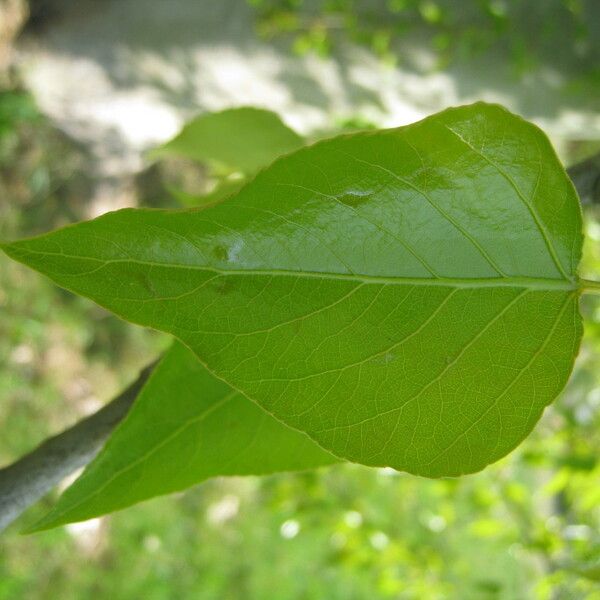
Plant Overview
Known as the "Yunnan Poplar," this majestic tree is a fast-growing giant originating from the high-altitude valleys of Southwestern China. It is a favorite in large-scale landscapes for its ability to transform a barren space into a lush, green canopy in a remarkably short time. Often used for reforestation and windbreaks, it brings a sense of ancient Chinese mountain mist to any expansive garden.
🔍 How to Identify
- 🍃 The Foliage: Large, heart-shaped (ovate) leaves that are glossy green on top and a paler, almost silvery-green underneath.
- 🍷 Reddish Accents: One of its most striking features is the reddish-pink hue found on the leaf stalks (petioles) and the central veins of young leaves.
- 🌳 The Bark: The trunk starts smooth and greyish-white, resembling a Birch tree when young, but develops deep, rugged furrows and a darker complexion as it matures.
🏡 In Your Garden
- 🏞️ Space is Key: This tree is a "space seeker." Because of its incredibly vigorous growth and aggressive root system, it should never be planted near house foundations, drainage pipes, or septic tanks.
- 💧 Thirsty Roots: Naturally found near riverbanks and mountain streams, the Yunnan Poplar loves moisture. It is an excellent choice for stabilizing soil in damp areas or near ponds, provided the soil doesn't become stagnant.
⚠️ Safety & Toxicity
- 🤧 Allergy Alert: The Yunnan Poplar is generally non-toxic to humans and pets, but it is a prolific producer of pollen during the spring.
- 🌬️ Seasonal Sniffles: Those with seasonal allergies should be cautious, as the wind-blown pollen can trigger hay fever. Additionally, like many poplars, it can drop "cotton" (seed fluff) which, while harmless, can be a nuisance for pool filters and outdoor maintenance.
✨ Fun Fact
In its native regions of Yunnan and Sichuan, this tree is a true "pioneer species." It is often the very first tree to move into areas cleared by landslides or fires, paving the way for slower-growing forest species to eventually return.

Detailed Care Instructions
To grow Populus yunnanensis plants, you can follow these steps:
- Obtaining seeds or cuttings: You can purchase Populus yunnanensis seeds or obtain cuttings from a mature plant. Cuttings should be approximately 30 cm long and taken from healthy, disease-free plants.
- Choosing the planting location: Populus yunnanensis prefer full sun to partial shade and well-draining soil. Select a location with good sunlight exposure and ensure the soil is loose, fertile, and able to retain some moisture.
- Preparing the soil: Before planting, prepare the soil by removing any weeds or grass from the area. Till the soil to a depth of around 12 inches and incorporate organic matter like compost or well-rotted manure to improve soil fertility and drainage.
- Planting seeds or cuttings: If starting from seeds, sow them in the soil at a depth of around 1/4 inch. Water the soil gently after planting to keep it moist but not waterlogged. If using cuttings, dig a hole in the soil and plant the cutting at an angle, leaving a few buds above the ground. Firmly press the soil around the base of the cutting.
- Watering: Young Populus yunnanensis plants require regular watering to establish roots. Water deeply but avoid overwatering, as it can lead to root rot. Once established, these trees are typically drought-tolerant.
- Mulching: Apply a layer of organic mulch around the base of the plant. This will help retain soil moisture, regulate soil temperature, and suppress weed growth. Keep the mulch a few inches away from the trunk to prevent rot.
- Pruning: Prune Populus yunnanensis plants during their dormant period in late winter or early spring. Remove any dead, damaged, or crossing branches. Pruning helps maintain tree structure, promotes healthy growth, and improves air circulation.
- Fertilizing: Apply a balanced slow-release fertilizer in early spring to provide essential nutrients. Follow the package instructions for the appropriate amount and method of application.
- Pest and disease control: Monitor your Populus yunnanensis plants regularly for signs of pests or diseases such as aphids, leaf spot, or cankers. Treat any issues promptly using organic or chemical means as appropriate.
- Maintenance: Regularly monitor the plant for overall health, irrigation needs, and any signs of stress. Protect young trees from extreme heat or frost when necessary. Maintain a weed-free area around the plant to reduce competition for resources.
By following these steps, you can successfully grow Populus yunnanensis plants and enjoy their beautiful foliage and form.

Place in a bright room that is sun drenched almost all day. Or directly in a south-facing window.

When watering this particular plant, it is important to take note of its soil type and drainage.
1. Check the soil: Before watering, check the soil to see if it is dry or moist. The soil should be moist to the touch, but not waterlogged.
2. Water quantity: Water the plant thoroughly, making sure the water reaches the roots. However, do not overwater as this can cause damage to the roots.
3. Water frequency: Water the plant once a week, or more frequently during summer months when the soil may dry out faster.
4. Use room temperature or tepid water: Use room temperature or tepid water when watering the plant, as cold water can shock the roots.
5. Avoid watering the leaves: It is important to avoid watering the leaves, as this can increase the risk of fungal diseases.
6. Use a pot with drainage holes: Use a pot with drainage holes to allow excess water to drain out and prevent waterlogging.
7. Use a potting mix with good drainage: Use a potting mix with good drainage to prevent waterlogging.
For best results, fertilize your Populus Yunnanensis plant in the spring and again in the fall. Use a balanced, slow-release fertilizer with equal amounts of nitrogen, phosphorus, and potassium. Apply the fertilizer around the base of the plant, being careful not to get it on the leaves or stems. Water the plant thoroughly after fertilizing. Avoid over-fertilizing as this can lead to excessive growth and weaken the plant.
The optimal soil for this plant should be well-draining and rich in nutrients. It should have a pH level of 5.0 to 7.5 and be able to hold moisture without becoming waterlogged. The soil should also be able to maintain a slightly acidic or neutral pH level. A mix of sand, loam, and compost is recommended for the best results. It is important to avoid using heavy clay soil or soil that is too dense, as this can lead to waterlogging and root rot. Additionally, the soil should be free of any contaminants or harmful chemicals that may negatively impact the growth and development of the plant.
To propagate this plant, take cuttings from healthy and mature stems during the dormant period in late winter or early spring. The cuttings should be 6-10 inches long and have at least two nodes.
Remove the lower leaves from the cutting and dip the cut end in rooting hormone. Plant the cutting in well-draining soil and keep it consistently moist. Cover the cutting with a plastic bag or create a mini greenhouse to maintain humidity.
Place the cutting in a bright and warm location, but out of direct sunlight. It should take several weeks for roots to form. Once roots have established, the plant can be transplanted into a larger pot or planted in a suitable location in the garden.








