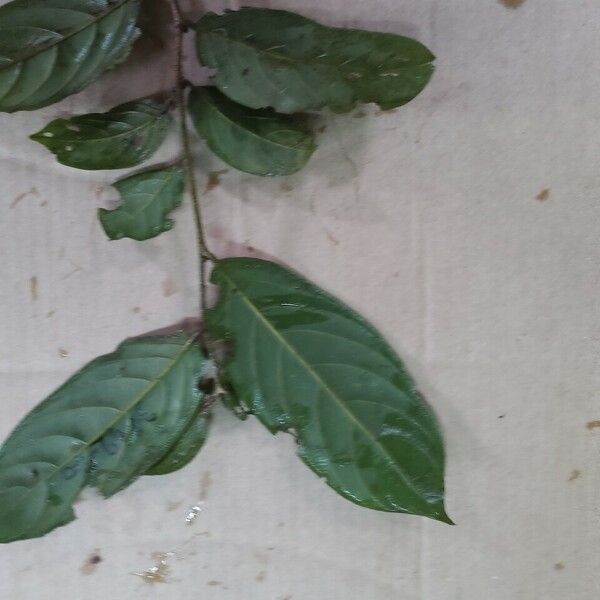
Plant Overview
Deep in the heart of the Amazon, the Poraqueiba guianensis—better known as the Umari—is a staple of the forest canopy. Often called the "Butter Tree" of the jungle, its fruit provides a rich, oily pulp that has sustained indigenous communities for centuries. While it remains a rare sight in domestic gardens outside of the tropics, its fragrant, heavy presence is unmistakable to those who walk the humid rainforest paths.
🔍 How to Identify
- 🍃 Lush Foliage: The leaves are large, leathery, and dark green, typically growing in an alternate pattern with a smooth, glossy finish designed to shed heavy tropical rain effortlessly.
- 🥭 The "Oily" Fruit: The fruit is the most iconic feature—smooth, egg-shaped, and ranging from vibrant yellow to deep orange or even purple. It has a thin skin and a distinct, pungent aroma that can be smelled from a distance when ripe.
- 🌳 Stately Stature: In its natural habitat, it grows into a medium-to-large tree with a straight, greyish trunk and a dense, rounded crown that provides deep, cool shade.
🏡 In Your Garden
- 🌡️ Tropical Requirements: This is a true child of the equator; it thrives in high humidity and consistent warmth. It is extremely sensitive to cold and will not tolerate frost, making it best suited for tropical zones or very large, heated conservatories.
- 💧 Moisture Consistency: Because it hails from the rainforest, the Umari hates drying out. It requires a steady supply of water and deep, nutrient-rich soil, yet it demands good drainage to prevent the roots from suffocating in stagnant water.
⚠️ Safety & Toxicity
- 🍴 Safe for Consumption: The fruit pulp is edible and highly prized for its buttery texture. It is a significant source of healthy fats and Vitamin A for local populations.
- 🐾 Seed Caution: While the flesh is safe, the large, hard seeds should be kept away from pets. They are not known to be toxic, but they pose a major choking hazard or the risk of intestinal blockage if swallowed by a curious dog.
✨ Fun Fact
The fruit of the Umari is so incredibly rich in natural oils that, historically, the pulp was not just eaten—it was pressed to extract oil for lamps! For centuries, this tree literally helped light up the Amazonian nights before the arrival of electricity.

Detailed Care Instructions

Place in a window with dappled sun or a spot in the middle of a room. Or directly in a window facing west or east.

Some plants require more regular watering than others, which should be done every few days. It's critical to maintain the soil moist all of the time. The water requirements of the same plant placed in pots with varying sizes will differ. Because the water in the smaller pot evaporates faster than the water in the larger pot, it will require more watering. Regardless of pot size, the surface should constantly be maintained moist.








