Plant Overview
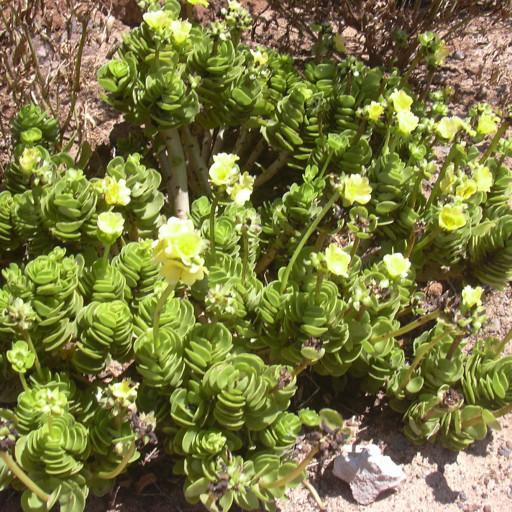
Often called the Hawaiian Portulaca or 'Ihi, this striking succulent looks like a miniature architectural sculpture designed by nature. Originating from the rugged, wind-swept coastal cliffs of the Hawaiian Islands, it has evolved to thrive in some of the harshest volcanic environments on Earth. While it is critically endangered in its natural habitat, its unique "stacked" geometric appearance has made it a prized treasure for succulent collectors worldwide.
🔍 How to Identify
- 🪨 The Stem: Unlike its creeping cousins, this species grows upright on a thick, woody, grayish trunk that resembles a tiny desert tree.
- 🍃 The Leaves: Fleshy, round, paddle-shaped leaves are arranged in tight, spiraling rosettes at the tips of the branches, looking almost like green roses.
- 🌼 The Blooms: It produces clusters of small, bright lemon-yellow flowers that emerge directly from the center of the leaf rosettes, typically opening during the sunniest part of the day.
🏡 In Your Garden
- 🌋 Volcanic Heritage: Because it naturally grows in volcanic tuff, this plant is an "extremophile" regarding drainage. It will not tolerate "wet feet" and requires a very gritty, porous soil mix—think more pumice and sand than peat moss.
- ☀️ Light Craver: To maintain its compact, sculptural shape, it needs intense light. If grown in the shade, the beautiful rosettes will stretch out and lose their geometric symmetry, a process known as etiolation.
- 🌬️ Air Circulation: It loves a breeze. If kept indoors, ensure it isn't in a stagnant corner, as it appreciates the mimicry of its native coastal winds to keep its foliage healthy.
⚠️ Safety & Toxicity
- 🐾 Pet Caution: Like many members of the Portulaca family, this plant contains soluble calcium oxalates. If ingested by cats or dogs, it can cause salivation, tremors, or digestive upset.
- 👶 Human Safety: It is generally non-toxic to touch, but the leaves are brittle and can snap easily. It’s best kept on a high shelf away from curious children to protect both the child from a stomach ache and the plant from losing its slow-growing limbs.
✨ Fun Fact
🏝️ A Tiny Kingdom: For a long time, this plant was believed to grow naturally only on the tiny, crescent-shaped volcanic islet of Molokini. It is so rare in the wild that botanists have had to use rappelling gear to reach the last remaining wild populations on sea cliffs!

Detailed Care Instructions
To grow Portulaca molokiniensis plant, follow these steps:
- Choose a bright and sunny location: Portulaca molokiniensis thrives in full sun, so select a spot that receives at least 6-8 hours of direct sunlight per day.
- Prepare the soil: The plant prefers well-draining soil. Mix compost or well-rotted manure into the soil to improve drainage and fertility. Avoid heavy clay soils that retain moisture.
- Sowing seeds: You can start Portulaca molokiniensis from seeds. Sow the seeds directly into the prepared soil after the last frost date in your area. Scatter the seeds over the soil surface and lightly press them into the soil. Keep the soil slightly moist until germination occurs.
- Watering: Portulaca molokiniensis is drought-tolerant and prefers dry conditions. Water the plant sparingly, allowing the soil to dry out between waterings. Overwatering can lead to rotting of the roots.
- Fertilization: Portulaca molokiniensis doesn't require much fertilization. If needed, you can apply a balanced slow-release fertilizer during the growing season. However, be cautious not to over-fertilize, as this can lead to lush foliage at the expense of flowers.
- Pruning: Portulaca molokiniensis doesn't require much pruning. However, you can pinch back any leggy stems to encourage bushier growth. Deadheading spent flowers will also promote continuous blooming.
- Mulching: Consider applying a thin layer of organic mulch around the plants to help retain moisture and suppress weed growth. Avoid placing mulch directly against the stems to prevent rotting.
- Protect from extreme weather: Portulaca molokiniensis is sensitive to frost and freezing temperatures. If you live in a region with cold winters, either grow it as an annual or bring containers indoors during winter.
- Pests and diseases: Portulaca molokiniensis is generally pest and disease-free. However, be mindful of aphids, slugs, and snails. Regularly inspect the plant for any signs of infestation, and take appropriate measures if necessary.
With proper care and maintenance, your Portulaca molokiniensis plant should grow well and produce its vibrant, colorful flowers throughout the growing season.

Place in a bright room that is sun drenched almost all day. Or directly in a south-facing window.

To properly water this plant, you should wait until the soil is completely dry before applying water. When you do water it, you should do so thoroughly, making sure that the water reaches the entire root system. Avoid getting water on the leaves or flowers, as this can lead to fungal diseases. It is recommended to water from the base of the plant rather than from above. Additionally, be careful not to overwater the plant, as this can lead to root rot.
- Choose a high-quality and balanced fertilizer that is suitable for flowering plants.
- Dilute the fertilizer according to the instructions on the package.
- Apply the fertilizer directly to the soil around the base of the plant.
- Water the soil thoroughly to distribute the fertilizer evenly.
- Repeat every 4-6 weeks during the growing season (spring and summer).
- Ensure that the soil is well-draining and avoid over-fertilizing, which can damage the plant.
Portulaca Molokiniensis plant requires a well-draining soil that is not too rich in nutrients. It prefers a slightly acidic soil with a pH range of 5.5 to 7.5. Adding perlite and sand to the soil can enhance drainage. It can also tolerate dry soil, so it is important not to overwater the plant. A mix of sand, perlite, and peat moss can be a suitable soil type for this plant.
- Identify the plant you want to propagate. The plant should have small, succulent leaves and stems.
- Select a healthy stem from the parent plant. Look for a stem with several leaves and a healthy, plump appearance.
- Cut the stem with clean, sharp scissors or pruning shears. Make the cut at a 45-degree angle, just below a node (where a leaf attaches to the stem).
- Remove the bottom leaves from the stem, leaving a small tuft of leaves at the top.
- Dip the cut end of the stem into rooting hormone powder. This will encourage the stem to produce roots.
- Plant the stem in a container filled with well-draining soil. Make a hole in the soil and gently insert the stem, making sure the tuft of leaves is above the soil line.
- Water the soil lightly, being careful not to wash away the rooting hormone powder.
- Cover the container with a plastic bag to create a humid environment for the plant.
- Place the container in a warm, bright location, but out of direct sunlight.
- Check the soil moisture and water as needed. Be careful not to over-water, as too much moisture can cause the stem to rot.
- In a few weeks, new growth should appear from the tuft of leaves at the top of the stem. This indicates that roots have formed and the plant is establishing itself.
- Once the new plant has grown several inches tall and has a few sets of leaves, it can be transplanted into a larger container or moved outdoors.
Common pests of the 'ihi include Scale insect, mealybugs, aphids, thrips. Make a habit of checking your 'ihi frequently for pests so that any infestations can be caught and managed early.








