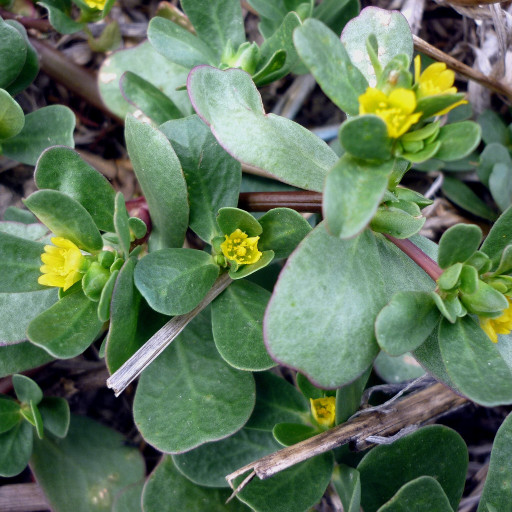
Plant Overview
Often dismissed as a common garden weed, Portulaca oleracea, popularly known as Purslane or "Verdolaga," is actually an ancient superfood with a global legacy. While most gardeners find it popping up uninvited in the cracks of their sidewalks, this succulent powerhouse has been cultivated for thousands of years from North Africa to the Middle East. It is a master of survival, thriving in the scorching heat where other plants wither and turn brown.
🔍 How to Identify
- 🌿 Succulent Stems: The stems are smooth, fleshy, and typically have a distinct reddish or purple tint, growing prostrate along the ground like a sprawling mat.
- 🍃 Teardrop Leaves: The leaves are bright green, thick, and paddle-shaped, clusters at the ends of the stems to store water for dry spells.
- ☀️ Sun-Kissed Blooms: It produces tiny, five-petaled yellow flowers that usually only open for a few hours in the bright morning sunlight before closing forever.
🏡 In Your Garden
- 🌱 Opportunistic Growth: Purslane loves disturbed soil. If you find it in your garden, it’s likely telling you your soil is compacted or nutrient-rich but perhaps a bit dry on the surface.
- 🚜 Resilient Roots: It possesses a surprisingly deep taproot for its size, which allows it to pull moisture from deep underground. If you try to pull it out, even a tiny fragment of the stem left behind can regenerate into a whole new plant.
⚠️ Safety & Toxicity
- 🐾 Pet Warning: While highly nutritious for humans, Purslane is toxic to cats, dogs, and horses. It contains soluble calcium oxalates which can cause tremors or kidney issues if ingested by your furry friends.
- 🥗 Human Consumption: For humans, it is entirely edible and tastes like a crunchy, slightly lemony spinach. However, because it is high in oxalates, people prone to kidney stones should consume it in moderation. Always ensure it hasn't been sprayed with lawn chemicals before snacking!
✨ Fun Fact
Purslane is one of the richest green plant sources of Omega-3 fatty acids—nutrients usually found in fish oils. In fact, it contains more Alpha-linolenic acid (ALA) than any other leafy green vegetable studied!

Detailed Care Instructions
| Color | White, Yellow, Orange, Red |
| Soil Ph | 6.0-6.5 Ph |
| Humidity | Dry |
| Invasive | Weed |
| Lighting | Full Sun |
| Toxicity | Poisonous |
| Soil Type | Loam, Clay, Sand |
| Bloom Time | Late Summer |
| Difficulty | Easy |
| Plant Type | Succulent, Annual |
| Mature Size | Height Between 3-12 Inches Tall With A 15 Inch Spread |
| Native Area | India |
| Temperature | 20°C - 27°C |
| Sun Exposure | Full Sun |
| Hardiness Zones | 2-11 |
To grow a Portulaca Oleracea plant, also known as purslane, you can follow these steps:
- Climate: Portulaca Oleracea is a warm-season annual plant that thrives in full sun and prefers temperatures between 70-90°F (21-32°C).
- Soil: Choose well-draining soil with a neutral to slightly acidic pH. This plant can tolerate poor soils but doesn't do well in heavy clay.
- Watering: Portulaca Oleracea is drought-tolerant and doesn't require excessive watering. Water the plant when the top inch of soil dries out. Avoid overwatering, as it can lead to root rot.
- Planting: Start by selecting healthy seeds or small transplants. Sow the seeds directly in the garden or start them indoors in small pots. If starting indoors, transplant seedlings outdoors after the last frost date in your area. Space the plants about 6-8 inches apart.
- Sunlight: Ensure the plant receives full sun exposure for at least 6-8 hours a day.
- Fertilizer: Purslane doesn't need much fertilization. However, you can apply a balanced liquid fertilizer once a month during the growing season to enhance growth and flowering.
- Weed control: Keep the area around the plants weed-free to prevent competition for nutrients and water.
- Pruning: Trim the plant regularly to promote branching and prevent it from becoming leggy.
- Harvesting: You can start harvesting leaves and tender stems when the plant reaches about 4-6 inches in height. Pinch or cut off the desired portion, leaving the main stem intact. The plant will continue growing and produce new leaves for continuous harvesting.
- Pest and disease control: Purslane generally doesn't suffer from many pest or disease issues. However, be on the lookout for aphids, slugs, or snails, which can occasionally attack the plant. If necessary, use organic insecticides or handpick pests.
By following these steps, you can successfully grow Portulaca Oleracea in your garden or containers.

Place in a bright room that is sun drenched almost all day. Or directly in a south-facing window.

To properly water this plant, first ensure that the soil is well-draining, as this plant does not tolerate standing water. Water deeply but infrequently, allowing the soil to dry out slightly between waterings. Avoid watering the leaves or stems, instead aiming to water at the base of the plant. When in doubt, let the plant dry out a bit before watering again.
The recommended fertilizing instructions for this particular type of plant would be to apply a balanced fertilizer once a month during the growing season, which is typically in the spring and summer months. It is important to follow the instructions on the fertilizer label and apply the appropriate amount of fertilizer based on the size of the plant. Over-fertilizing can cause damage or even death to the plant. Additionally, it is recommended to water the plant thoroughly after fertilizing to help distribute the nutrients evenly throughout the soil.
Portulaca Oleracea plant prefers well-draining soil that is composed of a mix of sand, perlite, and peat moss. This type of soil allows for good air circulation and prevents waterlogging. Additionally, the soil should be slightly acidic with a pH range of 6 to 7.5. It is also recommended to add organic matter such as compost or fertilizer to the soil to provide a nutrient-rich environment for the plant to thrive. Overall, the soil should be loose and crumbly to allow for adequate drainage and moisture retention.
- Choose a healthy parent plant: Look for a mature, healthy Portulaca Oleracea plant with vibrant, green leaves and strong stems. This will ensure that the cuttings you take will also be healthy.
- Take cuttings: Using a sharp knife or garden clippers, cut a stem from the parent plant that is around 2 to 3 inches long. The cutting should have several leaves and at least one node where the leaves attach to the stem.
- Remove lower leaves: Remove the lower leaves from the stem, leaving only a few at the top.
- Dip in rooting hormone (optional): To promote root growth, you can dip the cut end of the stem in rooting hormone powder.
- Plant in soil or water: There are two ways to propagate Portulaca Oleracea: in soil or water. If planting in soil, moisten the soil and make a small hole with a pencil or your finger. Insert the cutting into the hole and gently press the soil around it. If propagating in water, place the cuttings in a jar or vase filled with water. Change the water every few days to prevent bacteria build-up.
- Provide adequate light and water: Place the container with the cutting in a bright area, but not in direct sunlight. Keep the soil or water moist, but do not overwater. You should see new growth within a few weeks.
- Transplant: Once the cuttings have developed roots and new leaves, they are ready to be transplanted into a new pot or garden bed. Gently remove the plant from the soil or water and transplant it into the new location. Water the plant well and continue to care for it as you would any Portulaca Oleracea plant.
Common pests of the common purselane include Aphids. Make a habit of checking your common purselane frequently for pests so that any infestations can be caught and managed early.








