Plant Overview
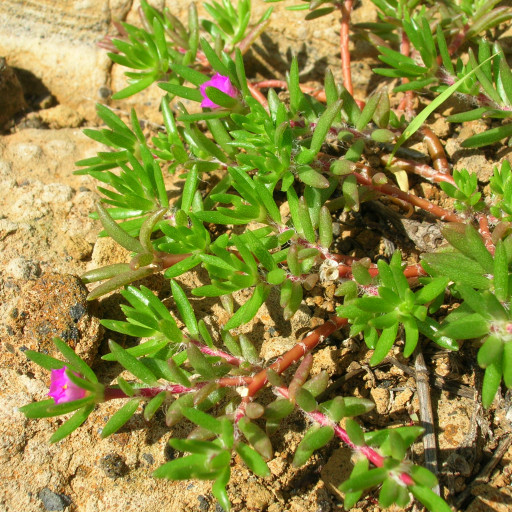
Known as the "Kiss-me-quick" or "Shaggy Portulaca," Portulaca pilosa is a tiny, rugged powerhouse that thrives where other plants give up. This succulent groundcover is a master of survival, often found tucked into rocky crevices or sandy paths throughout the Americas. With its neon-pink blossoms and curious "hairy" stems, it looks like a cross between a miniature cactus and a delicate wildflower.
🔍 How to Identify
- 🌵 The Leaves: Unlike the flat leaves of common purslane, these are thick, succulent, and shaped like tiny green cylinders or needles.
- 🧶 The "Hair": Look closely at the stem joints (axils). You will see distinct tufts of white, woolly hairs that give the plant its "pilosa" (hairy) name.
- 🌸 The Flower: Small, five-petaled flowers in shades of deep magenta or rose-pink appear at the very tips of the stems, usually surrounded by a ring of leaves.
🏡 In Your Garden
- ☀️ Sun Chaser: This plant is a true sun-worshipper. The flowers are photoblastic, meaning they often only "wake up" and open during the brightest hours of the day, closing tightly by late afternoon.
- 🏜️ Neglect is a Virtue: Because it possesses a deep taproot and succulent water-storing leaves, it hates "wet feet." It performs best in poor, sandy, or gravelly soil where the water drains away almost instantly. Over-watering is the fastest way to lose this plant.
⚠️ Safety & Toxicity
- 🐾 Pet Warning: While not considered deadly, Portulaca pilosa contains soluble calcium oxalates. If ingested in large quantities by cats or dogs, it can cause drooling, tremors, or kidney stress.
- 👶 Human Safety: It is generally non-toxic to humans, though the sap may cause very mild skin irritation for those with sensitive skin. It is best enjoyed as an ornamental rather than a snack.
✨ Fun Fact
The nickname "Kiss-me-quick" isn't just a romantic sentiment—it refers to the fleeting nature of the flowers. Because they open and close so rapidly in response to the sun, you have to be quick to catch them in their full glory!

Detailed Care Instructions
| Humidity | Dry |
| Lighting | Full Sun |
| Difficulty | Easy |
| Hibernation | Cold Period |
To grow Portulaca pilosa (Kiss Me Quick), follow these steps:
- Choose a sunny location: Portulaca pilosa prefers full sun, so select a spot in your garden that receives at least 6 hours of direct sunlight each day.
- Prepare the soil: Make sure the soil is well-draining and fertile. If the soil is heavy or clayey, amend it with some compost or organic matter to improve drainage.
- Sow the seeds: Portulaca pilosa can be propagated from seeds. Sow the seeds directly into the soil, spacing them about 6-8 inches apart. Gently press the seeds into the soil, but do not cover them with additional soil because they need light for germination.
- Watering: Water the seeds lightly after sowing, keeping the soil moist but not soggy. Once the plants have established, reduce watering as Portulaca pilosa is drought-tolerant and overwatering can cause root rot.
- Fertilization: Portulaca pilosa generally doesn't require regular fertilization as it can thrive in poor soil conditions. However, you can apply a slow-release balanced fertilizer once or twice during the growing season to provide some nutrients.
- Mulching: Consider applying a layer of organic mulch, such as wood chips or straw, around the plants. Mulching helps retain moisture in the soil, suppresses weed growth, and regulates soil temperature.
- Pruning: Portulaca pilosa does not require extensive pruning. However, you can deadhead the faded flowers to encourage continuous blooming and maintain a neat appearance.
- Pests and diseases: Portulaca pilosa is relatively resistant to pests and diseases. However, keep an eye out for common garden pests like aphids, slugs, and snails. If necessary, use appropriate organic pest control methods to deal with any infestations.
- Propagation: Portulaca pilosa can also be propagated from stem cuttings. Trim a piece of healthy stem, remove the bottom leaves, and plant it in a container filled with well-draining soil. Keep the soil slightly moist until the cutting establishes roots.
Overall, Portulaca pilosa is a relatively easy and low-maintenance plant to grow. With proper care and the right growing conditions, it should thrive and reward you with its charming flowers.

Place in a bright room that is sun drenched almost all day. Or directly in a south-facing window.

To water this plant, it is best to use a watering can or a hose with a gentle spray attachment. Before watering, check the soil moisture by sticking your finger about an inch into the soil. If the soil feels dry, it is time to water. Water slowly and evenly, being careful not to overwater and saturate the soil. Allow excess water to drain out of the bottom of the container before returning it to its original location. Watering frequency will depend on the temperature, humidity, and amount of sunlight the plant receives, as well as the size of the container and the type of soil it is planted in. As a general rule, wait until the top inch of soil is dry before watering again.
To fertilize this plant, apply a balanced, water-soluble fertilizer every two weeks during the growing season. Dilute the fertilizer to half strength and apply it to the soil around the base of the plant. Water the plant thoroughly after fertilizing to prevent fertilizer burn. Avoid fertilizing during dormant periods and reduce the frequency of fertilization during winter months.
A suitable soil for Portulaca Pilosa plant is a well-draining, sandy soil that is rich in nutrients. It should be slightly acidic to neutral in pH and have good air circulation. The soil should be able to retain moisture but not be waterlogged as it can lead to root rot. It's also important to ensure that the soil is free from weeds and any potential pests. Amending the soil with organic matter such as compost or aged manure can help provide additional nutrients to the plant. Additionally, providing a layer of mulch around the base of the plant can help regulate soil moisture and temperature.
- Choose a healthy and mature Portulaca Pilosa plant for propagation. Look for one with strong stems and healthy leaves.
- Cut a stem from the Portulaca Pilosa plant, making sure to use a clean and sharp pair of pruning shears or scissors. The stem should be about 4-6 inches long.
- Remove the lower leaves from the stem, leaving only a few at the top.
- Dip the cut end of the stem into rooting hormone powder.
- Plant the stem in a well-draining potting mix, making sure to keep the soil moist but not waterlogged.
- Cover the pot with a plastic bag or dome to create a humid environment. Place it in a bright location, but out of direct sunlight.
- Check regularly for signs of new growth, such as new leaves or roots. Once the plant has established itself, you can remove the plastic bag or dome and continue caring for it as usual.
Note: Portulaca Pilosa plants can also be propagated through division, by separating the plant into smaller sections and replanting them separately.








