Plant Overview
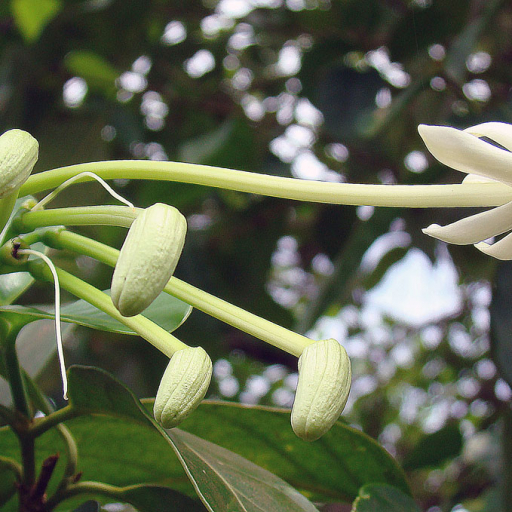
Often called the Needle Flower or the Fried Egg Plant, Posoqueria latifolia is a tropical showstopper known for its incredibly long, trumpet-like white blossoms. Native to the lush rainforests of Central and South America, this plant is a favorite among gardeners who want to attract nocturnal life, as its flowers emit a powerful, sweet fragrance specifically designed to lure sphinx moths under the moonlight.
🔍 How to Identify
- 🎺 Long-Tubed Flowers: The most striking feature is the clusters of white flowers with tubes reaching up to 6 inches long, ending in five star-shaped petals.
- 🍃 Lush Foliage: Its leaves are large, leathery, and dark emerald green, providing a dense, glossy backdrop that makes the white blooms pop.
- 🍊 The "Monkey Apple": After blooming, it produces round, yellow-to-orange fruits that look like small citrus fruits or guavas, which are a favorite snack for local wildlife.
🏡 In Your Garden
- 💧 Humidity is Key: Because it hails from the tropics, this plant thrives in high humidity. If you are growing it indoors or in a dry climate, regular misting or a pebble tray is essential to keep the leaves from browning at the edges.
- 🌱 Space to Stretch: While it can be kept as a large shrub, it naturally wants to become a small tree. It has a robust root system and dislikes being "pot-bound," so ensure you provide a large container or a permanent spot in the ground where it won't be moved.
⚠️ Safety & Toxicity
- 🐾 Pet Safety: While not listed as highly toxic, most members of the Rubiaceae family can cause mild stomach upset if leaves or fruits are ingested in large quantities by curious dogs or cats.
- 👶 Child Safety: The fruits are generally considered edible for wildlife but are not typically consumed by humans due to their bland taste and seedy texture. Keep an eye on small children who might be tempted by the bright "apples."
✨ Fun Fact
The Needle Flower has a "violent" way of saying hello! It uses an explosive pollination mechanism. When a moth touches the flower's center, the stamens spring forward with surprising force, literally slapping a concentrated dose of pollen onto the insect's head so it can be carried to the next bloom.

Detailed Care Instructions
To grow a Posoqueria Latifolia plant, also known as the sacred blushwood tree, you can follow the following steps:
- Purchase seeds or young plants from a reputable nursery or online vendor.
- Select a suitable location for planting. Posoqueria Latifolia prefers well-draining soil with a slightly acidic to neutral pH. It also thrives in bright, indirect sunlight or partial shade.
- Prepare the soil by loosening it and removing any weeds or debris. You can add organic matter, such as compost, to improve soil fertility and drainage.
- If planting seeds, follow the instructions on the packet regarding germination techniques, such as soaking them in water for 24 hours before sowing. If using young plants, dig a hole slightly larger than the root ball.
- Gently plant the seed or young plant in the soil, ensuring that the top of the root ball is level with the soil surface. Backfill the hole with soil, pressing it down gently to remove air pockets.
- Water the plant thoroughly after planting and then regularly thereafter. Keep the soil consistently moist, but not soggy, as Posoqueria Latifolia prefers moderate watering.
- Mulch around the base of the plant to conserve moisture, suppress weed growth, and regulate soil temperature.
- Prune dead or damaged branches to maintain the plant's health and shape. However, avoid extensive pruning as this may negatively impact flowering.
- Protect the plant from extreme weather conditions, such as frost or strong winds, especially when it is young.
- Fertilize the plant during the growing season (spring and summer) with a balanced, slow-release fertilizer according to the manufacturer's instructions.
- Be patient, as Posoqueria Latifolia may take several years to reach maturity and produce flowers. However, with proper care and optimal growing conditions, it can become a beautiful addition to your garden.

Place in a bright room that is sun drenched almost all day. Or directly in a south-facing window.

When watering this plant, it is important to only add moisture to the soil and not to the leaves or flowers. The plant should be watered when the top inch of soil feels dry to the touch. When watering, make sure to thoroughly saturate the soil, but don't let it become waterlogged. Allow any excess water to drain away before returning the plant to its normal location. Depending on the environment and the humidity levels, regular watering may be necessary to keep the plant healthy and thriving.
To fertilize this plant, use a balanced, slow-release fertilizer during the growing season. Apply it every two months, following the package instructions for dosage. Water the plant deeply before fertilizing to avoid root burn. Avoid fertilizing during the dormant season.
Posoqueria latifolia plant is a tropical plant that requires a specific type of soil to thrive. The ideal soil for this plant should be well-draining and rich in organic matter. It should have a pH range between 5.5 and 6.5. This plant prefers loose, sandy soil that allows water to drain quickly. It also needs soil that is nutrient-rich and has good aeration. The recommended soil type for this plant is a mixture of garden soil, peat moss, perlite, and sand. This combination provides the necessary nutrients, drainage, and aeration for the plant. It is important to avoid heavy clay soil as it can hold too much water and cause root rot. Proper soil preparation is essential for the growth and health of Posoqueria latifolia plant.
To propagate this plant, take a softwood cutting that is approximately 4-6 inches long from the parent plant. Remove the lower leaves from the stem, leaving only the top 2-3 leaves. Dip the cut end of the stem into rooting hormone powder and plant it into a pot filled with moist, well-draining soil. Place the pot in a warm, bright location with indirect sunlight and water regularly. After 4-6 weeks, the cutting should begin to develop roots and can be transplanted into a larger pot or a garden bed.








