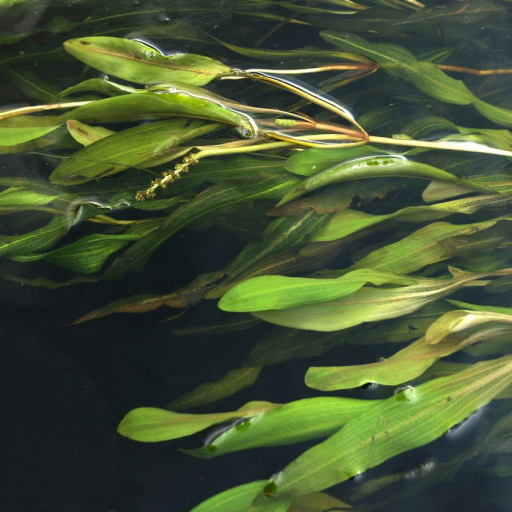
Plant Overview
Often referred to as the Alpine Pondweed or Reddish Pondweed, this aquatic perennial is a shimmering translucent gem found in the cool, clear waters of the Northern Hemisphere. Unlike many of its muddy-green relatives, this plant is celebrated by pond enthusiasts for its unique ability to blush a deep rusty red when exposed to bright sunlight. It acts as a vital underwater forest, providing a sophisticated nursery for tiny fish and aquatic life in high-altitude lakes and northern streams.
🔍 How to Identify
- 🍂 The "Blushing" Leaves: Submerged leaves are long, narrow, and remarkably translucent. They often take on a distinct reddish or brownish tint, looking almost like stained glass under the water.
- 🍃 Floating Foliage: While it doesn't always produce them, it can grow leathery, elliptical floating leaves that sit on the surface. These are typically olive-green and much tougher than the delicate submerged ones.
- 🥖 Blunt Tips: A key giveaway for P. alpinus is that the tips of the submerged leaves are rounded or blunt, never sharply pointed like many other pondweed species.
- 🌾 Spike-like Flowers: During the summer, it sends up small, brownish-green flower spikes that poke just above the water surface to be wind-pollinated.
🏡 In Your Garden & Pond
- 💧 Water Quality Specialist: This plant is a "bio-indicator," meaning it thrives in clean, unpolluted water. It struggles in ponds with high runoff or heavy chemical treatments, making it a badge of honor for a healthy ecosystem.
- 🏔️ Temperature Sensitivity: As the name "Alpine" suggests, this plant is built for the cold. It is incredibly hardy against frost but may struggle in very shallow, stagnant backyard ponds that overheat during peak summer.
- 🐟 Wildlife Sanctuary: Because of its dense, branching growth habit, it provides excellent "fry cover" for baby fish and a hunting ground for dragonflies, making your pond a hub of biodiversity.
⚠️ Safety & Toxicity
- ✅ Safe Status: Alpine Pondweed is non-toxic to humans, dogs, cats, and horses.
- 🐢 Reptile Friendly: It is a safe addition to outdoor turtle ponds, though hungry turtles may see those tender submerged leaves as a delicious snack.
- 🌾 Natural Balance: While not considered a "danger," pondweeds can grow rapidly. If it begins to take over your pond, simply thin it out by hand to maintain oxygen levels.
✨ Fun Fact
The reddish color of the Alpine Pondweed isn't just for show—it's actually a form of "underwater sunscreen." In the clear, high-altitude lakes where it lives, the UV rays are very strong; the plant produces red pigments (anthocyanins) to protect its delicate tissues from being "sunburned" under the waves!

Detailed Care Instructions
Here are some tips to help you grow Potamogeton Alpinus plants:
- Obtain plant material: Purchase Potamogeton Alpinus plants or try contacting local nurseries or botanical gardens to inquire about availability. Alternatively, you can collect seeds or vegetative propagules from natural habitats, but make sure to check local regulations and obtain permission if necessary.
- Choose the right conditions: Potamogeton Alpinus is an aquatic plant that typically grows in cold, shallow, freshwater habitats. Mimicking these conditions in a controlled environment can optimize growth. Consider using a coldwater aquarium or a pond with cool water for cultivation.
- Provide adequate lighting: Potamogeton Alpinus requires moderate to high levels of light for optimal growth. If you are using an aquarium or indoor pond, use full spectrum fluorescent or LED lights designed for aquatic plants. Position the lights to ensure even coverage across the entire plant.
- Maintain proper temperature: Potamogeton Alpinus prefers cool water temperatures between 10-20°C (50-68°F). Avoid extreme temperature fluctuations, especially in indoor environments where temperature control may be necessary.
- Use suitable growing medium: Potamogeton Alpinus benefits from a nutrient-rich substrate, such as aquatic plant soil or specialized aquatic plant fertilizers. Ensure the substrate is well-drained and has the correct pH level (around neutral).
- Planting depth: Potamogeton Alpinus should be planted at a suitable depth, which is typically shallow or just below the water surface. Aquatic plant baskets or containers can be used to anchor the plant in the substrate.
- Maintain water quality: Regularly check and maintain the water quality parameters such as pH, ammonia, nitrate, and phosphate levels. Change a portion of the water regularly to prevent the accumulation of pollutants and maintain good oxygenation of the roots.
- Provide adequate nutrients: Potamogeton Alpinus benefits from nutrient supplementation. You can use slow-release fertilizers or liquid fertilizers formulated specifically for aquatic plants to provide essential nutrients like iron, potassium, and micronutrients.
- Prune as needed: Regularly trim the plant to remove dead or decaying parts, and to control growth and maintain a compact shape. This helps to prevent overcrowding and ensures that the plant receives enough light and nutrients.
- Observe and adjust: Monitor the growth of your Potamogeton Alpinus plants regularly. Adjust lighting, nutrient supplementation, and other factors based on the plant's response and specific requirements.
Remember that Potamogeton Alpinus is a native plant in certain regions, so ensure that you are not contributing to invasive species proliferation by properly containing and managing the plant in a controlled environment.

Place in a bright room that is sun drenched almost all day. Or directly in a south-facing window.

To water this particular plant, it is important to first understand its natural habitat and water requirements. For example, if it is a submerged aquatic plant, it may require more water than a terrestrial plant. It is also important to note the soil and drainage conditions of the pot it is planted in.
When watering, it is best to use room temperature water and avoid chlorinated water. The plant should be watered frequently to ensure the soil is consistently moist. However, it is important not to overwater, as this can lead to root rot.
One way to ensure proper watering is to monitor the soil moisture level using a moisture meter or by sticking your finger into the soil. If the top inch of soil feels dry, it is time to water. It is also important to allow excess water to drain out of the pot to prevent waterlogging.
Overall, proper watering techniques will help keep this plant healthy and thriving.
To fertilize the Potamogeton Alpinus plant, use a slow-release, aquatic plant fertilizer tablet. Place one tablet at the base of the plant every 6-8 weeks during the growing season. Avoid over-fertilizing as it can harm the plant or promote excessive algae growth.
Potamogeton Alpinus plant prefers a soil that is rich in nutrients and has a pH between 6.5 and 7.5. It also requires a soil that is well-draining and does not become waterlogged. A mix of peat moss, perlite, and coarse sand can be used to create a soil that meets these requirements. Additionally, it is important to ensure that the soil is kept moist but not soggy, as this can lead to root rot. Fertilizer can be added to the soil to provide additional nutrients, but it is important not to over-fertilize as this can also cause damage to the plant.
To propagate this plant, start by taking stem cuttings that are at least three inches long and have healthy leaves. Remove the bottom leaves of the cutting and plant it in soil or sand that is free from organic matter. The cuttings should be planted in a well-lit area, but not in direct sunlight.
Keep the soil damp and the cutting should root within a few weeks. Once the cutting has established roots, you can transplant it into its permanent location. It is also possible to propagate this plant by dividing established clumps. This can be done in early spring or fall by carefully digging up clumps and separating them into smaller sections, making sure that each section has some roots attached. Once divided, the clumps can be replanted in their new location.








