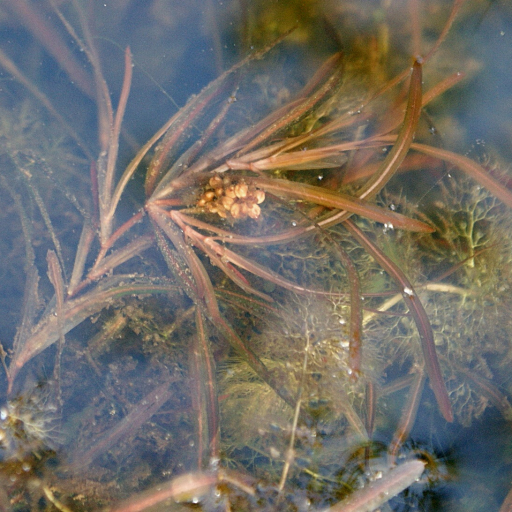
Plant Overview
Known as the Blunt-leaved Pondweed, this delicate aquatic perennial is a silent architect of freshwater ecosystems. Often found swaying in slow-moving streams or quiet ponds, it creates intricate underwater forests that offer a sanctuary for tiny aquatic creatures. Its name comes from its distinctively rounded leaf tips, setting it apart from its many sharper-edged pondweed cousins.
🔍 How to Identify
- 🌿 Leaf Shape: The leaves are entirely submerged, translucent, and linear. Unlike many other pondweeds, the tips are notably blunt or rounded, often with a tiny, sharp point (mucro) at the very center.
- 🥨 Stem Structure: The stems are slender, slightly flattened, and highly branched, giving the plant a bushy, "cloud-like" appearance underwater.
- 🌾 Flower Spikes: During the summer, it produces small, dense spikes of brownish-green flowers that briefly poke above the water's surface to catch the wind for pollination.
🏡 In Your Garden (or Local Pond)
- 🧬 Ecological Role: This plant is a powerhouse oxygenator. It helps keep pond water clear by competing with algae for nutrients and provides essential "nursery" space for dragonfly larvae, tadpoles, and small fish.
- 💧 Water Chemistry: It thrives best in mesotrophic to eutrophic (nutrient-rich) water. If you are introducing it to a garden pond, be mindful that it dislikes "hard" cleaning; it relies on a stable environment and can be sensitive to sudden changes in water pH or clarity.
⚠️ Safety & Toxicity
- ✅ Status: Generally non-toxic and safe.
- 🐾 Details: It poses no chemical threat to curious dogs, cats, or children. However, because it grows in wild, slow-moving water, the plant may harbor natural bacteria or pond parasites, so it is not recommended for human consumption.
✨ Fun Fact
- ❄️ The Turion Trick: To survive freezing winters, the plant produces "turions"—specialized, hardened winter buds. These buds break off, sink to the muddy bottom, and remain dormant in the dark until the warmth of spring triggers them to sprout into entirely new plants.

Detailed Care Instructions
To grow Potamogeton Obtusifolius (blunt-leaved pondweed) plant, you can follow these steps:
- Obtain seeds or plant cuttings: You can either collect seeds from a mature plant or purchase them from a reputable nursery. Alternatively, you can obtain stem cuttings from an existing plant.
- Prepare a suitable habitat: Potamogeton Obtusifolius is an aquatic plant and requires a pond or aquarium with clean, still or slow-moving water. Ensure that the water pH is neutral to slightly alkaline (pH 6.5-8) and the water temperature is around 60-75°F (15-24°C).
- Plant the seeds or cuttings: If you have seeds, scatter them across the surface of the water. For cuttings, bury them about 3-4 inches deep in the substrate or anchor them using weights in the desired location.
- Provide adequate light: Potamogeton Obtusifolius requires moderate to high light levels to support its growth. If you are growing it indoors, consider using fluorescent or LED aquarium lights to ensure consistent light exposure for about 8-12 hours a day.
- Maintain water conditions: Make sure the water remains clean and properly oxygenated. Regularly test and adjust the water parameters as required. Avoid sudden temperature fluctuations, high ammonia or nitrate levels, or excessive algal growth, which can negatively impact the plant's growth.
- Control weeds and algae: Keep an eye on the growth of unwanted weeds or excessive algae, as they can compete with Potamogeton Obtusifolius for nutrients and light. Remove any unwanted plants manually or use herbicides/algicides if necessary, taking care to follow the instructions.
- Provide nutrients: Potamogeton Obtusifolius can extract nutrients from the water column, but you can supplement its growth by adding a slow-release aquatic plant fertilizer or root tabs around the base of the plant.
- Prune as needed: Trim any dead or decaying leaves as well as excess growth to maintain a healthy and aesthetically pleasing plant. Regular pruning also encourages new growth.
- Monitor for pests and diseases: Inspect the plant regularly for signs of pests (such as snails) or diseases (such as fungal infections). Address any issues promptly by manually removing pests or using appropriate treatments.
- Enjoy the plant: With proper care and maintenance, your Potamogeton Obtusifolius should thrive and provide a natural and attractive addition to your aquatic environment.

Place in a bright room that is sun drenched almost all day. Or directly in a south-facing window.

Potamogeton Obtusifolius is an aquatic plant that requires a constant supply of water. It is typically grown in a shallow water body, such as a pond or lake. To water the plant, it is important to ensure that the water source is constantly replenished. This can be achieved through regular rainfall or by manually adding water. The water must be clean and free of pollutants, as Potamogeton Obtusifolius is sensitive to water quality.
When watering the plant, it is important to avoid splashing the leaves and disrupting the soil around the roots. Instead, the water should be gently poured or sprayed onto the surface of the water. This will allow the plant to absorb the necessary nutrients without causing damage to the delicate structure of the plant.
Overall, watering Potamogeton Obtusifolius is a delicate process that requires careful attention to detail. With proper care, this aquatic plant can thrive and provide a beautiful addition to any water environment.
To fertilize this aquatic plant, use a slow release aquatic fertilizer specifically designed for submerged plants. Apply the fertilizer to the water around the plant roots according to the manufacturer's instructions. It is important not to exceed the recommended dosage to avoid causing harm to the plant. Fertilize the plant during the spring growing season and again in mid-summer if necessary.
In order to successfully grow the plant Potamogeton Obtusifolius, it is important to use a specific type of soil. This type of soil should have a high organic matter content and be well-draining. It is also important that the soil be slightly acidic with a pH range between 6.0 and 6.5. In terms of texture, a sandy loam soil is recommended for best growth. Additionally, the soil should be kept consistently moist but not waterlogged, as too much water can lead to root rot. Overall, using the right soil is crucial for the health and growth of Potamogeton Obtusifolius.
To propagate this plant, you will need to gather mature leaves that have developed small, white roots. Cut the stem below the root system and place the cuttings in a container with clean water. Change the water every few days to keep it fresh. Once the cuttings have developed more extensive roots, they can be transplanted into substrate to grow into mature plants.








