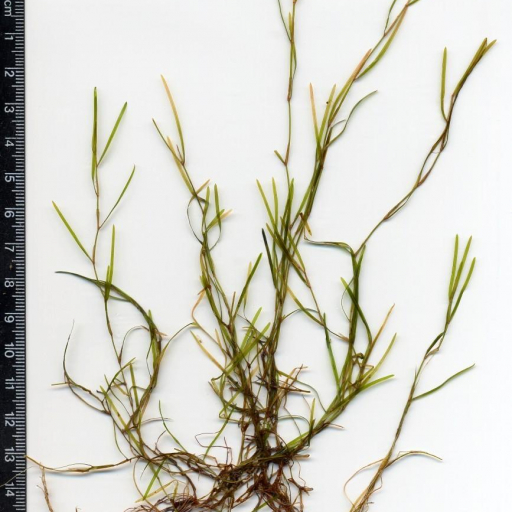
Plant Overview
Known as the Small Pondweed or Slender Pondweed, Potamogeton pusillus is a delicate, submerged wanderer of the underwater world. Often overlooked due to its thin, grass-like frame, it plays a massive role in freshwater ecosystems by acting as a silent architect for "fish nurseries." In the wild, it forms soft, swaying meadows that ripple with the current, providing structure to otherwise barren pond floors.
🔍 How to Identify
- 🍃 The Leaves: Extremely narrow and linear, usually less than 2mm wide. They are translucent and often have a subtle olive-green to brownish hue.
- 🌱 The Stems: Slender, cylindrical, and highly branched. Despite their fragility, they are quite flexible, allowing the plant to move with water currents without snapping.
- 🌾 The Flowers: It produces tiny, inconspicuous flower spikes that occasionally break the surface of the water, though they are often mistaken for floating debris.
🏡 In Your Garden Pond
- 💧 Oxygenation Station: This plant is a powerhouse for adding dissolved oxygen directly into the water. It’s a "working" plant that helps keep the pond environment balanced and healthy for fish.
- 🐟 A Safe Haven: Because of its dense, fine foliage, it provides the perfect hiding spot for dragonflies, snails, and young fish (fry) looking to escape larger predators.
- ☀️ Nutrient Sponge: It thrives by absorbing excess nutrients (like nitrates) from the water column. This competition for food helps starve out unsightly "pea-soup" algae blooms.
⚠️ Safety & Toxicity
- ✅ Safe Status: Potamogeton pusillus is non-toxic to humans, dogs, and cats. It is a completely natural part of a healthy pond ecosystem.
- 🦆 Wildlife Salad: It is a primary food source for many species of waterfowl; ducks and geese consider the seeds and foliage a nutritious snack.
- 🏊 Physical Caution: While safe, in large wild bodies of water, pondweeds can grow into very dense mats. Swimmers should always be cautious of "weed tangles" in unmanaged areas.
✨ Fun Fact
To survive the freezing winter, Small Pondweed creates "Turions"—hardy, modified buds that detach and sink to the muddy pond floor. They stay dormant in the freezing muck all winter, waiting patiently for the warmth of spring to float back up and restart their growth!

Detailed Care Instructions
To grow Potamogeton pusillus, also known as curly pondweed, you can follow these steps:
- Obtain seeds or small plants: You can typically find Potamogeton pusillus seeds or small plants at local nurseries, online plant retailers, or specialized aquatic plant suppliers.
- Choose a suitable location: P. pusillus is an aquatic plant, so it needs to be grown in a container or a pond. Ensure that the container is large enough to accommodate the plant's growth and has the capability of holding water.
- Planting in a container: If growing in a container, fill it with a good-quality aquatic potting mix. Bury the seeds or small plants about 1/2 inch deep in the soil, or follow the instructions provided with the plant or seeds.
- Planting in a pond: If growing in a pond, ensure that the water is relatively shallow (around 1-3 feet deep), as P. pusillus prefers to grow in shallower water. Bury the seeds or small plants in the mud or substrate at the bottom of the pond. If there is no mud or substrate, you can anchor the plants by placing them in mesh pots filled with aquatic soil and sink the pots into the pond.
- Provide proper lighting: Potamogeton pusillus thrives in full to partial sunlight. Ensure that the plants receive at least 6 hours of direct sunlight per day. If growing indoors, consider using artificial grow lights to provide the necessary light intensity.
- Maintain water temperature and quality: P. pusillus prefers water temperatures between 50-75°F (10-24°C). Ensure that the water quality is suitable for aquatic plants, which includes maintaining proper pH levels and low levels of pollutants, such as ammonia and nitrate.
- Regularly fertilize: Use a specialized aquatic plant fertilizer to supply essential nutrients to the plants. Follow the instructions on the fertilizer packaging for application rates and frequency.
- Control algae and weeds: Monitor the water for any signs of algae overgrowth or invasive aquatic weeds. Manual removal or the use of natural or chemical algae control methods may be necessary to ensure the healthy growth of P. pusillus.
- Prune if needed: If the plants become overcrowded or develop excessive growth, you can prune them by cutting off any excess foliage. This helps maintain a healthy growth pattern.
- Regular monitoring and maintenance: Regularly check the growth and health of the plants. Maintain proper water levels and quality, and make necessary adjustments to ensure optimal growing conditions for Potamogeton pusillus.
Remember that Potamogeton pusillus is a native plant species in many regions, so check if it is allowed to be grown in your area, especially in natural water bodies, as it may be considered invasive in some regions.

Place in a bright room that is sun drenched almost all day. Or directly in a south-facing window.

Potamogeton Pusillus is an aquatic plant that requires a consistent water supply to thrive. When watering, it is important to ensure that the roots are submerged in water and that the leaves and stem are not exposed to the air for extended periods, as this can cause them to wilt and die. The plant should be watered regularly with clean, fresh water, and any debris or dead leaves should be removed from the water to prevent rot and disease. Additionally, it is important to monitor the pH and nutrient levels of the water to ensure that they are within the plant's optimal range. Proper water management will help ensure that Potamogeton Pusillus grows healthily and remains vibrant and lush.
To fertilize the Potamogeton Pusillus plant, use a water-soluble fertilizer with equal parts nitrogen, phosphorus, and potassium. Mix the fertilizer with water and apply it to the plant once a month during the growing season. Be sure to follow the instructions on the fertilizer package and avoid over-fertilization, as it can harm the plant. Additionally, consider adding organic matter to the soil surrounding the plant to improve its overall health and nutrient uptake.
Potamogeton Pusillus is an aquatic plant that requires a specific type of soil for optimal growth. The ideal soil for this plant should be nutrient-rich and have a fine texture that allows water to flow through easily. It should also have a neutral to slightly alkaline pH level to support the plant's growth.
To create this type of soil, you can mix together several different components such as sand, gravel, and clay. You may also want to consider adding organic matter like peat moss or compost to provide additional nutrients for the plant. It is important to ensure that the soil is well-draining and does not become waterlogged, as this can lead to root rot and other problems.
When planting Potamogeton Pusillus, you should first fill the container with the prepared soil, making sure to leave enough space at the top for the plant. Place the plant in the center of the container, gently pressing the roots into the soil. Water the plant thoroughly, and place it in a location that receives part to full sun. With proper care and the right soil, your Potamogeton Pusillus plant will thrive and add beauty to any water feature or aquatic garden.
There are several ways to propagate Potamogeton Pusillus plant. One way is through vegetative propagation. This involves taking stem cuttings from healthy plants and rooting them in water. Select healthy stems with several leaves and cut them into sections about 3-6 inches long. Remove the lower leaves and place the cuttings in a jar of water. Keep the water level consistent and change it regularly. After a few weeks, roots should appear, and the cutting can be transplanted to soil.
Another method of propagation is through seed. Collect mature seeds from the plant and sow them onto a moist seed-starting mix. Cover the seeds lightly with the soil and keep them moist but not waterlogged. Germination should occur within a few weeks, and the seedlings can be transplanted to larger containers or directly in the garden.
Potamogeton Pusillus plant can also propagate through rhizomes. These are underground stems that grow horizontally, sending up shoots at intervals. To propagate using rhizomes, divide a clump of plants carefully, making sure that each section has roots attached. Replant the rhizomes in the desired location and water regularly until new growth appears.








