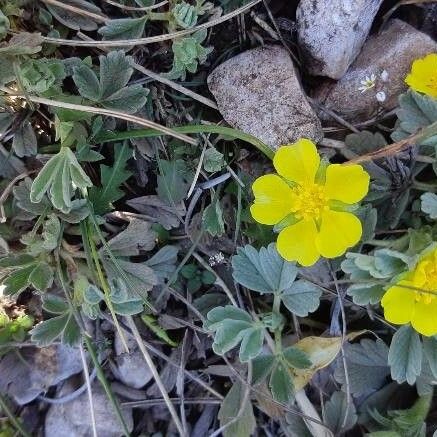
Plant Overview
Often called the Grey Cinquefoil, this charming little creeper is a master of survival in the dry, rocky terrains of Europe. Its name cinerea literally translates to "ash-colored," referring to the beautiful silvery-grey sheen of its foliage. While it might look like a wild strawberry at first glance, its bright golden blooms reveal its true identity as a resilient and sun-loving member of the rose family.
🔍 How to Identify
- 🍃 Velvety Foliage: The leaves are palmate, usually divided into five small leaflets, and are covered in soft, fine white hairs that give the plant its signature "ashy" look.
- 🌼 Butter-Yellow Blooms: It produces delicate, five-petaled flowers with a slightly darker orange-yellow center, appearing in small clusters during the spring.
- 🌱 Low Profile: This is a prostrate plant, meaning it grows very close to the ground, forming dense, spreading mats that rarely rise more than a few inches high.
🏡 In Your Garden
- 🌞 The Sun Specialist: Unlike many garden plants that crave rich soil, the Grey Cinquefoil thrives in "poor" conditions. It loves well-drained, sandy, or rocky soil where it doesn't have to compete with taller, thirstier plants.
- 🧗 The Taproot Factor: This plant develops a surprisingly deep taproot to survive droughts. Because of this, it is notoriously difficult to transplant once it has settled in—so be sure to choose its permanent home carefully!
- 🦋 Pollinator Magnet: Despite its small size, it is a vital early-season food source for small solitary bees and butterflies looking for nectar in rocky outcrops.
⚠️ Safety & Toxicity
- ✅ Pet & Human Safe: Potentilla cinerea is generally considered non-toxic to humans, cats, and dogs. It is a "friendly" addition to gardens with curious explorers.
- 🖐️ Skin Comfort: The soft, hairy leaves are not known to cause irritation, making it a safe plant to handle without gloves during maintenance or weeding.
✨ Fun Fact
🛡️ Knights and Leaves: The name "Cinquefoil" comes from the French cinque feuilles, meaning "five leaves." This five-leaf pattern was a popular symbol in medieval heraldry, often found on the shields of knights to represent strength, power, and loyalty.

Detailed Care Instructions

Place in a bright room that is sun drenched almost all day. Or directly in a south-facing window.

Some plants require more regular watering than others, which should be done every few days. It's critical to maintain the soil moist all of the time. The water requirements of the same plant placed in pots with varying sizes will differ. Because the water in the smaller pot evaporates faster than the water in the larger pot, it will require more watering. Regardless of pot size, the surface should constantly be maintained moist.








