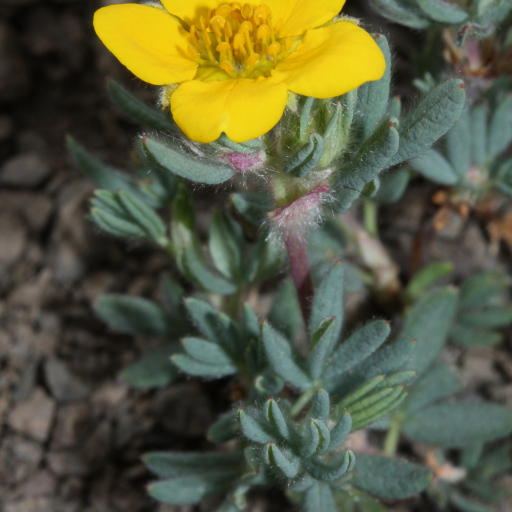
Plant Overview
Often called the Shrubby Cinquefoil or "Golden Hardhack," this hardy little bush is a staple of northern gardens and wild mountain meadows. Its common name comes from the French cinq feuilles, meaning "five leaves," referring to the distinct shape of its foliage. It is essentially a miniature, ultra-tough rose relative that provides a carpet of color for months on end without demanding any special treatment.
🔍 How to Identify
- 🌼 The Flowers: Flat, five-petaled blooms that look like tiny wild roses or buttercups. While bright yellow is the classic color, modern varieties come in sunset orange, snowy white, and soft pink.
- 🌿 The Foliage: Small, compound leaves that are divided into five to seven narrow leaflets. They often have a soft, fine hairiness that gives the shrub a subtle silvery-green or grayish cast.
- 🪴 Growth Habit: A compact, multi-stemmed deciduous shrub that forms a neat, rounded mound. It looks like a dense "puff" of greenery and flowers in the landscape.
🏡 In Your Garden
- ☀️ Sun Worshiper: To see this plant at its best, give it full sun. While it can survive in partial shade, the "flower power" significantly drops, and the branches may become leggy and sparse.
- 🏔️ Rugged Roots: This is one of the most "unkillable" shrubs for cold climates. It is incredibly drought-tolerant once established and actually prefers lean, rocky, or sandy soil over rich, heavy garden beds.
- ✂️ Low Maintenance: It blooms on "new wood," meaning you can give it a vigorous trim in late winter or early spring. This "haircut" prevents the center of the plant from becoming woody and bare.
⚠️ Safety & Toxicity
- ✅ Safe Status: Potentilla fruticosa is considered non-toxic to humans, dogs, and cats.
- 🛡️ Child-Friendly: Unlike many of its cousins in the Rose family, this shrub is entirely thornless, making it an excellent choice for planting near walkways or children's play areas.
✨ Fun Fact
📜 The genus name Potentilla is derived from the Latin word potens, meaning "powerful." This refers to the potent medicinal properties ancient herbalists believed the plant possessed, often using it in teas to treat inflammation and throat ailments.

Detailed Care Instructions
To grow a Potentilla Fruticosa plant, follow these steps:
- Choose a location: Potentilla Fruticosa prefers full sun, so select a spot in your garden that receives at least 6 hours of direct sunlight per day. The soil should be well-draining and not waterlogged.
- Prepare the soil: Dig the soil to loosen it and remove any weeds or rocks. Incorporate organic matter, such as compost or well-rotted manure, to improve soil fertility and drainage.
- Planting: Dig a hole that is slightly larger than the plant's root ball. Place the plant in the hole and backfill with soil, gently firming it around the roots. Ensure that the plant is at the same level as it was in the nursery pot.
- Watering: After planting, thoroughly water the plant. Potentilla Fruticosa requires regular watering to establish but is drought-tolerant once it matures. Water deeply, allowing the soil to slightly dry out between watering sessions.
- Mulching: Apply a layer of mulch around the plant to help conserve moisture, suppress weed growth, and regulate soil temperature. Use organic material, such as straw or wood chips, and maintain a thin layer around the base of the plant.
- Pruning: Potentilla Fruticosa benefits from annual pruning to maintain its shape and promote healthy growth. Prune in early spring before new growth begins, removing any dead or damaged branches and trimming back 1/3 of the plant's overall size if necessary.
- Fertilizing: Potentilla Fruticosa is not a heavy feeder, but you can apply a slow-release, balanced fertilizer in early spring to provide nutrients. Follow the instructions on the fertilizer package for application rates.
- Pests and Diseases: Potentilla Fruticosa is generally resistant to pests and diseases, but keep an eye out for symptoms such as leaf spots or aphid infestations. Treat any issues promptly with organic pest control methods or consult a local gardening expert for advice.
- Winter care: Potentilla Fruticosa is hardy and can tolerate cold temperatures. However, if your region experiences severe winters, you can provide some protection by applying a layer of mulch around the base of the plant or covering it with burlap.
With proper care and maintenance, your Potentilla Fruticosa plant should grow well and provide beautiful blooms throughout the growing season.

Place in a window with dappled sun or a spot in the middle of a room. Or directly in a window facing west or east.

To water this plant, you should first check the soil for moisture by inserting your finger about an inch into the soil. If the soil feels dry to the touch, it's time to give your plant a thorough watering. Choose a watering can or a hose with a gentle spray nozzle. Water the soil around the base of the plant, avoiding the leaves and stems. Water until the soil is moist but not soaking wet. Do not allow the plant to sit in standing water, as this can cause root rot. Watering frequency will depend on factors such as temperature, humidity, and the type of soil your plant is growing in. It's best to water this plant deeply but infrequently rather than giving it frequent shallow waterings.
To provide proper nourishment for this plant, it is recommended to use a slow-release granular fertilizer, which can be applied in the spring or fall. Mix the fertilizer into the soil around the base of the plant, being careful not to get any on the leaves. Water the plant thoroughly after fertilizing to ensure the nutrients penetrate deeply into the roots. Repeat this process annually to maintain optimal growth. Avoid over-fertilizing, as this can lead to excessive growth and damage to the plant.
Potentilla Fruticosa plants prefer well-draining soil that is rich in organic matter. The ideal soil for this plant should have a pH range of 5.0 to 7.5 and should be slightly acidic. Potentilla Fruticosa plants do best in soil that is moist but not saturated, so it is important to ensure proper drainage. Sandy loam and loamy soils are ideal for these plants, as they provide the perfect balance of drainage and moisture retention. Adding compost or other organic matter to the soil can improve its texture and fertility, which in turn can promote healthy growth and flowering. Fertilizing Potentilla Fruticosa plants with a balanced, slow-release fertilizer can also help to keep them healthy and thriving. Overall, it is important to choose a soil that is well-suited for the specific needs of this plant, in order to promote optimal growth and flowering.
Potentilla Fruticosa is a versatile and hardy plant that can be propagated easily. There are several ways to propagate this plant, including seed propagation, cuttings propagation, and division propagation.
Seed Propagation: Collect the seeds from the matured fruits of the plant. Sow the seeds indoors or outdoors during the spring season. The soil should be moist, well-drained, and in a sunny location. Water the seeds regularly, and germination should occur in 14-21 days.
Cuttings Propagation: Take cuttings from the plant in early spring. Select a healthy and mature stem, cut it just below a leaf node. Dip the cut end into rooting hormone powder, if available. Plant the cutting in a well-drained soil mixture of sand and peat moss. Water regularly and make sure the plant receives adequate light.
Division Propagation: This method is best suited for mature plants that have outgrown their container. Remove the plant from the pot and divide it into several sections, ensuring that each section has roots attached. The divisions should be replanted in suitable soil, ensuring that the roots are protected and the soil is well-drained.
Overall, Potentilla Fruticosa is a versatile plant that can be propagated easily. With proper care and attention, it can grow and thrive in various conditions.
Common pests of the shrubby cinquefoil include Spider mites, larvae. Make a habit of checking your shrubby cinquefoil frequently for pests so that any infestations can be caught and managed early.







