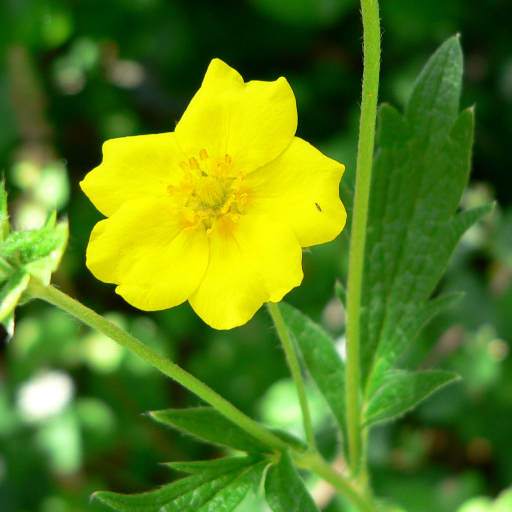
Plant Overview
Often called the Graceful Cinquefoil or Slender Cinquefoil, this charming perennial is a staple of North American meadows and sun-drenched prairies. Its common name, "Cinquefoil," stems from the French cinque feuilles, meaning "five leaves," a nod to its distinctive finger-like foliage. This plant is a favorite among restoration ecologists and wildflower enthusiasts for its ability to bring a splash of buttery sunshine to even the rockiest landscapes.
🔍 How to Identify
- 🖐️ The "Five-Finger" Leaves: The leaves are palmate, meaning they radiate from a single point like fingers on a hand. You will typically see 5 to 7 leaflets with sharply toothed edges.
- ✨ Silvery Undersides: If you flip a leaf over, you’ll often find a dense layer of fine, white hairs. This gives the plant a shimmering, silvery appearance when the wind blows.
- 🌼 Buttercup-like Blooms: The flowers are a vibrant, sunny yellow with five heart-shaped petals. They look remarkably like strawberry blossoms, but in a rich golden hue rather than white.
🏡 In Your Garden
- 🌱 Taproot Tenacity: This plant develops a deep, woody taproot that allows it to survive long periods of drought. However, this "anchor" makes it very difficult to transplant once it is established, so choose its spot in your garden wisely!
- 🐝 Pollinator Buffet: It is a high-priority plant for native pollinators. It serves as a vital nectar source for sweat bees and hoverflies, and it is a known host plant for the caterpillars of the Two-banded Checkered-Skipper butterfly.
- 🏔️ Versatile Performer: While it loves meadows, it is equally at home in rock gardens or edges of woodland paths. It thrives in well-drained soil and isn't picky about soil fertility.
⚠️ Safety & Toxicity
- ✅ Status: Potentilla gracilis is generally considered non-toxic to humans, dogs, and cats.
- 🍃 Astringent Qualities: While safe, the plant is very high in tannins. This makes the leaves taste quite bitter, which usually discourages curious pets or toddlers from taking more than one nibble.
✨ Fun Fact
The genus name Potentilla translates to "little powerful one" in Latin. This refers to the plant's long history in traditional medicine, where it was believed to have potent powers to heal inflammation and gastrointestinal issues.

Detailed Care Instructions
To grow Potentilla gracilis, also known as slender cinquefoil, you can follow these steps:
- Choose a suitable location: Potentilla gracilis prefers full sun to partial shade. Choose a location in your garden that receives at least 6 hours of sunlight a day.
- Prepare the soil: Potentilla gracilis prefers well-draining soil. Amend the soil with organic matter, such as compost, to improve drainage and fertility.
- Sow seeds: Potentilla gracilis can be propagated by seeds. Sow the seeds in early spring or late fall, ensuring they are placed approximately ¼ inch deep in the soil. Leave some space between each seed, as the plants will spread out as they grow.
- Watering: Keep the soil lightly moist until the seeds germinate. Once the plants are established, water them deeply once a week or as needed. Avoid overwatering, as it can lead to root rot.
- Mulch: Apply a layer of organic mulch around the plants to help retain moisture, suppress weed growth, and regulate soil temperature.
- Pruning: Potentilla gracilis does not require extensive pruning. However, you can trim back any dead or damaged branches in early spring to promote new growth and maintain a neat appearance.
- Fertilizer: Potentilla gracilis generally does not require much fertilizer. However, you can apply a balanced slow-release fertilizer in early spring to provide necessary nutrients.
- Pests and diseases: Potentilla gracilis is relatively resistant to common pests and diseases. However, keep an eye out for aphids or spider mites. Treat any infestations promptly using organic pest control methods.
- Division: Over time, Potentilla gracilis clumps can become crowded. To rejuvenate the plant, you can divide the clump every three to four years in early spring or late fall.
By following these steps, you can successfully grow Potentilla gracilis in your garden.

Place in a bright room that is sun drenched almost all day. Or directly in a south-facing window.

Potentilla Gracilis is a plant that requires regular watering to thrive. Here are some tips to help you water this plant effectively:
1. Check the soil: Before watering your Potentilla Gracilis plant, check the soil to see if it is dry. Insert your finger into the soil to a depth of 1 inch. If the soil feels dry, it's time to water the plant.
2. Water gently: When watering your Potentilla Gracilis plant, be sure to do it gently. Use a watering can with a fine or narrow spout, and pour the water directly onto the soil. Avoid getting water on the leaves or stems of the plant, as this can promote fungal growth.
3. Water deeply: When you do water your Potentilla Gracilis plant, be sure to water deeply. This means allowing the water to soak into the soil to a depth of at least 6 inches. This will encourage the roots to grow deeper and will help the plant to become more drought-resistant.
4. Water regularly: Potentilla Gracilis needs regular watering, especially during hot, dry weather. Water the plant once a week during the growing season, and reduce watering in the winter when the plant is dormant.
5. Use a moisture meter: If you're not sure when to water your Potentilla Gracilis plant, consider using a moisture meter. This tool will tell you when the soil is dry and needs watering, helping you to avoid over- or under-watering your plant.
To fertilize your Potentilla Gracilis plant, you should apply a balanced fertilizer in the early spring before new growth appears. Use a granular fertilizer with an NPK (nitrogen, phosphorus, potassium) ratio of 10-10-10 or 20-20-20. Apply the fertilizer according to the package instructions, making sure to spread it evenly over the soil surface around the base of the plant. Water the area thoroughly after fertilizing to help the nutrients soak into the soil. Repeat this process every six weeks throughout the growing season, but stop fertilizing in the fall to allow the plant to go dormant for the winter.
Potentilla Gracilis requires well-draining soil that is rich in organic matter. It prefers soil with a slightly acidic pH level that ranges between 5.5 to 7.0. The soil should be moist but not waterlogged. The plant can tolerate dry soil conditions for short periods but excessive watering should be avoided. Loamy or sandy soils are well suited for this plant, while heavy clay soils should be avoided. The soil should be fertile and capable of holding nutrients to support the plant’s growth. Regular fertilization during the growing season can help ensure healthy growth and abundant blooms. Adding a layer of mulch around the base of the plant can help retain soil moisture and regulate temperature.
Propagation of this plant can be done by taking stem cuttings in the late spring or early summer. Select a healthy stem with several leaves on it, and cut it just below a node. Remove any leaves on the bottom half of the stem, and dip the cut end in rooting hormone powder. Plant the stem in a pot filled with well-draining soil, and keep it in a warm, bright location with consistent moisture. It can take several weeks for roots to form, but once they do, the plant can be transplanted to its permanent location.








