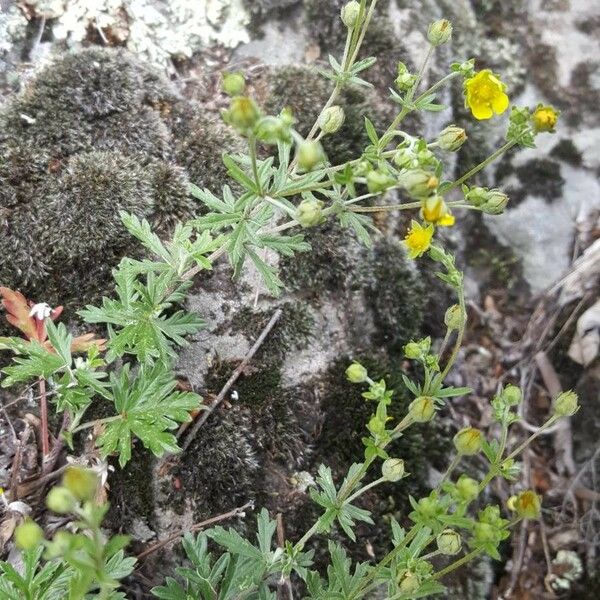
Plant Overview
Often known as the Ashy Cinquefoil, this resilient perennial is a master of disguise in dry, rocky landscapes. With its soft, silvery-grey foliage and cheerful butter-yellow blooms, it brings a touch of wild elegance to the harshest terrains. While it might look like a delicate wildflower, it is actually a tough-as-nails survivor that thrives where other plants often wither.
🔍 How to Identify
- 🌿 Silvery Foliage: The leaves are "palmate" (arranged like the palm of a hand), typically divided into 5 to 7 toothed leaflets with a distinct greyish-white hairy coating on the underside that gives the plant its "ashy" name.
- 🌼 Sunny Blooms: It produces clusters of small, five-petaled yellow flowers that resemble buttercups, featuring a notched tip on each petal and a bright orange-yellow center.
- 📏 Inclined Stems: The stems are often reddish and covered in fine downy hairs; they tend to grow in an "inclined" or ascending fashion, arching gracefully rather than standing perfectly upright.
🏡 In Your Garden
- ⛰️ The Minimalist: This plant thrives in "lean" soil—if your garden soil is too rich or damp, the Grey Cinquefoil may become leggy or lose its signature silvery luster. It prefers well-drained, sandy, or gravelly spots.
- ☀️ Sun-Worshipper: It is highly drought-tolerant once established, making it a perfect candidate for rock gardens or xeriscaping. It uses its tiny leaf hairs to trap moisture and reflect intense sunlight, staying cool in the heat.
⚠️ Safety & Toxicity
- ✅ Safe Status: Potentilla inclinata is generally considered non-toxic to humans and common household pets like cats and dogs.
- 👅 Bitter Defense: While not poisonous, the plant contains high levels of tannins, giving it a very bitter and astringent taste that usually prevents curious toddlers or pets from eating enough to cause an upset stomach.
✨ Fun Fact
The Grey Cinquefoil is a bit of a "botanical mystery." Many scientists believe it is a stabilized natural hybrid between the Silver Cinquefoil (P. argentea) and the Sulphur Cinquefoil (P. recta), inheriting the silvery beauty of one and the tall, robust stature of the other!

Detailed Care Instructions
To grow Potentilla inclinata, also known as the cinquefoil plant, you can follow these steps:
- Select a suitable location: Potentilla inclinata prefers full sun to partial shade. Choose a well-drained area in your garden or a pot with good drainage.
- Prepare the soil: The soil should be loamy and well-drained. Add organic matter like compost to improve the soil structure and fertility.
- Planting: Purchase young seedlings or propagate from cuttings. Dig a hole slightly larger than the root ball of the plant and place it in the hole, making sure the crown is level with the soil surface. Space the plants about 12-18 inches apart if planting multiple seedlings.
- Watering: Water the plant thoroughly after planting, and keep the soil moist but not waterlogged. Once established, water when the top inch of soil feels dry.
- Mulching: Apply a layer of organic mulch around the plant to help retain moisture and suppress weeds. Keep the mulch a few inches away from the stem to prevent rotting.
- Fertilizing: Potentilla inclinata generally does not require heavy feeding. However, you can apply a balanced slow-release granular fertilizer in spring or use a liquid fertilizer diluted according to the manufacturer's instructions.
- Pruning: Trim back any dead or damaged branches in early spring. Prune the plant lightly after flowering to maintain its shape and encourage new growth.
- Pests and diseases: Potentilla inclinata is relatively resistant to pests and diseases. However, keep an eye out for common garden pests like aphids or spider mites. Treat any infestations promptly using insecticidal soap or natural remedies like neem oil.
- Winter care: In colder regions, provide a layer of organic mulch around the base of the plant in late fall to protect the roots from harsh winter conditions.
- Propagation: Potentilla inclinata can be propagated by division or by collecting and planting seeds. Division should be done in early spring when new growth appears. Sow seeds in early spring or late fall, either directly in the ground or in seed trays.
By following these steps, you can successfully grow Potentilla inclinata in your garden or in pots, adding a beautiful and low-maintenance plant to your landscape.

Place in a bright room that is sun drenched almost all day. Or directly in a south-facing window.

Potentilla Inclinata is a perennial plant that requires regular watering to survive and thrive. However, it is essential to avoid overwatering, as it can lead to root rot and other diseases.
When watering Potentilla Inclinata, it is best to water deeply and infrequently. This means giving the plant a good soaking, allowing the water to penetrate the soil and reach the roots, and then waiting until the soil is almost dry before watering again.
To determine when it is time to water, you can stick your finger into the soil up to the first knuckle. If the soil feels dry, it is time to water. However, if the soil feels moist, you should wait a few more days before checking again.
When watering, it is also important to avoid getting the leaves wet, as this can promote the growth of fungal diseases. Instead, water only at the base of the plant, using a watering can or a hose with a gentle spray nozzle.
In addition to regular watering, Potentilla Inclinata also benefits from mulching. A layer of organic mulch, such as shredded bark or compost, can help retain moisture in the soil and reduce the need for frequent watering.
Potentilla Inclinata should be fertilized in the spring or early summer using a balanced fertilizer with equal amounts of nitrogen, phosphorus, and potassium. Use a slow-release fertilizer and apply according to the package instructions to avoid over-fertilizing, which can damage the plant. Water the plant deeply after fertilizing to help the nutrients penetrate the soil. Avoid fertilizing in the fall or winter, as this can encourage new growth that may be damaged by cold weather.
For Potentilla Inclinata plant, a well-draining soil mix with good fertility is recommended. The soil pH should be slightly acidic to neutral, with a range between 5.5 to 7.0. The soil should be rich in organic matter and have good structure to promote healthy root growth and water infiltration. A mixture of sand, peat moss, and loam soil is ideal for Potentilla Inclinata, but it's also important to consider the native soil conditions and climate of the plant's natural habitat for the best growing conditions. Regular fertilization and watering will also maintain the plant's health and attractiveness, but avoid overwatering as it can promote fungal growth and root rot.
To propagate this plant, take cuttings of approximately 4-6 inches in length from healthy, mature stems in the spring or early summer. Remove any leaves from the lower half of the stem and dip the cut end in rooting hormone. Plant the cutting in a pot filled with well-draining soil, and keep it moist but not waterlogged. Place the pot in a spot with bright, indirect light and protect it from direct sunlight. After roots have formed, gradually acclimate the new plant to outside conditions by exposing it to increasingly longer periods of direct sunlight until it is ready to be planted in the ground.








