Plant Overview
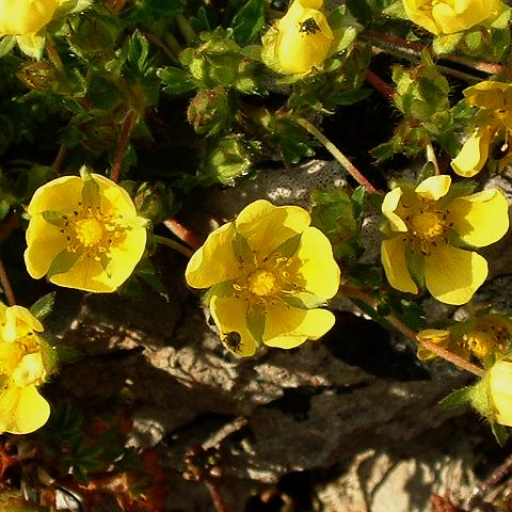
Often called the Spring Cinquefoil, this cheerful little plant is like a burst of sunshine hugging the earth. Originating from the rocky meadows of Europe, it is a master of the "ground hug," creating a lush, green carpet that erupts into brilliant yellow blooms just as the last frost fades. It is a favorite for rock gardens and "step-over" paths where its resilient, low-profile nature turns harsh terrain into a golden meadow.
🔍 How to Identify
- 🍃 The Leaves: Features palm-shaped (palmate) leaves, usually with five deeply toothed leaflets that look remarkably like those of a wild strawberry.
- 🌼 The Flowers: Small, saucer-shaped blooms with five bright yellow petals and a slightly darker orange-gold center, appearing in loose clusters.
- 📏 The Habit: A low-growing, mat-forming perennial that spreads via creeping stems (stolons), rarely reaching more than 2 to 4 inches in height.
🏡 In Your Garden
- ☀️ Sun Lover: To get that signature carpet of gold, give it plenty of sunshine. While it can handle light shade, it will produce fewer flowers and the foliage may become "leggy" or thin.
- 🪨 The Drainage Expert: This plant hates "wet feet." It thrives in poor, sandy, or rocky soils and is particularly fond of limestone. It’s the perfect candidate for tucking into the crevices of a dry stone wall or between pavers.
- ✂️ Low Maintenance: Unlike many groundcovers, it isn't overly aggressive. If it starts to look a bit untidy after flowering, a quick light shearing will encourage a fresh flush of green growth.
⚠️ Safety & Toxicity
- ✅ Non-Toxic: Potentilla neumanniana is generally considered safe and non-toxic for humans, cats, and dogs.
- 🐾 Paw-Friendly: Because it grows so low and is durable, it is an excellent alternative to grass in low-traffic areas where pets might roam, as it won't harm them if they take a curious nibble.
✨ Fun Fact
The name Potentilla is derived from the Latin word potens, meaning "powerful." This refers to the potent medicinal properties that ancient herbalists believed resided in the plant’s roots and leaves, which were once used to treat everything from toothaches to fevers!

Detailed Care Instructions
To grow Potentilla neumanniana, also known as Alumroot or Cinquefoil, follow these steps:
- Planting: Choose a suitable location for your Potentilla neumanniana. It prefers full sun to light shade, well-drained soil, and moderate moisture levels. It can thrive in various soil types, including clay, loam, or sandy soil.
- Soil preparation: Before planting, prepare the soil by loosening it and removing any weeds or grass. Incorporate organic matter such as compost or well-rotted manure to improve the soil fertility and drainage.
- Planting method: Dig a hole slightly larger than the root ball of the plant. Place the root ball in the hole and backfill with soil, ensuring that the crown of the plant is level with the soil surface. Gently firm the soil around the plant, but avoid compacting it too much.
- Watering: Water the newly planted Potentilla neumanniana thoroughly to settle the soil and eliminate any air pockets around the roots. Keep the soil evenly moist but not overly saturated. Water deeply and less frequently rather than shallowly and frequently.
- Mulching: Apply a layer of organic mulch, such as wood chips or straw, around the plant to conserve moisture, suppress weed growth, and maintain an even soil temperature. Avoid piling mulch directly against the plant's stem.
- Fertilizing: Potentilla neumanniana generally doesn't require heavy fertilization. However, you can apply a balanced, slow-release fertilizer in early spring to promote healthy growth. Follow the instructions on the fertilizer packaging for proper application rates.
- Pruning: Prune back Potentilla neumanniana in late winter or early spring to remove any dead, damaged, or overgrown branches. Light pruning can also help maintain a compact and bushy shape. Avoid heavy pruning, as this can inhibit flower production.
- Pests and diseases: Potentilla neumanniana is relatively resistant to pests and diseases. However, occasional issues may include aphids, spider mites, or powdery mildew. Monitor your plants regularly, and if necessary, treat any infestations or infections according to the appropriate methods or consult with a local gardening expert.
- Propagation: Potentilla neumanniana can be propagated through division or by taking stem cuttings. Division can be done in early spring or fall, while stem cuttings can be taken in summer. Follow proper propagation techniques for successful establishment of new plants.
By following these steps, you should be able to successfully grow Potentilla neumanniana and enjoy its beautiful flowers and foliage in your garden.

Place in a bright room that is sun drenched almost all day. Or directly in a south-facing window.

To water this particular plant, it's important to make sure that the soil is evenly moist. You don't want the soil to be too dry or too wet. This can lead to issues with the plant's growth and can even cause it to die.
One way to make sure the soil stays moist is by using a watering can or hose with a gentle spray attachment. Slowly pour water over the soil until it's saturated but not waterlogged. It's important to avoid getting water on the leaves and flowers as this can cause damage.
Another important factor to consider when watering Potentilla Neumanniana is the amount of sunlight the plant is receiving. If the plant is in full sun, it may require more frequent watering than if it's in partial shade.
Keep an eye on the soil moisture levels and adjust your watering schedule accordingly. It's better to water deeply and infrequently rather than giving the plant a small amount of water frequently. This encourages deep root growth and helps the plant become more drought-tolerant over time.
Overall, Potentilla Neumanniana is a relatively easy plant to care for as long as you provide it with the right growing conditions and watering schedule.
To fertilize Potentilla Neumanniana, it is recommended to use a balanced slow-release fertilizer with an N-P-K ratio of 10-10-10. Apply the fertilizer in early spring or late fall, according to package instructions. Be sure to water the plant before and after fertilizing to prevent damage to the roots. Avoid over-fertilizing, as this can lead to excessive growth and weaken the plant's overall health.
Potentilla Neumanniana thrives well in well-drained soil that is rich in nutrients. It typically prefers soil that is slightly acidic to neutral with a pH level ranging from 6 to 7.5. Additionally, the soil should be moist but not waterlogged, and it should be able to retain moisture while allowing excess water to drain away.
It is recommended to use a high-quality potting mix that is specifically designed for growing plants in containers. The potting mix should contain a balanced blend of peat moss, perlite, vermiculite, and organic matter. These ingredients help to ensure good drainage, air circulation, and root development.
It is advisable to avoid using heavy clay soils that retain water for long periods, as they can lead to root rot in the plant. Additionally, sandy soils with poor water retention should also be avoided as they tend to dry out quickly, leading to drought stress in the plant.
Overall, the soil used for Potentilla neumanniana should be well-draining, nutrient-rich, and able to retain moisture while allowing excess water to drain away.
Potentilla Neumanniana is a plant that can be easily propagated by using stem cuttings. To do so, select healthy stems that are not too woody or too thin. Cut a piece of stem about 4-6 inches long just below a node (a point where a leaf emerges from the stem). Remove the leaves from the bottom 2 inches of the stem, leaving only a few leaves at the top.
Fill a small container with well-draining soil mix, such as a mixture of peat moss and sand. Make a hole in the soil and insert the stem cutting, making sure that the bottom 2 inches are buried in the soil. Press the soil firmly around the stem to ensure good contact.
Water the cutting until the soil is moist but not saturated. Cover the container with a plastic bag or glass jar to maintain humidity and prevent the cutting from drying out. Place the container in a warm, bright location, but out of direct sunlight.
Check on the cutting regularly and mist the plant if it appears to be drying out. After a few weeks, the cutting should begin to produce new growth and roots. Once the plant has established roots and several leaves, it can be gradually acclimated to more light and eventually transplanted to a larger container or in a garden bed.








