Plant Overview
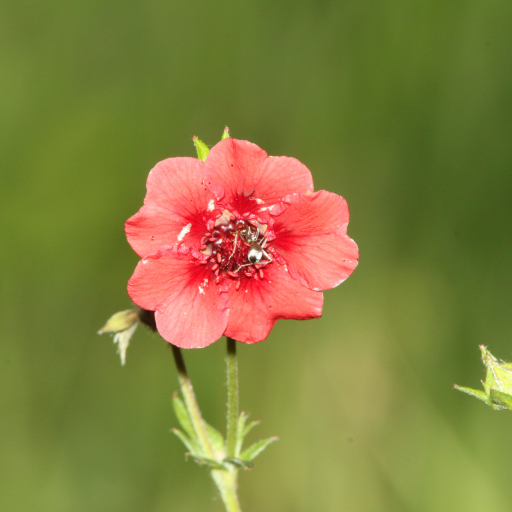
Often called the Scarlet Cinquefoil, Potentilla thurberi is a stunning mountain native that defies the "yellow-only" reputation of its cousins. Found naturally in the damp meadows and canyons of the American Southwest and Mexico, it looks like a wild strawberry plant that decided to dress up in velvet burgundy. Its deep, wine-colored blooms bring a moody, sophisticated touch to wildflower gardens and rockeries.
🔍 How to Identify
- 🌸 The Bloom: Features five-petaled flowers in a deep, saturated mahogany or "oxblood" red. The center of the flower is often a darker, almost blackish-purple.
- 🍃 The Foliage: Its leaves are "palmate," meaning they spread out like the fingers of a hand. Each leaf usually has five to seven leaflets with sharply toothed (serrated) edges.
- 🌱 Growth Habit: It forms a low-growing, mounding clump of greenery that stays relatively compact, making it an excellent choice for borders or filling gaps between larger shrubs.
🏡 In Your Garden
- 🏜️ High-Altitude Heritage: Because it originates from mountain canyons, this plant loves "bright but cool" conditions. It thrives in full sun but appreciates a bit of afternoon shade if you live in a particularly scorching climate.
- 💧 Drainage is Key: While it enjoys more moisture than a desert cactus, it cannot tolerate stagnant water. It prefers "lean" soil—avoid over-fertilizing, as too much nitrogen will give you plenty of leaves but very few of those signature red flowers.
- 🦋 Wildlife Support: It acts as a vital nectar source for native bees and small butterflies, serving as a high-protein pit stop in late summer when other wildflowers might be fading.
⚠️ Safety & Toxicity
- ✅ Non-Toxic: Potentilla thurberi is generally considered safe and non-toxic for humans, dogs, and cats. It does not possess the bitter alkaloids found in some other mountain wildflowers.
- 🧤 Mild Irritation: The stems and leaves are covered in fine, soft hairs. While not dangerous, these can occasionally cause a "fuzzy" or itchy sensation for gardeners with very sensitive skin after long periods of pruning.
✨ Fun Fact
The name "Cinquefoil" is derived from the Old French cinque feuilles, meaning "five leaves." Although this specific species can sometimes have seven leaflets, it remains a proud member of this "five-leafed" lineage, closely related to both roses and strawberries!

Detailed Care Instructions
To grow Potentilla Thurberi (Scarlet Cinquefoil) plants, follow these steps:
- Choose a suitable location: Potentilla Thurberi thrives in full sun or partial shade. Select a spot in your garden that receives at least 6 hours of sunlight per day.
- Prepare the soil: The soil should be well-draining and fertile. If your soil is heavy or compacted, amend it with organic matter such as compost or peat moss to improve drainage and nutrient content.
- Planting: Dig a hole that is twice the width of the pot the plant comes in. Place the Potentilla Thurberi plant in the hole, ensuring that the top of the root ball is level with the ground. Backfill the hole with soil, gently firming it around the plant.
- Watering: Water the plant thoroughly after planting to help settle the soil. Water regularly during the first growing season to establish a strong root system. Afterward, the plant is drought-tolerant and will only need watering during prolonged dry periods.
- Mulching: Apply a layer of organic mulch around the base of the plant to help retain soil moisture, suppress weeds, and regulate soil temperature.
- Pruning: Potentilla Thurberi does not require regular pruning, but you can remove any dead or damaged branches to maintain the health and shape of the plant. Prune in late winter or early spring before new growth appears.
- Fertilization: Potentilla Thurberi is a low-maintenance plant and does not require heavy feeding. However, you can apply a balanced, slow-release fertilizer in the spring to promote healthy growth.
- Pests and diseases: The Scarlet Cinquefoil is generally resistant to pests and diseases. However, keep an eye out for spider mites or aphids. If infestations occur, treat them with appropriate organic insecticides.
- Propagation: Potentilla Thurberi can be propagated through stem cuttings taken in early summer or by division in early spring or fall. Allow the cuttings or divided plants to root in a well-draining rooting medium before transplanting them into the garden.
By following these guidelines, you can successfully grow Potentilla Thurberi plants in your garden.

Place in a bright room that is sun drenched almost all day. Or directly in a south-facing window.

Potentilla Thurberi plant should be watered regularly, but not excessively. Before watering, it is important to check the soil moisture level by inserting your finger into the soil up to an inch deep. If the soil feels dry, it is time to water the plant. Potentilla Thurberi plant prefers well-draining soil, so make sure the pot or container has drainage holes. Water the plant slowly and evenly until the excess water drains out of the pot. Avoid getting water on the leaves as it can cause fungal growth. In summers, watering should be done twice a week whereas in winters, once a week would be enough.
To fertilize this plant, it is recommended to use a slow-release, balanced fertilizer in early spring or mid-summer. Be sure to follow the manufacturer's instructions for application rates. Avoid over-fertilization, as this may cause the plant to produce excessive foliage instead of blooms. Water the plant thoroughly after fertilizing to promote proper uptake.
Potentilla Thurberi generally prefers soils that are well-draining and rich in organic matter, with a pH range between slightly acidic to slightly alkaline. A good potting mix for it would ideally contain organic materials like peat moss, coconut coir, or compost, along with nutrient-rich amendments like perlite, vermiculite, or sand to improve drainage. Adding a slow-release fertilizer can also help promote healthy growth. It is important to avoid using heavy, clay-like soils which retain excess moisture and can cause root rot in the plant.
Potentilla Thurberi plant can be propagated through a process known as division. To do this, one must carefully remove the plant from its container or bed. The plant should be gently sifted apart into separate sections, taking care not to damage the roots.
Once the plant has been divided, each section should be placed in a prepared area of soil. The soil should be moist and well-draining, with adequate nutrients to support growth. Each section of the plant should be given space to grow and spread, and should be watered regularly.
Propagation through cuttings is also possible. To do this, one must carefully remove a healthy stem from the parent plant. The stem should be cut just below a node, using a clean, sharp pair of scissors or shears.
The cutting should then be dipped in rooting hormone, and planted in a container of moist soil. The container should be placed in a sunny location, but protected from direct sunlight. The cutting should be watered regularly, and kept moist until it has developed roots and begins to produce new growth.
Overall, Potentilla Thurberi plant is a hardy and resilient plant that can be easily propagated through division or cuttings. With proper care and attention, it can grow into a beautiful and thriving addition to any garden or landscape.
Common pests of the scarlet cinquefoil include Spider mites, larvae. Make a habit of checking your scarlet cinquefoil frequently for pests so that any infestations can be caught and managed early.








