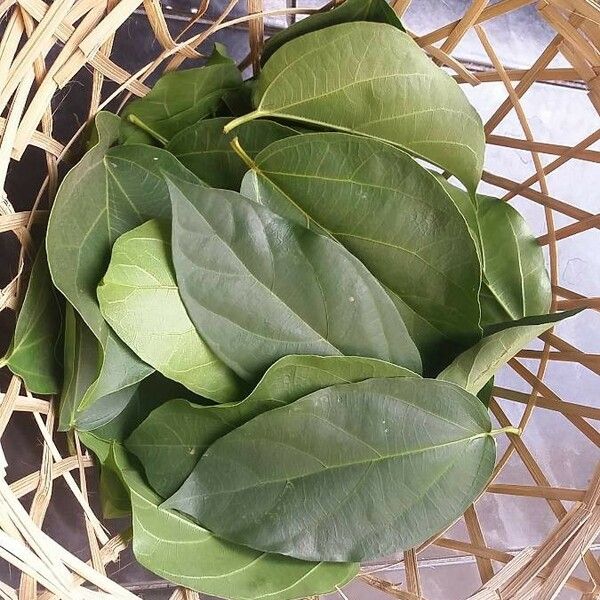
Plant Overview
Known as the "Grass Jelly Shrub" or Cincau Perdu, Premna oblongifolia is a tropical treasure primarily celebrated in Southeast Asian kitchens. Unlike the climbing vines often used for jelly, this plant grows as a sturdy, upright shrub, making it a versatile addition to edible landscapes. In local folklore, it is considered a "cooling" plant, used for centuries to balance the body's heat during humid tropical summers.
🔍 How to Identify
- 🍃 The Foliage: The leaves are oblong (as the name suggests), glossy green, and typically grow in opposite pairs. They have a slightly papery texture when dried but are soft and pliable when fresh.
- 🪵 Growth Habit: It maintains a shrubby, bushy form that can reach up to 2–4 meters if not pruned, with woody stems that darken as the plant matures.
- 🌼 The Flowers: It produces tiny, inconspicuous greenish-white flowers in branched clusters, which eventually turn into small, dark, berry-like fruits.
🏡 In Your Garden
- 💧 Thirsty Tendencies: While it is a hardy grower, this shrub needs consistent moisture to produce the high-quality, succulent leaves required for jelly-making. If the soil dries out completely, the leaf edges will quickly turn crisp and brown.
- ☀️ Light & Space: It thrives in dappled sunlight or partial shade. In its native habitat, it lives under the canopy of larger trees, so it appreciates protection from the harsh, direct afternoon sun which can bleach its vibrant green leaves.
⚠️ Safety & Toxicity
- ✅ Status: Non-toxic and edible for humans.
- 🍽️ Details: The leaves are widely consumed as "Cincau Hijau" (Green Grass Jelly). However, as with any ornamental-turned-edible plant, ensure it hasn't been treated with chemical pesticides before harvesting. For pets, it is generally considered safe, though ingesting large amounts of raw leaves may cause minor digestive upset.
✨ Fun Fact
- 🧪 Natural Chemistry: You don't need heat to turn these leaves into jelly! The leaves are packed with natural pectin. By simply crushing the leaves in room-temperature water and letting the liquid sit, it will set into a firm, emerald-green gelatin all on its own.

Detailed Care Instructions
To grow Premna Oblongifolia plant, also known as the Mexican Privet, you can follow these steps:
- Choose the right location: The plant thrives in full sun to partial shade. Select a spot with well-drained soil that is rich in organic matter.
- Prepare the soil: If the soil is heavy or clayey, amend it with compost or well-rotted manure to improve drainage and fertility.
- Planting: Dig a hole that is slightly larger than the root ball of the plant. Place the plant in the hole and backfill with soil, making sure the top of the root ball is level with the soil surface. Tamp the soil gently to remove any air pockets.
- Watering: Water the plant thoroughly after planting to help settle the soil and to provide moisture for the newly established roots. Afterward, water regularly, ensuring the soil remains consistently moist.
- Mulching: Apply a layer of organic mulch around the plant to help retain moisture, suppress weeds, and regulate soil temperature.
- Fertilizing: Feed the plant with a balanced slow-release fertilizer in early spring and mid-summer. Follow the instructions on the fertilizer label for proper application.
- Pruning: Prune the plant lightly in early spring to remove any dead, damaged, or crossing branches. This helps to maintain the plant's shape and promote healthy growth.
- Pests and diseases: Keep an eye out for common pests like aphids, scale, or spider mites. Use appropriate insecticidal soaps or horticultural oils to control infestations. Ensure good air circulation around the plant to prevent fungal diseases.
- Winter care: Mexican Privet is quite hardy, but young plants may benefit from a layer of mulch around the base to protect against freezing temperatures. Watering should be reduced during winter, but the soil should not dry out completely.
By following these steps, you can successfully grow Premna Oblongifolia plant in your garden. Remember to monitor the plant's health, provide adequate care, and make adjustments as needed based on the specific conditions of your area.
To properly water Premna oblongifolia plants, it is important to consider the specific needs of the plant in terms of moisture. Here is a detailed guide on how to water this particular plant:
- Understand the plant's moisture requirements: Before watering, it is crucial to know how much water this particular species needs. Premna oblongifolia prefers slightly moist soil at all times, but it should not be sitting in waterlogged conditions. It is essential to strike a balance between keeping the soil moist and avoiding excessive moisture, as this can lead to root rot.
- Check the soil moisture: To determine whether your Premna oblongifolia plant needs watering, check the soil moisture level. Insert your finger about an inch into the soil near the base of the plant. If it feels dry at this depth, it is time to water the plant. However, if the soil feels slightly moist, it is best to wait a bit longer before watering.
- Watering frequency: The frequency of watering will depend on various factors, such as the climate, pot size, and environmental conditions. As a general guideline, water your Premna oblongifolia plant when the top inch of soil feels dry. This might range from once a week during the growing season to less frequently during winter when the plant is dormant.
- Watering technique: When watering Premna oblongifolia, use a gentle watering technique to avoid disturbing the soil or causing water to splash onto the foliage. Pour water directly onto the soil around the base of the plant until it begins to come out of the drainage holes at the bottom of the pot. Ensure that the water reaches the roots rather than simply wetting the surface of the soil.
- Drainage considerations: Proper drainage is essential for the health of Premna oblongifolia plants. Make sure the pot has adequate drainage holes to allow excess water to escape. This prevents water from accumulating in the bottom of the pot, which can lead to root rot. If the pot lacks drainage holes, consider repotting the plant into a container that provides better drainage.
- Weather adjustments: Adjust your watering routine based on weather conditions. During hot and dry periods, you may need to increase the frequency of watering. Conversely, reduce watering during cooler periods or when the plant is not actively growing.
Remember, it is always better to slightly underwater Premna oblongifolia than to overwater it. Monitoring the soil moisture and adapting your watering accordingly will help keep your plant healthy and thriving.
- Choose a balanced fertilizer: Select a slow-release or balanced fertilizer formulated for woody plants or tropical plants. This will ensure that your Premna oblongifolia plant receives a well-rounded mix of essential nutrients.
- Dilute the fertilizer: Follow the manufacturer's instructions to dilute the fertilizer with water. The recommended ratio may vary, but a general guideline is to use 1/4 to 1/2 of the recommended dosage. This will prevent overfertilization, which can harm the plant.
- Apply during the growing season: Begin fertilizing when the plant enters its active growing phase, typically during spring or early summer. Avoid fertilizing in fall or winter when growth slows down.
- Water the plant: Thoroughly water the soil around the plant before applying fertilizer. This will help prevent fertilizer burn and ensure even distribution of the nutrients.
- Apply the diluted fertilizer: Slowly pour the diluted fertilizer mixture onto the soil around the base of the Premna oblongifolia plant, taking care to avoid direct contact with the foliage. Apply enough to moisten the soil but avoid saturating it.
- Distribute evenly: If the plant has multiple stems or branches, distribute the fertilizer mixture evenly among them to ensure all parts of the plant receive nutrients.
- Avoid overfertilization: It's important not to overfertilize as this can lead to nutrient imbalances and damage the plant. Always follow the recommended dosage and frequency specified by the fertilizer manufacturer.
- Monitor plant growth: Keep an eye on the plant's overall health and growth. If you notice signs of excessive fertilization, such as burnt or yellowing leaves, it may be necessary to flush the soil with water to remove excess nutrients.
- Adjust fertilization schedule: While the general recommendation is to fertilize every 4-6 weeks during the growing season, observe your Premna oblongifolia plant's response to the fertilizer and adjust the frequency if needed. If it shows signs of vigorous growth without any nutrient deficiencies, you may reduce the frequency of fertilization.
Remember, it's always advisable to do some research specific to Premna oblongifolia or consult with a horticulturist or local plant expert for more precise fertilizing recommendations based on the unique needs of this particular plant species.
Premna oblongifolia is a plant species that requires a specific type of soil composition to thrive. An ideal soil choice for this plant would generally be a well-draining and fertile soil mix. It should have a balanced pH level, usually around 6.0 to 7.5, which is slightly acidic to neutral.
The soil should have good moisture retention capabilities while also allowing excess water to drain away easily. This prevents the roots from becoming waterlogged, which can lead to root rot and other issues. A soil mixture that contains organic matter, such as compost or well-rotted manure, will provide essential nutrients and help maintain soil moisture levels.
When potting the Premna oblongifolia plant, it is recommended to use a soil mix that consists of a combination of peat moss, perlite, and coarse sand. This mixture provides adequate aeration for the roots and allows excess water to drain away. Additionally, the sandy component helps prevent the soil from compacting, promoting better root growth and overall plant health.
It is important to ensure that the soil used for this plant does not contain excessive clay content, as clay soils tend to retain water for longer periods, increasing the risk of waterlogging. Similarly, heavy soils should be avoided as they can hinder proper drainage and root development.
Overall, providing a well-draining, fertile, and slightly acidic to neutral soil mix will create an optimal environment for the Premna oblongifolia plant to grow and flourish.
Premna oblongifolia is a plant that can be propagated through various methods such as seed germination, stem cuttings, and layering. Here are the steps to propagate Premna oblongifolia:
- Seed germination: Collect mature seeds from the plant. Soak the seeds in water for 24 hours to soften the outer seed coat. Sow the seeds in a well-draining seed-starting mix, covering them lightly with soil. Maintain a consistently moist environment by misting regularly. Place the seed tray in a warm location with indirect sunlight. Germination can take several weeks to several months.
- Stem cuttings: Select a healthy and mature stem from the plant that is about 6 to 8 inches long. Using a clean and sharp knife or pruners, cut the stem just below a node (the point where leaves emerge). Remove the lower leaves, leaving only a few on the upper part of the stem. Dip the cut end in a rooting hormone powder to encourage root development. Plant the cutting in a well-draining potting mix, burying about two-thirds of it. Ensure the soil remains consistently moist. Place the pot in a warm location with bright, indirect sunlight. Roots should develop in a few weeks to a few months.
- Layering: Choose a healthy, low-growing branch on the parent plant that can be bent towards the ground. Remove leaves from the bottom 6 to 8 inches of the branch. Make a small wound or scratch on the lower part of the branch where it will come into contact with the soil. Dig a small hole in the soil next to the parent plant and bury the wounded section of the branch, leaving the top part above ground. Secure the branch to the soil with a small stake if needed. Keep the soil consistently moist and protect the area from wind and extreme weather conditions. Once roots form, which can take several months, sever the new plant from the parent plant and transfer it to a separate container.
Remember to provide the propagated Premna oblongifolia plants with adequate water, light, and appropriate growing conditions to ensure their healthy growth.








