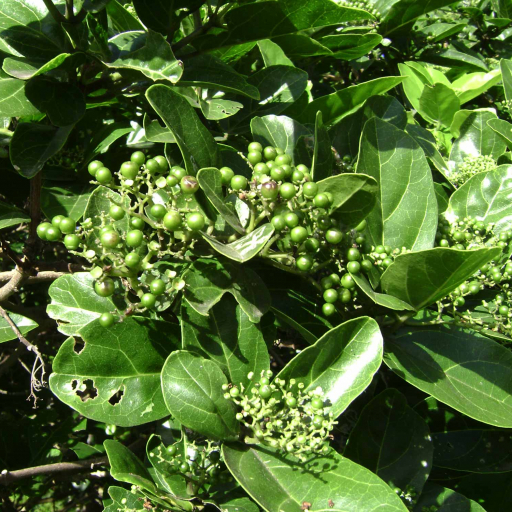
Plant Overview
Known affectionately as the Headache Tree or Coastal Premna, this resilient evergreen is a superstar of the tropical coastline. Whether it is growing as a sprawling shrub in the wild or a meticulously wired Bonsai in a ceramic pot, it is celebrated for its incredible hardiness and ability to bounce back from heavy pruning. In many Pacific cultures, it is a "living pharmacy," traditionally used to treat everything from fevers to migraines.
🔍 How to Identify
- 🍃 The Foliage: The leaves are usually bright green, glossy, and arranged in opposite pairs. While the name serratifolia suggests "saw-toothed" edges, the leaves can actually range from perfectly smooth to slightly wavy or serrated.
- 🌼 The Blooms: It produces small, inconspicuous clusters of greenish-white flowers at the ends of its branches. These flowers possess a distinct, slightly musky fragrance that attracts a variety of local pollinators.
- 🍒 The Berries: Following the flowers, small, round fruits appear. They start green and ripen into a deep, glossy purple or black color, looking much like tiny peppercorns.
🏡 In Your Garden
- ✂️ A Pruning Dream: This plant is one of the best candidates for the art of Bonsai. Because it grows quickly and has a "forgiving" nature, it allows hobbyists to experiment with dramatic shapes and frequent trimming without the plant skipping a beat.
- 🌊 Salt and Wind Resistance: In the landscape, it is an excellent choice for coastal gardens. It acts as a natural windbreak and isn't bothered by salty sea breezes that would wither more sensitive garden plants.
- 🪴 Soil Preference: It isn't picky about soil quality but demands good drainage. If kept as a houseplant or Bonsai, it prefers high humidity and consistent moisture—never let the root ball dry out completely.
⚠️ Safety & Toxicity
- 🟢 General Status: Premna serratifolia is generally considered non-toxic to humans and is widely used in traditional medicine.
- 🐾 Pet Caution: While not listed as a major toxin, it is always best to keep pets from chewing on the leaves, as the high concentration of essential oils in the foliage can cause mild stomach upset or drooling in curious cats and dogs.
✨ Fun Fact
The "Headache Tree" nickname isn't just a myth; in traditional Melanesian and Indian medicine, the leaves are crushed and inhaled, or applied as a poultice to the forehead, to provide cooling relief from intense sinus pressure and migraines!

Detailed Care Instructions
| Humidity | Normal |
| Lighting | Part Sun |
| Difficulty | Easy |
| Hibernation | Cold Period |
To grow a Premna Serratifolia plant, also known as the Aralu or Indian Pandan, you can follow these steps:
- Obtaining seeds or saplings: You can acquire seeds or saplings either from a local nursery or online seed banks. Choose a reliable source to ensure the highest quality plant material.
- Soil selection: Premna Serratifolia prefers a well-draining soil mix. You can prepare a soil mixture using equal parts of garden soil, sand, and organic compost. This will ensure good drainage and nutrient availability.
- Pot selection: Use a well-draining pot with sufficient drainage holes to avoid waterlogging. Make sure the pot is large enough to accommodate the growth of the plant.
- Planting: If using seeds, soak them in water for 24 hours prior to planting. Sow the seeds at a depth of 1/4 inch in the prepared soil mix, or gently transplant the saplings into the pot. Water the soil gently after planting to settle it.
- Sunlight: Premna Serratifolia prefers partial shade to full sun exposure. Place the potted plant in a location where it receives bright, indirect sunlight for around 4-6 hours a day.
- Watering: Keep the soil evenly moist but not waterlogged. Water the plant whenever the top inch of soil feels dry. Avoid overwatering as it may lead to root rot.
- Fertilization: Use a balanced, slow-release fertilizer to provide essential nutrients to the plant. Follow the instructions on the fertilizer package and apply it every 2-3 months during the growing season.
- Pruning: Regularly prune the plant to maintain its shape and encourage compact growth. Remove any dead or diseased leaves, stems, or flowers to promote healthy growth.
- Pests and diseases: Keep an eye out for any pests like aphids, mealybugs, or spider mites. Treat them promptly using organic insecticides or by wiping the leaves with a mild soapy water solution. Premna Serratifolia is generally resistant to diseases if the growing conditions are suitable.
- Winter care: If you live in a region with cold winters, protect your Premna Serratifolia plant by moving it indoors or providing a frost cover to shield it from freezing temperatures.
By following these steps and providing proper care, your Premna Serratifolia plant should grow and thrive.

Place in a bright room that is sun drenched almost all day. Or directly in a south-facing window.

To water this particular plant, you should use a watering can or hose with a gentle flow to avoid damaging the delicate leaves and stem. It is important to allow the soil to dry out slightly between waterings, as overwatering can lead to root rot and other issues. Before watering, check the soil moisture level by inserting your finger into the soil up to your second knuckle; if the soil feels dry, it is time for watering. Be sure to water all parts of the soil evenly, and avoid getting water on the foliage as this can encourage the growth of fungal diseases. It is generally recommended to water Premna Serratifolia plants once or twice a week, depending on the climate and humidity levels in your area.
To fertilize the plant, use a balanced fertilizer with an equal ratio of nitrogen, phosphorus, and potassium. Mix the fertilizer in water according to the package instructions and apply it to the soil around the plant every two weeks during the growing season. Avoid getting the fertilizer on the leaves or stems of the plant as this can cause burns. Water the plant thoroughly after fertilizing to prevent any salts from building up in the soil.
Premna serratifolia is a plant that prefers well-draining soil that is rich in organic matter. The soil should have a pH level of around 6.5 to 7.5. It is recommended to use a mix of loamy soil, sand, and compost for this plant. The soil should be moist, but not waterlogged, and should be allowed to dry out slightly before watering again. It is important to avoid using heavy clay soils or soils that are too sandy, as these can lead to poor drainage and nutrient deficiencies. Additionally, adding a slow-release fertilizer to the soil can help provide the necessary nutrients for healthy growth.
To propagate this plant, start by taking a cutting about 4-6 inches in length from healthy, mature stems. Remove any leaves from the bottom 2 inches of the stem, making sure there are still a few leaves left on the top.
Dip the cut end in rooting hormone to promote root growth. Plant the cutting in a pot filled with well-draining soil. Keep the soil consistently moist and place the pot in a warm, bright location - but out of direct sunlight.
After a few weeks, check for root growth by gently tugging on the plant. If there is resistance, roots have formed and the plant is ready to be transplanted into a larger pot or directly into the ground.
It is best to propagate in spring or summer when the plant is actively growing.








