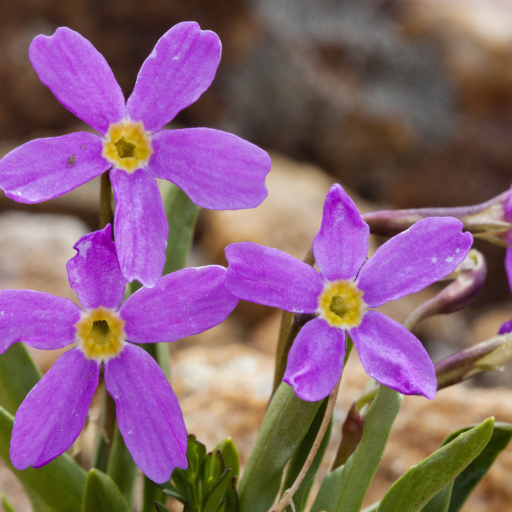
Plant Overview
The Narrowleaf Primrose is a hardy gem of the high peaks, often affectionately called the "Alpine Fairy Flower." This tiny perennial thrives where most plants surrender, hugging the rocky ridges of the Southern Rocky Mountains. It is one of the first splashes of color to emerge as the mountain snowpack begins its spring retreat, signaling the start of the alpine growing season.
🔍 How to Identify
- 🌸 The Bloom: Look for solitary, five-petaled flowers that range from deep magenta to delicate rose-pink. Each bloom features a distinct, bright yellow "eye" at the center that guides pollinators.
- 🍃 The Foliage: True to its name (angustifolia means narrow-leafed), it grows in a tight basal rosette of smooth, narrow, strap-shaped green leaves.
- 📏 Stature: It is a classic "belly plant"—staying incredibly low to the ground (rarely exceeding 2-3 inches) to escape the punishing force of high-altitude winds.
🏡 In Your Garden
- 🏔️ The Alpine Challenge: This plant is an "extremophile" and can be quite finicky in traditional backyard settings. It craves the cool, thin air of high elevations and often suffers in the heat and humidity of lowland summers.
- 🪨 Rock Garden Specialist: If you wish to cultivate it, it requires a dedicated rock garden or "trough" setup. It needs exceptional drainage and gritty, mineral-rich soil that mimics a mountain scree slope, ensuring its roots stay cool and moist but never soggy.
⚠️ Safety & Toxicity
- 🟢 Status: Generally non-toxic.
- 👐 Skin Sensitivity: While not considered poisonous to pets or humans, many species in the Primula genus contain primin, an oil that can cause mild skin irritation or an itchy rash in sensitive individuals. It is best to wear gloves when dividing or planting.
✨ Fun Fact
Primula angustifolia is a master of the "fast life." Because the summer at 11,000 feet is so short, this plant has been observed blooming while still partially surrounded by melting snow, completing its entire flowering and seeding cycle in just a few weeks before the frost returns.

Detailed Care Instructions
To grow Primula angustifolia, also known as narrow-leaf primrose, you can follow these steps:
- Select a suitable location: Primula angustifolia prefers partial shade or filtered sunlight, so choose a spot in your garden that receives morning sun or dappled light throughout the day. It also prefers moist, well-draining soil.
- Prepare the soil: Amend the soil with organic matter like compost or well-rotted manure to improve drainage and fertility. Remove any weeds or debris from the planting area.
- Planting: Dig a hole that is slightly larger than the root ball of the plant. Place the primrose into the hole, making sure that the crown of the plant (where the roots meet the stem) is level with the surrounding soil. Gently backfill the hole with soil and firm it down lightly.
- Watering: After planting, water thoroughly to settle the soil and ensure good root-to-soil contact. Keep the soil consistently moist, but avoid waterlogging or allowing it to dry out completely. Mulching the soil around the plant can help retain moisture.
- Fertilization: Primula angustifolia generally does not require much fertilizer. However, if you notice weak growth or pale foliage, you can apply a balanced, slow-release fertilizer according to the manufacturer's instructions.
- Pruning and Deadheading: Remove faded or wilted flowers by pinching them off at the base. This process, known as deadheading, promotes continuous blooming. Additionally, prune any yellowing or damaged leaves to maintain the overall health and appearance of the plant.
- Winter care: In regions with harsh winters, apply a layer of mulch around the base of the plant to protect it from cold temperatures. The mulch will help insulate the soil and prevent freezing.
- Pests and diseases: Primula angustifolia is generally relatively resistant to pests and diseases. However, keep an eye out for snails, slugs, aphids, or powdery mildew. Using natural or organic pest control methods can help if these issues arise.
By following these steps, you should be able to successfully grow Primula angustifolia in your garden. Remember to pay attention to its specific needs for light, moisture, and soil conditions to ensure it thrives.

Place in a bright room that is sun drenched almost all day. Or directly in a south-facing window.

To water this plant, make sure to keep the soil moist but not waterlogged. Allow the top inch of soil to dry out slightly before watering. Water at the base of the plant, being careful not to wet the leaves or flowers. It is best to water early in the morning or late in the day to avoid evaporation. During hot and dry weather, increase watering frequency as needed. Use a watering can or drip irrigation system to deliver water gently and evenly. Avoid getting water on the plant's foliage as this can lead to disease.
To fertilize this plant, use a balanced fertilizer with equal parts nitrogen, phosphorus and potassium. Apply the fertilizer once a month during the growing season, from spring to fall. Dilute the fertilizer to half strength and water the plant thoroughly after fertilizing. Avoid fertilizing during the winter months when the plant is dormant.
The ideal soil for Primula Angustifolia should be a well-draining and slightly acidic soil with a pH level between 5.5-6.5. It should also be rich in organic matter and have good moisture retention. Avoid using heavy clay soils or soils that are too alkaline as they can harm the plant's growth and development. It's recommended to mix in some peat moss or compost to improve soil structure and nutrient availability for the plant. Additionally, adding a layer of mulch to the soil surface will help retain moisture and regulate soil temperature.
To propagate this plant, take a cutting from a healthy and mature plant. Cut a stem that is about 10-15 centimeters in length and has a few leaves attached to it. Remove the lower leaves from the stem and dip the cut end in rooting hormone powder. Plant the stem in a pot with well-draining soil and keep it moist. Place the pot in a location with indirect light and maintain a consistent temperature of around 18-21 degrees Celsius. Within a few weeks, the cutting should develop roots and new growth. Once the young plant has developed a strong root system, it can be transplanted into a larger pot or garden bed.








