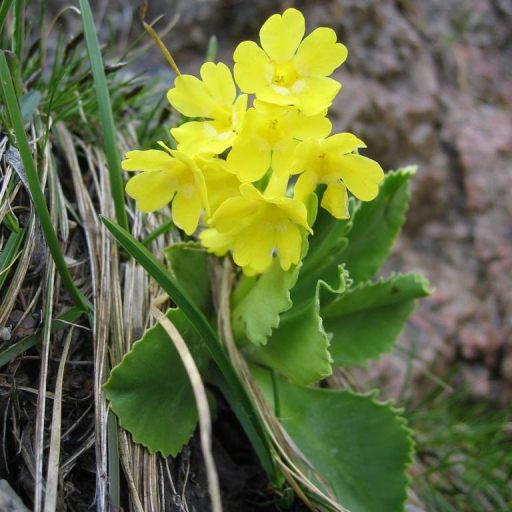
Plant Overview
The Primula auricula, often affectionately called "Bear’s Ear" for its thick, velvety leaves, is the true aristocrat of the primrose family. Originally hailing from the rugged, rocky slopes of the European Alps, these hardy perennials became a floral obsession in 17th-century Europe. They are the perfect blend of alpine toughness and delicate, ornate beauty, looking almost as if a Victorian artist hand-painted their petals.
🔍 How to Identify
- 👂 The "Bear’s Ear" Foliage: The leaves form a low-growing rosette; they are thick, fleshy, and often have a subtle silvery-grey sheen or a scalloped edge.
- 🎨 The Eye-Catching Bloom: Flowers appear in clusters on sturdy stems, featuring a distinct, often contrasting "eye" in the center surrounded by rings of vivid, saturated colors ranging from deep purple to buttery yellow.
- ❄️ The Farina Coating: Many prize-winning varieties are dusted with a fine, white flour-like powder called "farina," which gives the flowers and stems a ghostly, frosted appearance.
🏡 In Your Garden
- 🏔️ Mountain Roots: Because they naturally grow in rocky crevices, they despise "wet feet." They require extremely well-draining, gritty soil to prevent their roots from rotting during damp winters.
- 🌬️ Cool and Collected: Unlike many garden favorites, Auriculas hate sweltering heat. They perform best in a spot that catches the morning sun but stays shaded and cool during the heat of the afternoon.
- 💧 Watering Wisdom: If your variety has the powdery farina, always water at the base of the plant. Getting water on the leaves or flowers can wash away that beautiful "dust," leaving the plant looking mottled.
⚠️ Safety & Toxicity
- 🚫 Mildly Toxic: While not considered high-risk, all parts of the plant can cause mild stomach upset (nausea or vomiting) if ingested by curious pets or small children.
- 🧤 Skin Sensitivity: Some individuals may experience "Primula dermatitis," a mild itchy rash caused by tiny hairs and a substance called primulin on the leaves. It is wise to wear gloves during heavy pruning or repotting.
✨ Fun Fact
In the Victorian era, "Auricula Theaters" were a massive trend! These were specialized, tiered wooden stages—usually painted black—designed to showcase potted Auriculas. The dark background made the vibrant, "theatrical" colors of the flowers pop, treating each plant like a performer on a stage.

Detailed Care Instructions
| Humidity | Normal |
| Lighting | Part Sun |
| Difficulty | Medium |
| Hardiness Zones | 7 - 10 |
To grow Primula auricula plants successfully, you can follow these steps:
- Purchase high-quality seeds or young plants from a reputable nursery or garden center.
- Choose a suitable location for your plant. Primula auricula prefers a cool, shady spot with well-draining soil. It is a good idea to provide some protection from direct sunlight, especially during hot summer days.
- Prepare the soil by adding organic matter such as compost or well-rotted manure to improve its fertility and drainage.
- Sow the seeds or transplant the young plants in early spring or late summer/early autumn. If starting from seeds, sprinkle them lightly on the soil surface, as they require light to germinate.
- Water the plant regularly, keeping the soil consistently moist but not waterlogged. Avoid overwatering, as excessive moisture can cause root rot.
- Mulch around the plant to conserve moisture, suppress weed growth, and regulate soil temperature.
- Fertilize the plants every 4-6 weeks during the growing season with a balanced, water-soluble fertilizer. Follow the package instructions for proper application.
- Pinch off any dead flowerheads or yellowing leaves to promote healthy growth and encourage further blooming.
- Protect the plant from extreme cold temperatures, especially during the winter season. Consider covering the plant with a frost cloth or moving it to a sheltered location if severe cold is expected.
- Additionally, you can divide and repot the plants every few years to prevent overcrowding and maintain their vigor. This is best done during early spring or after flowering.
With proper care and attention, your Primula auricula plant will reward you with colorful, delicate blooms.

Place in a bright room that is sun drenched almost all day. Or directly in a south-facing window.

One way to water this plant is to check the soil moisture regularly by sticking your finger into the top inch of soil. If it feels dry, it is time to water. Another method is to place the plant in a saucer of water and allow it to absorb the moisture from the bottom up. It is important not to allow the soil to become waterlogged or to let the plant sit in standing water, as this can lead to root rot. If using a watering can or hose, aim to water the soil around the base of the plant rather than getting water on the leaves or flowers. It is also recommended to use room-temperature water rather than cold water straight from the tap.
- Choose a high-quality, well-balanced fertilizer that has a balanced ratio of nitrogen, phosphorous, and potassium.
- Apply the fertilizer in early spring before the plant starts actively growing.
- Dilute the fertilizer according to the manufacturer's instructions.
- Apply the fertilizer directly to the soil around the base of the plant.
- Avoid getting the fertilizer on the leaves or flowers as this can cause fertilizer burn.
- Water the plant after fertilizing to help the nutrients penetrate the soil.
- Repeat this process once a month during the growing season, stopping fertilization in late summer.
- Always read and follow the instructions on the fertilizer packaging.
The ideal soil for the plant in question should be well-draining and slightly acidic. It should contain a mixture of organic matter such as leaf mold and peat moss, along with perlite or sand to improve drainage. The plant prefers a soil that is moist but not waterlogged, so it is important to avoid compacted or heavy soils. The pH level of the soil should be kept between 6.0 and 6.5. When planting, be sure to loosen the soil and mix in some compost before placing the plant in the hole. It is important to keep the soil consistently moist and to avoid letting it dry out completely.
One method for propagating this plant is by removing offsets from the parent plant. This can be done by gently digging into the soil around the base of the parent plant and carefully separating the offsets from the main stem. It is important to ensure that each offset has its own root system. These offsets can then be planted in their own pots with well-draining soil and kept in a shady location. Another method involves taking leaf cuttings from the parent plant. This involves carefully removing a healthy leaf from the parent plant, cutting it into sections, and placing each section in a pot with moist, well-draining soil. The cuttings should be kept in a cool, shady location and misted regularly until they begin to root and grow.
Common pests of the auricula include Aphids, thrips, larvae, snails. Make a habit of checking your auricula frequently for pests so that any infestations can be caught and managed early.








