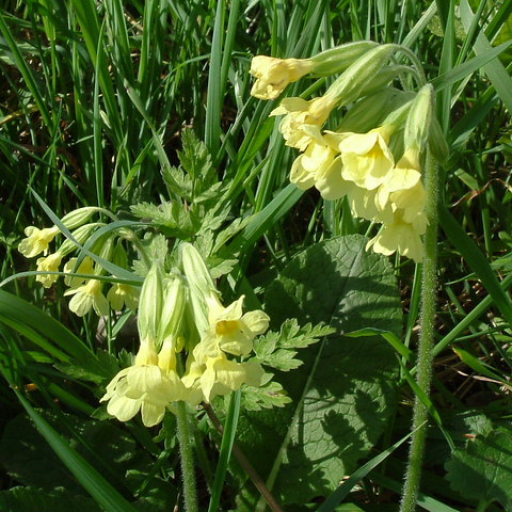
Plant Overview
Commonly known as the Oxlip, this elegant woodland beauty is a classic herald of spring. Often found dancing in the dappled light of ancient European forests, it bridges the visual gap between its cousins, the Primrose and the Cowslip. In folklore, Oxlips were sometimes tucked under pillows to induce dreams of a future sweetheart.
🔍 How to Identify
- 🌼 One-Sided Blooms: Unlike the Primrose, the Oxlip features a tall, leafless stem where the pale yellow flowers all hang gracefully to one side.
- 🍃 Crinkled Foliage: The leaves form a basal rosette and are distinctly "tongue-shaped" with a textured, wrinkled surface and hairy undersides.
- 🎺 Trumpet Centers: Each flower is a soft, buttery yellow with a deeper apricot-colored ring at the very center of the tube.
🏡 In Your Garden
- 🌳 The Woodland Vibe: Because they are native to forest floors, they thrive in heavy, damp, clay-rich soils. They are much thirstier than Cowslips and will wilt quickly if left in parched, sandy earth.
- 🌥️ Cool Shadows: They are perfect for those "difficult" shady spots. They prefer the cool breath of early spring; once the summer heat hits, they appreciate being tucked under the shade of deciduous shrubs or trees.
⚠️ Safety & Toxicity
- 🐾 Mildly Toxic: Like many members of the Primulaceae family, the Oxlip contains primin, which can be a mild stomach irritant if leaves or flowers are ingested by curious cats or dogs.
- 🧤 Skin Sensitivity: Some gardeners may experience a mild "primrose itch" or contact dermatitis after handling the leaves. If you have sensitive skin, it is best to wear gloves during maintenance.
✨ Fun Fact
The Oxlip played a starring role in the history of science! Charles Darwin spent years studying the "Pin" and "Thrum" flower structures of Primula elatior, using them to prove how plants evolved complex ways to ensure they cross-pollinate rather than breeding with themselves.

Detailed Care Instructions
| Humidity | High |
| Lighting | Full Sun |
| Difficulty | Medium |
| Temperature | 10°C - 20°C |
| Hardiness Zones | 4 - 8 |
To grow Primula Elatior or oxlip plants, follow these steps:
- Choose a suitable location: Primula Elatior plants prefer partial shade to full shade. Find a spot in your garden or yard that receives limited direct sunlight, especially during the hottest part of the day.
- Prepare the soil: The plants prefer moist, well-drained soil that is rich in organic matter. Amend the soil with compost or well-rotted manure to improve its fertility. Make sure the soil has good drainage to prevent waterlogging.
- Planting: The best time to plant Primula Elatior is in early spring, just as the ground starts to warm up. Dig a hole slightly larger than the root ball of the plant and place it in the hole. Backfill with soil, gently firming it around the roots. Space the plants about 6-12 inches apart.
- Watering: Keep the soil consistently moist but not waterlogged. Primula Elatior plants thrive in damp conditions. Water regularly, especially during dry spells, and avoid letting the soil dry out completely.
- Mulching: Apply a layer of organic mulch around the plants to help conserve moisture, suppress weed growth, and provide insulation to the roots. Mulch also helps in keeping the soil temperature cool.
- Fertilization: Primula Elatior plants don't require heavy feeding. However, you can apply a balanced slow-release fertilizer in early spring to provide some nutrients to the plants.
- Pruning: Deadhead the flowers regularly to encourage more blooms and prevent the plant from setting seeds. Pruning back any brown or damaged leaves or stems will help maintain the plant's overall health and appearance.
- Winter care: Primula Elatior is a hardy perennial plant that can withstand frost and colder temperatures. However, applying a layer of mulch in late fall can help protect the plant and its roots during severe winters.
- Propagation: Primula Elatior can be propagated by division. After a few years, when the clumps become crowded, dig up the plants and gently separate them into smaller individual clumps. Replant the divisions in prepared soil.
By providing the right growing conditions such as shade, moisture, and well-draining soil, and adhering to the care tips mentioned, you can successfully grow Primula Elatior plants in your garden.

Place in a bright room that is sun drenched almost all day. Or directly in a south-facing window.

To water this plant, make sure the soil is slightly damp before watering. Use a watering can or watering hose to gently pour water onto the soil around the base of the plant. Avoid watering the foliage as this can encourage disease. Water thoroughly but do not allow the soil to become waterlogged, as this may cause root rot. Check the soil moisture level regularly to determine when watering is necessary.
Primula Elatior should be fertilized every two weeks with a balanced fertilizer. Use a water-soluble fertilizer that is high in nitrogen for the first few weeks and switch to a fertilizer that is higher in phosphorus and potassium as the plant grows. Be sure to dilute the fertilizer according to the package instructions and apply it to the soil around the base of the plant. During the growing season, fertilize regularly to ensure healthy growth and vibrant blooms.
Primula Elatior plant requires well-draining soil that is rich in organic matter, with a slightly acidic pH level. The soil should be moist but not waterlogged, as the plant prefers consistent moisture but can easily develop root rot in overly saturated soils. It is important to avoid using heavy or clay-based soils, as they can restrict root growth and drainage. Adding perlite or sand to the soil mix can help increase drainage. Additionally, providing regular fertilization with a balanced fertilizer can help to promote healthy growth and flowering.
To propagate this plant, you will need to carefully divide the plant's root system. Begin by gently removing the plant from its pot or garden bed and brushing away any excess soil. Next, use a sharp, clean knife to cut the root ball into sections, making sure that each section has a healthy set of leaves and roots. Place each section into a pot filled with well-draining soil, and keep the soil moist until new growth appears. In about 2-4 weeks, new roots should begin to grow, and the plant should begin to acclimate to its new environment.
Common pests of the oxlip include Aphids, snails. Make a habit of checking your oxlip frequently for pests so that any infestations can be caught and managed early.








