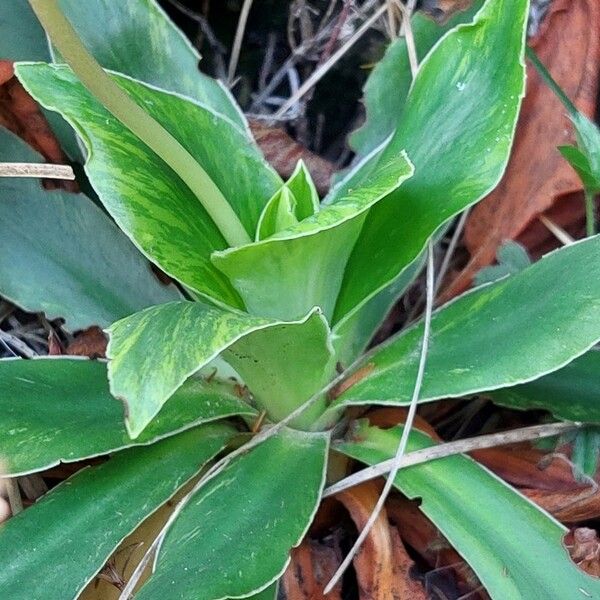
Plant Overview
Often called the Lombardy Primrose, this hardy alpine beauty hails from the sun-drenched rocky crevices of the Italian Alps. Unlike its soft-leaved woodland cousins, this primrose looks as though it is wearing a waxy suit of armor to survive the harsh mountain winds. It is a prized jewel for rock garden enthusiasts, offering a regal splash of purple against the backdrop of grey stone.
🔍 How to Identify
- 🍃 The Glaucous Leaves: The foliage is stiff, leathery, and a distinct blue-green (sea-green) color. Unlike common primroses, these leaves are smooth and lack a fuzzy or crinkled texture.
- 🌸 Vibrant Blooms: Each plant produces clusters of rosy-purple to deep lilac flowers, usually featuring a tiny white or pale yellow "eye" at the center.
- 📏 Sturdy Stems: The flowers sit atop short, reddish-tinted stalks that rise just high enough to clear the foliage, keeping a compact, mounded shape.
🏡 In Your Garden
- 🪨 The Limestone Lover: This species is "calcicole," meaning it thrives in limestone-rich environments. In your garden, it will be happiest in a stone trough or a gritty rockery where the drainage is impeccable.
- ❄️ Cool Roots, Sun-Kissed Leaves: While it enjoys the sun, it hates "hot feet." Tucking it into a north-facing crevice or placing a flat stone over its root zone helps mimic the cool mountain crevices it calls home.
⚠️ Safety & Toxicity
- 🧴 Skin Sensitivity: Like many members of the Primula family, this plant can produce primin, an oil that causes mild skin irritation or an itchy rash in sensitive individuals.
- 🐾 Pet Safety: If ingested, it may cause mild stomach upset in cats and dogs. It is best placed in elevated rock pockets where curious pets cannot easily reach it.
✨ Fun Fact
🏔️ The name glaucescens translates to "becoming sea-green." This refers to the "epicuticular wax" on the leaves, a natural biological coating that protects the plant from intense UV radiation and prevents water loss at high altitudes.

Detailed Care Instructions
To grow Primula Glaucescens, also known as the Glaucescent Primrose, follow these steps:
- Climate: Primula Glaucescens is native to the Himalayas and prefers cool temperatures. It thrives in areas with mild summers and cold winters. Ensure that the climate is suitable for this plant before growing it.
- Choose a suitable location: Primula Glaucescens prefers partial shade and well-draining soil. Select a location with dappled sunlight or an area that receives morning sun and afternoon shade. The soil should be rich in organic matter and have good drainage.
- Sowing seeds: Start by obtaining Primula Glaucescens seeds from a reputable source. Sow the seeds directly into the ground or in a seed tray indoors. If starting indoors, sow the seeds in a pot or tray filled with moist seed compost and cover them with a thin layer of soil. Keep the soil consistently moist, and the seeds should germinate in a few weeks.
- Transplanting: Once the seedlings have grown large enough to handle, transplant them into individual pots or directly into the garden bed. Choose a location that matches the plant's preferences for shade and soil conditions. Space the plants about 6-8 inches apart to allow for proper growth.
- Watering and care: Primula Glaucescens enjoys consistently moist, well-drained soil. Water the plants regularly, especially during dry spells or hot weather. Avoid overwatering, as this can lead to root rot. Mulching around the plants can help retain moisture and regulate soil temperature.
- Fertilizer: Apply a balanced organic fertilizer in spring or early summer to promote healthy growth. Follow the recommended dosage on the fertilizer packaging, as too much fertilizer can harm the plant.
- Remove spent blooms: Deadhead the flowers as they fade to encourage continuous blooming and prevent the plant from putting energy into seed production.
- Winter care: Primula Glaucescens is hardy in colder regions and can withstand frost and snow. Ensure the soil is well-drained to avoid waterlogging during winter. Mulching around the base of the plant can also provide some protection from extreme cold.
By following these steps, you should be able to grow Primula Glaucescens successfully. Always monitor the plant's health and adjust care accordingly if needed.

Place in a bright room that is sun drenched almost all day. Or directly in a south-facing window.

To water this particular plant, it is important to take into consideration its natural habitat and growing conditions. Primula Glaucescens typically prefers moist soil, but is prone to root rot if overwatered.
One way to water this plant is to check the top inch of soil regularly to see if it feels dry to the touch. If it does, it is time to water. It is important to make sure that the water can drain out of the bottom of the pot to prevent standing water that can lead to root rot.
When watering, slowly pour water into the soil until it is fully saturated. Allow excess water to run out of the bottom of the pot. It is recommended to avoid getting water on the leaves of the plant as this may lead to fungal diseases.
It is also important to note that Primula Glaucescens may require more frequent watering during periods of dry or hot weather. Alternatively, it may need less frequent watering during cooler weather or in indoor environments with lower humidity.
Overall, providing consistent moisture without overwatering is key to properly watering this plant.
To fertilize this plant, apply a balanced fertilizer such as 10-10-10 or 20-20-20 in early spring or late fall. Mix the fertilizer in water according to package instructions, then apply to the soil around the base of the plant. Repeat the application every two to three weeks during the growing season. Avoid over-fertilizing, as this can lead to leaf burn or other damage. Water the plant after fertilizing to help the nutrients reach the roots.
The ideal soil for this plant is loose and well-draining, with a slightly acidic to neutral pH level. The soil should be rich in organic matter and nutrients, such as compost or well-rotted manure, to ensure healthy growth and flower production. Adding a layer of mulch around the base of the plant can also help to retain moisture and regulate soil temperature. It is important not to use heavy or compacted soils or those that are prone to waterlogging, as this can lead to root rot and other issues. A soil mixture containing equal parts of peat moss, perlite, and vermiculite can provide a suitable growing medium for this plant.
To propagate this plant, you can use a few different methods, including division, leaf cuttings, and seed propagation. Division is the simplest method, and involves separating a section of the plant that has its own set of roots and replanting it in a new location. This can be done in the spring or fall, when the plant is not actively growing.
Leaf cuttings are another option, and involve taking a leaf cutting from the plant and rooting it in a pot of soil or water. To do this, select a healthy leaf and make a clean cut near the base of the stem. Remove the lower leaves from the stem, leaving only a few at the top. Dip the cut end of the stem in rooting hormone, and then plant it in a pot of soil or water. Keep the soil or water moist and place the pot in a warm, bright location. The cutting should root in a few weeks.
Seed propagation is also an option, but can be more challenging. Collect seeds from the plant in the fall, and store them in a cool, dry location until spring. Then, plant the seeds in a pot of soil, covering them lightly with soil. Keep the soil moist and place the pot in a bright, warm location. The seeds should germinate in a few weeks.








