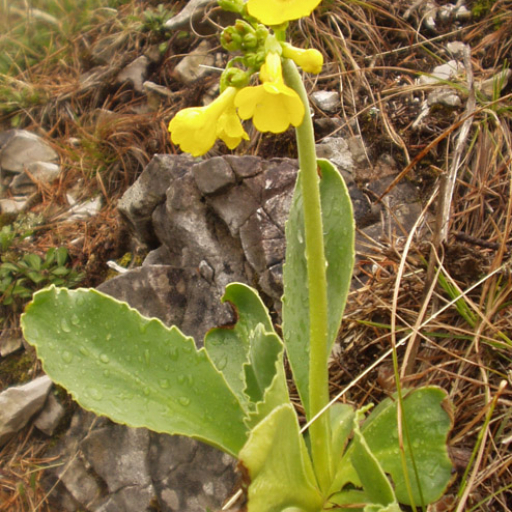
Plant Overview
Known famously as the Mountain Cowslip or by its charming historical name, the Bear’s Ear, Primula lutea is a golden jewel of the European Alps. This hardy alpine perennial has been a favorite of mountain hikers and "florists"—specialized gardeners—for centuries. It carries a sense of old-world elegance, looking just as at home tucked into a rocky crevice as it does in a Victorian-style terracotta pot.
🔍 How to Identify
- 👂 The "Bear's Ear" Foliage: The leaves are thick, fleshy, and spoon-shaped. Their slightly fuzzy texture and rounded edges are what earned them the nickname related to a bear's ear.
- 🌞 Brilliant Umbels: The flowers are a vivid, sunny yellow with a distinct white or pale center. They grow in small clusters (umbels) atop a sturdy, leafless stem that rises from the center of the leaf rosette.
- ❄️ The "Farina" Coating: Look closely at the leaves and stems; you might see a fine, silvery-white powder. This is called farina, a natural wax the plant produces to protect itself from intense high-altitude sunlight and dehydration.
🏡 In Your Garden
- ⛰️ Alpine Aspirations: Because it originates from high-altitude rocky slopes, this plant demands exceptional drainage. It hates "wet feet," so adding grit or perlite to your soil mix is essential to prevent the roots from rotting during rainy seasons.
- 🌬️ Cool and Breezy: Unlike many flowering plants that crave heat, Primula lutea thrives in cool, airy conditions. In hotter climates, it appreciates a spot that stays shaded during the scorching afternoon hours to prevent its fleshy leaves from wilting.
⚠️ Safety & Toxicity
- 🚫 Skin Sensitivity: Like many members of the Primrose family, this plant contains primin, an oil that can cause mild skin irritation or contact dermatitis in sensitive individuals. It is best to wear gloves when dividing or pruning.
- 🐾 Pet Watch: While not considered deadly, it can cause stomach upset, vomiting, or drooling if ingested by curious cats or dogs. It’s best kept on a high shelf or in a rockery out of reach of pets.
✨ Fun Fact
In the 17th and 18th centuries, Auriculas (close relatives of P. lutea) became such a status symbol that "Auricula Theatres" were built. These were ornate, tiered wooden stages used to display the plants individually, protecting their delicate "farina" powder from the rain while showing off their colors to neighbors!

Detailed Care Instructions








