Plant Overview
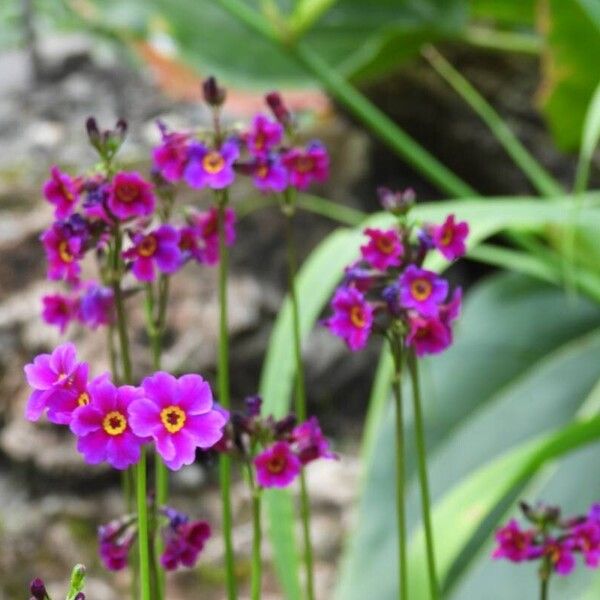
Known as Poison's Primrose or the Candelabra Primula, this striking perennial is a jewel of the damp gardens. Named after the French botanist Jules Poisson, it originates from the high-altitude marshes and stream banks of Southwest China. It is famous for its "layered" look, adding a touch of architectural elegance to boggy areas where other plants might struggle.
🔍 How to Identify
- 🌸 Tiered Blooms: The vibrant magenta to deep purple flowers are arranged in "whorls" or layers around a single tall stalk, resembling a floral candelabra.
- 🍃 Spoon-Shaped Foliage: The leaves are smooth, leathery, and shaped like long spoons (oblanceolate) with slightly toothed edges, forming a low-lying rosette.
- 📏 Sturdy Stature: Unlike the common woodland primrose, this variety stands tall on stiff, upright stems that can reach up to 2 feet (60cm) in height.
🏡 In Your Garden
- 💧 The "Thirsty" Resident: This plant is a true moisture lover. It thrives in "boggy" conditions and is the perfect candidate for the edge of a pond or a rain garden where the soil never fully dries out.
- ⛅ Cool Feet, Bright Face: While it loves bright light to keep its colors vivid, it demands "cool feet." In hotter climates, ensure it is tucked into a spot with afternoon shade to prevent the leaves from scorching.
- 🌱 Soil Preference: It prefers rich, heavy, and slightly acidic soil. Because it has a vigorous root system, it doesn't enjoy being moved once established, so choose its permanent "forever home" carefully.
⚠️ Safety & Toxicity
- 🚫 Status: Mildly toxic to pets and humans.
- 🖐️ Contact Warning: Like many members of the Primula family, the leaves and stems contain primin, an allergen that can cause mild skin irritation or "primula dermatitis" in sensitive individuals. It is best to wear gloves when dividing or pruning.
- 🐾 Pet Safety: If ingested by curious cats or dogs, it can lead to stomach upset or vomiting. Keep it toward the back of the garden bed away from pet pathways.
✨ Fun Fact
Unlike many of its Primrose cousins that disappear entirely in the winter, Primula poissonii is semi-evergreen. In milder climates, its leathery green rosette will persist through the snow, waiting for the first sign of spring to shoot up its floral tiers.

Detailed Care Instructions

Place in a window with dappled sun or a spot in the middle of a room. Or directly in a window facing west or east.

Some plants require more regular watering than others, which should be done every few days. It's critical to maintain the soil moist all of the time. The water requirements of the same plant placed in pots with varying sizes will differ. Because the water in the smaller pot evaporates faster than the water in the larger pot, it will require more watering. Regardless of pot size, the surface should constantly be maintained moist.







