Plant Overview
Known affectionately as the Victorian Christmas Bush, this Australian native is a botanical showstopper that rings in the southern hemisphere's holidays with a snowy explosion of flowers. Unlike the traditional European holly or pine, this "Christmas tree" belongs to the mint family, filling the summer air with a refreshing, spicy fragrance whenever its leaves are brushed.
🔍 How to Identify
- 🍃 The Foliage: Features long, lance-shaped, dark green leaves with serrated (saw-like) edges. When crushed, they release a cooling, menthol-like scent.
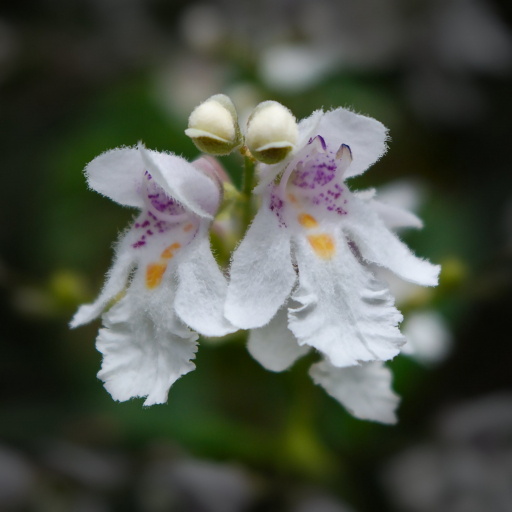
- 🌸 The Bloom: Small, bell-shaped flowers that are typically white or pale mauve. If you look closely inside the "throat" of the flower, you’ll see delicate purple and orange spots.
- 🌳 The Silhouette: It is a vigorous grower that can vary from a medium shrub to a tall, slender tree, often reaching up to 10 meters in its natural forest habitat.
🏡 In Your Garden
- 💧 Gully Roots: Because it naturally evolves in moist forest gullies, this plant hates drying out completely. It prefers "cool feet," so applying a thick layer of organic mulch will help mimic its forest floor origins.
- 🌤️ Dappled Light: While it can handle full sun in cooler climates, it thrives best in part-shade. Protection from harsh, drying winds is essential, as its soft new growth can wilt quickly under stress.
⚠️ Safety & Toxicity
- ✅ Generally Safe: The Victorian Christmas Bush is not considered toxic to humans, dogs, or cats.
- 🌿 Essential Oils: Like many members of the mint family (Lamiaceae), the leaves are rich in essential oils. While not poisonous, eating large quantities of the foliage could cause mild stomach upset in curious pets, and the oils may cause very minor skin tingling for sensitive gardeners.
✨ Fun Fact
The species name Lasianthos is derived from the Greek words lasios (shaggy or hairy) and anthos (flower), referring to the tiny, delicate hairs that cover the blossoms and give them a soft, velvet-like appearance!

Detailed Care Instructions
To grow Prostanthera lasianthos plant, also known as Victorian Christmas bush, follow these steps:
- Choose the right location: Prostanthera lasianthos requires a sunny or partially shaded spot that receives at least 6 hours of direct sunlight per day. The soil should be well-draining and fertile.
- Prepare the soil: Before planting, ensure the soil is well-draining by adding organic matter like compost or well-rotted manure. This will improve soil fertility and drainage.
- Planting: Dig a hole slightly larger than the nursery pot or root ball. Carefully remove the plant from its container, taking care not to disturb the roots too much. Place the plant in the hole and backfill with soil, gently firming it around the roots.
- Watering: Water the plant thoroughly after planting and then regularly during the first growing season to establish root growth. Prostanthera lasianthos requires regular watering, especially during periods of prolonged dryness. However, be careful not to overwater, as it is susceptible to root rot.
- Mulching: Apply a layer of organic mulch around the base of the plant to help retain moisture, suppress weed growth, and insulate the roots from extreme temperatures.
- Pruning: Prostanthera lasianthos benefits from regular pruning to maintain its shape and encourage bushy growth. Prune after flowering, removing any dead or damaged branches and lightly trimming to shape.
- Fertilizing: Use a slow-release fertilizer in spring to promote healthy growth. Follow the recommended dosage on the fertilizer packaging, and avoid excessive fertilization, as it can harm the plant.
- Pests and diseases: Keep an eye out for common pests like aphids, caterpillars, and scale insects. If necessary, apply an appropriate insecticide or use organic pest control methods. Prostanthera lasianthos is generally resistant to most diseases.
Remember to always check the specific care instructions for your Prostanthera lasianthos plant, as some varieties may have slightly different requirements.

Place in a bright room that is sun drenched almost all day. Or directly in a south-facing window.

Prostanthera Lasianthos is a species of plant that requires regular watering to ensure its health and growth. It is important to avoid overwatering as it can result in root rot, which can kill the plant.
To water the plant, gently pour water onto the soil around the base of the plant. Make sure to water the plant thoroughly but avoid letting water sit on top of the soil for too long. Watering can be done once or twice a week, depending on the climate and the moisture level of the soil.
It is also important to ensure that the soil is well-draining, as stagnant water can also lead to root rot. Before watering, check the soil to see if it is dry to the touch. If the soil is still moist, wait a few more days before watering again.
Finally, it is recommended to avoid using hard water or tap water, as the chemicals and minerals in these types of water can be harmful to the plant. Instead, use filtered or distilled water to ensure the plant stays healthy.
For optimal growth and health, it is recommended to fertilize this plant with a balanced, slow-release fertilizer in early spring and mid-summer. Follow the recommended dosage on the fertilizer package and apply to the soil around the plant, avoiding contact with the leaves. Water the plant well after fertilizing. Avoid fertilizing during periods of drought or extreme heat.
The ideal soil for this plant should be well-draining and rich in organic matter. It should have a slightly acidic to neutral pH range of 5.5-7.0. A mix of equal parts of garden soil, peat moss, and perlite or coarse sand makes a good growing medium. It is important to ensure that the soil doesn't become waterlogged as this can lead to root rot. Adding a layer of mulch around the plant will help retain moisture and suppress weed growth.
- Start by collecting stem cuttings from a healthy and mature Prostanthera Lasianthos plant. Choose stems that are at least 10-15 cm long and have several nodes.
- Remove the leaves from the lower two-thirds of the stem, leaving only a few leaves at the top.
- Dip the cut end of the stem in rooting hormone powder to encourage root growth.
- Plant the stem cutting in a pot or container filled with well-draining soil. Make a small hole and gently insert the stem, firming the soil around it.
- Water the soil thoroughly and cover the pot with a clear plastic bag to create a humid environment. Place the pot in a warm and bright location, away from direct sunlight.
- Check the soil moisture regularly and water as needed to keep the soil moist but not waterlogged.
- After several weeks, the stem should start developing roots. You can gently tug on the stem to check if it has rooted.
- Once the stem has rooted, remove the plastic bag and gradually acclimate the new plant to outdoor conditions over the course of a few days.
- Transplant the new Prostanthera Lasianthos plant to a larger pot or directly into the ground in a sunny and well-draining area. Water regularly and fertilize as needed to encourage healthy growth.








