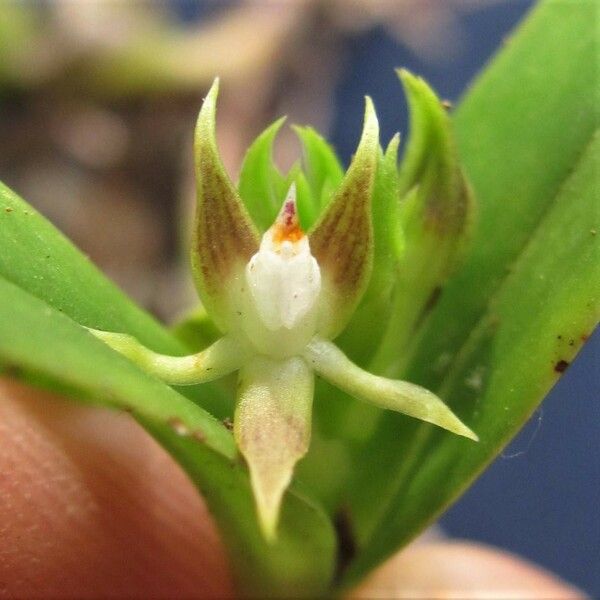
Plant Overview
Small but mighty, the Prosthechea pseudopygmaea is a miniature marvel of the orchid world. Often found clinging to trees in the humid forests of Central America and Mexico, this tiny epiphyte proves that you don’t need a massive greenhouse to host a stunning floral display. Known by some as the "False Pygmy Orchid," it is beloved by collectors for its ability to produce delicate, upside-down flowers on a plant that fits easily in the palm of your hand.
🔍 How to Identify
- 🍐 Pseudobulbs: Look for tiny, pear-shaped or egg-shaped bulbs that grow in clusters, acting as the plant's personal water reservoirs.
- 🍃 Foliage: Each bulb typically produces two narrow, leathery, grass-like leaves that remain evergreen and glossy.
- 🙃 Upside-Down Flowers: The blossoms are "non-resupinate," meaning the lip of the flower points upward rather than downward, appearing creamy-white or pale green with subtle brownish tints.
🏡 In Your Garden
- ☁️ Humidity is Key: Because it originates from misty mountain forests, this orchid thrives in high humidity. If growing indoors, a pebble tray or a nearby humidifier will keep it from shriveling.
- 💨 Breathing Room: As an epiphyte, its roots hate being smothered in dense soil. It performs best mounted on a piece of cork bark or nestled in a very airy bark mix to ensure the roots dry out slightly between waterings.
- ☀️ Dappled Light: Think of the forest canopy; it enjoys bright, indirect light. Direct afternoon sun will quickly scorch its diminutive leaves.
⚠️ Safety & Toxicity
- ✅ Status: Generally considered non-toxic.
- 🐾 Details: This orchid is safe to keep around curious cats, dogs, and children. However, as with any ornamental plant, it is best kept out of reach to avoid accidental choking or mild digestive upset if nibbled.
✨ Fun Fact
The term "pseudopygmaea" literally means "false pygmy." It was given this name because it looks incredibly similar to another tiny orchid, Prosthechea pygmaea, but can be distinguished by the specific structure of its floral column!

Detailed Care Instructions

Some plants require more regular watering than others, which should be done every few days. It's critical to maintain the soil moist all of the time. The water requirements of the same plant placed in pots with varying sizes will differ. Because the water in the smaller pot evaporates faster than the water in the larger pot, it will require more watering. Regardless of pot size, the surface should constantly be maintained moist.








