Plant Overview
Known as the Red Sugarbush or Peach Protea, this South African beauty is the aristocrat of the Cape mountains. It is a slow-growing, long-lived shrub that looks like it was plucked straight from a prehistoric landscape. Often prized by florists for its dramatic "bearded" appearance, it carries an air of ancient royalty and rugged endurance.
🔍 How to Identify
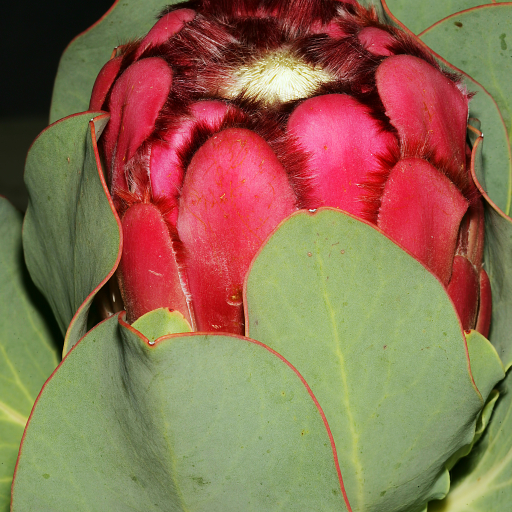
- 🌸 The Flower Head: Large, bowl-shaped blooms featuring deep coral-pink to red bracts that curve inward, tipped with a distinctive "fringe" of white or dark brown velvet hairs.
- 🍃 The Foliage: Broad, leathery, oval-shaped leaves that often have a soft grey-green or bluish tint, providing a muted backdrop that makes the red flowers pop.
- 🌳 Growth Habit: A sturdy, rounded shrub that stays relatively compact compared to other Proteas, usually reaching about 5 to 7 feet in height.
🏡 In Your Garden
- 🧪 Soil Nuance: This plant is a "specialist" that hates phosphorus. Using standard garden fertilizers can actually be fatal; it requires lean, acidic, well-draining soil similar to its native sandstone slopes.
- 🌬️ Airflow is Key: It thrives in windy, exposed locations. Good air circulation is its best defense against the fungal issues that often plague dense-foliage plants in humid environments.
- ✂️ Pruning Patience: Because it grows slowly, avoid heavy hacking. Simply "tip pruning" the spent flower stems will help maintain its neat, rounded shape without shocking the system.
⚠️ Safety & Toxicity
- ✅ Status: Generally Non-Toxic.
- 🐾 Details: The Red Sugarbush is considered safe for cats, dogs, and horses. However, its leaves are quite tough and leathery, which might cause mild stomach upset if a curious pet decides to chew on them.
✨ Fun Fact
The Protea grandiceps is a "fire-adapted" species. In the wild, the parent plant often perishes in mountain fires, but the intense heat triggers the woody seed heads to open, releasing the next generation into the nutrient-rich ash left behind.

Detailed Care Instructions
To grow Protea Grandiceps (also known as the "Green Sugarbush"), you can follow these steps:
- Climate: Protea Grandiceps thrives in a Mediterranean climate, similar to its native South Africa. It prefers bright sunlight, cool winters, and warm summers. However, it can tolerate a wide range of temperatures.
- Soil: Plant the Protea Grandiceps in well-draining soil with a slightly acidic pH. The soil should be sandy and enriched with organic matter.
- Watering: While the plant is establishing its roots, water it regularly to keep the soil evenly moist. Once it is established, reduce watering, as Protea Grandiceps is drought-tolerant. Overwatering can lead to root rot.
- Pruning: Prune the plant lightly after it has finished flowering to maintain its shape. Remove any dead or diseased branches.
- Fertilizer: Apply a slow-release, low-phosphorus fertilizer specifically formulated for flowering plants in early spring. Avoid high-nitrogen fertilizers as they promote leaf growth instead of flowering.
- Mulching: Apply a layer of mulch around the base of the plant to help retain moisture and suppress weeds. Use materials like wood chips or straw.
- Protection: Protea Grandiceps can be sensitive to frost. If you live in an area with cold winters, consider protecting the plant during extreme cold spells using frost cloth or a temporary shelter.
- Propagation: Propagate the plant from cuttings taken during late spring or early summer. Use a rooting hormone, place the cuttings in well-drained potting mix, and keep them in a warm, bright location until roots develop.
- Pests and diseases: Keep an eye out for common pests like aphids, mealybugs, and scales. Treat any infestations promptly with insecticidal soap or an appropriate insecticide. Additionally, make sure the plant has good air circulation to prevent fungal diseases.
- Patience: Protea Grandiceps can be a slow-growing plant, and it may take a few years to establish itself and produce flowers. Be patient and provide the appropriate care, and you will eventually enjoy the beautiful blooms.
Remember to research and adapt the specific care instructions to your local climate and conditions.

Place in a bright room that is sun drenched almost all day. Or directly in a south-facing window.

Protea Grandiceps is a plant that is native to South Africa and is a member of the Proteaceae family. To water this plant, it is best to do so deeply and infrequently. This means that you should water the plant thoroughly, but not too often, allowing the soil to dry out slightly between watering. It is important to ensure that the soil is well-draining and that the plant is not sitting in stagnant water, as this can lead to root rot. It is also recommended to use rainwater or distilled water rather than tap water, as the high mineral content in tap water can cause harm to the plant. Additionally, during the hot summer months, it is important to provide some shade for the plant or mist it with water to prevent it from becoming too dry. Finally, it is important to fertilize the plant with a low-nitrogen fertilizer, as high nitrogen can cause damage to the root system.
For optimal growth and flowering, fertilize your plant every two months during the growing season (spring and summer).
Use a slow-release fertilizer formulated for acid-loving plants, such as a 6-3-9 blend.
Apply the fertilizer evenly around the base of the plant, taking care not to get any on the foliage.
Water the plant thoroughly after fertilizing to ensure the nutrients penetrate the soil and reach the roots.
Avoid fertilizing during the dormant period (fall and winter) as this can stimulate new growth that may be susceptible to cold damage.
Protea Grandiceps plants require a well-draining soil that is low in nutrients and low in pH. The soil should have a pH between 4.5 and 6.5 and be composed of a mix of sand, loam, and gravel. It is important to avoid using soil that is high in organic matter or contains too much clay, as this can cause root rot. A mixture of coarse river sand and decomposed granite is recommended for good drainage. Adding some perlite or vermiculite to the mix can also improve drainage. It is important to provide good aeration to the root system of the plant. In order to avoid moisture retention and maintain good soil structure, it is recommended to incorporate bark chips, pine needles, or other amorphous materials into the soil. A high-quality potting mix made specifically for Protea species can also be used.
To propagate this plant, you should start by taking a cutting from the parent plant. Make sure to use a sharp, clean pair of gardening shears to cut a stem that is at least 10 centimeters long, with several healthy leaves at the top. Remove any leaves from the bottom section of the stem.
Next, prepare a suitable potting mix that is well-draining and has a slightly acidic pH. Use a pot with drainage holes and fill it with the potting mix. Make a hole in the center and insert the cutting, pressing firmly to ensure it is secure.
Water the cutting well, making sure the soil is moist but not waterlogged. Cover the pot with a clear plastic bag or plastic wrap to create a humid environment that will help the cutting root. Place the pot in a warm, bright location but out of direct sunlight.
After a few weeks, check for signs of new growth and roots. Once you see new growth, you can remove the plastic bag and start to treat your new plant as you would a mature Protea Grandiceps plant. Keep the soil moist but not wet, and provide regular fertilization during the growing season.








