Plant Overview
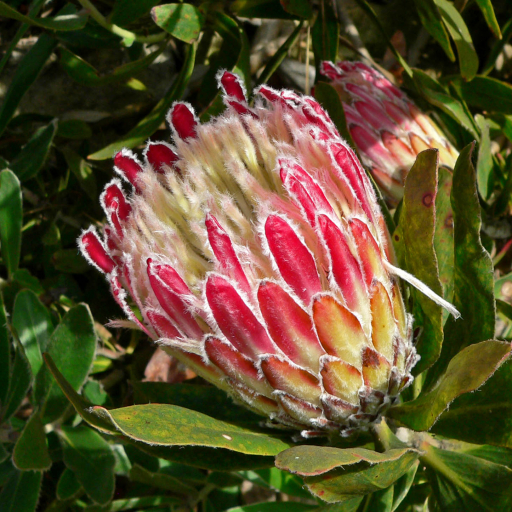
Known as the Limestone Sugarbush, this architectural marvel is a true rebel of the Protea family. While most of its cousins are famous for being "acid-loving" plants that wither in alkaline conditions, this species thrives exclusively on limestone outcrops along the South African coast. With its regal, goblet-shaped blooms and glossy foliage, it is a favorite for dramatic floral arrangements and wind-swept coastal gardens.
🔍 How to Identify
- 🌺 The Bloom: Features large, waxy flower heads that range from a deep, glowing crimson to a soft creamy white. The bracts (the "petals") are tightly packed and have a polished, satiny sheen.
- 🍃 The Foliage: The name obtusifolia refers to its "blunt" leaves. Unlike the sharp, needle-like leaves of other Proteas, these are broad, leathery, and rounded at the tips.
- 🌳 The Silhouette: A robust, multi-stemmed shrub that can reach up to 4 meters in height, creating a dense, rounded canopy of deep green.
🏡 In Your Garden
- 🪨 Soil Nuance: This is your go-to Protea if you have "sweet" (alkaline) or calcium-rich soil. It actually struggles in the acidic soils that most other Proteas require, making it a rare specialist for coastal gardeners.
- 🐦 Avian Magnet: It produces an incredible volume of nectar. In its native habitat, it is a primary food source for the Cape Sugarbird; in a home garden, it will attract any local nectar-feeding birds.
- 💨 Coastal Guardian: Because it evolved on the rocky coastlines of the Agulhas Plain, it is exceptionally resistant to salt spray and heavy winds, acting as a beautiful natural screen.
⚠️ Safety & Toxicity
- ✅ Status: Non-toxic and safe.
- 🐾 Details: There are no known toxic effects for humans, cats, or dogs. However, the leaves are very tough and fibrous; if a curious pet decides to chew on them, it might cause minor stomach upset simply due to the difficulty of digestion.
✨ Fun Fact
Protea obtusifolia is a "serotinous" plant, meaning it keeps its seeds locked away in fire-proof cones for years. The seeds are only released after a wildfire sweeps through, using the ash-enriched soil to jumpstart the next generation!

Detailed Care Instructions
To grow Protea Obtusifolia plant, follow these steps:
- Climate: Protea Obtusifolia plants thrive in a Mediterranean climate, with cool, wet winters and warm, dry summers. Ensure your area matches these conditions or provide suitable conditions indoors.
- Soil: These plants prefer well-draining, slightly acidic soil. Mix equal parts of compost, sand, and peat moss to create a well-draining soil mix. Avoid heavy clay soils.
- Sunlight: Protea plants require full sun to grow properly. Choose a location that receives at least 6-8 hours of direct sunlight per day.
- Watering: While Protea plants are drought-tolerant once established, they require regular watering during their initial growth. Water deeply and then allow the soil to dry out before the next watering. Avoid overwatering, as it can cause root rot.
- Fertilizer: Use a slow-release, low-phosphorus fertilizer specifically formulated for Protea plants. Apply it in early spring before the new growth starts, following the manufacturer's instructions.
- Pruning: Prune Protea Obtusifolia lightly in early spring to remove any dead or damaged branches. Avoid heavy pruning, as it can cause the plant to react negatively.
- Protection: Protea Obtusifolia is sensitive to frost. Protect the plant during freezing temperatures by covering it with a frost cloth or moving it indoors.
- Propagation: Propagate Protea Obtusifolia from seeds or cuttings. Seeds can be sown in spring or early summer, while cuttings can be taken during the growing season. Ensure the cutting has a node and remove the lower leaves before planting.
- Pests and Diseases: These plants are generally resistant to pests and diseases. However, keep an eye out for aphids, mealybugs, or scale insects. Treat any infestations promptly using a natural insecticide if necessary.
- Patience: Protea Obtusifolia is a slow-growing plant, so be patient with its growth. It may take a few years before it reaches full maturity and starts blooming.
Remember to consult any local gardening guidelines or experts concerning specific conditions and care tips for Protea Obtusifolia in your region.

Place in a bright room that is sun drenched almost all day. Or directly in a south-facing window.

Protea Obtusifolia is a unique plant species that requires special care when it comes to watering. Here are some guidelines to help you water it effectively:
1. Soil moisture: Before watering, check the soil moisture level using your finger or a moisture meter. The ideal soil moisture for Protea Obtusifolia is slightly moist but not waterlogged.
2. Watering frequency: Protea Obtusifolia is a drought-tolerant plant and prefers infrequent but deep watering. Water the plant thoroughly until the water drains out of the container or reaches a depth of at least 6 inches in the ground.
3. Seasonal variations: Adjust the watering frequency according to seasonal variations. During the plant's active growth period in spring and summer, water it more frequently to meet its increased water demands. In autumn and winter, reduce watering as the plant goes dormant.
4. Watering method: Avoid overhead watering as the foliage and flowers of Protea Obtusifolia are prone to damage from direct moisture. Instead, direct the water towards the base of the plant, aiming for the soil rather than the leaves.
5. Water quality: Protea Obtusifolia is sensitive to high levels of dissolved salts or minerals in water. Hence, it is recommended to use filtered or distilled water. If tap water is the only option, let it sit overnight before watering to allow chlorine and other chemicals to dissipate.
6. Mulching: Apply a layer of organic mulch, such as wood chips or bark, around the plant. Mulching helps to retain soil moisture, reduce weed growth, and protect the plant's shallow roots from extreme temperatures.
7. Drought monitoring: Keep an eye on the plant for signs of drought stress, such as wilting or yellowing leaves. This indicates that the plant needs watering. However, refrain from overwatering, as it can lead to root rot and other issues.
Remember to adapt these guidelines based on the specific conditions of your Protea Obtusifolia plant, such as its container size, location, and climate. Regular observation and adjustment will help you provide proper water management for the plant's overall health and growth.
Here are fertilizing instructions for the Protea Obtusifolia plant:
- Choose a balanced, slow-release fertilizer with a ratio of 10-10-10 or 20-20-20. This indicates the percentages of nitrogen (N), phosphorus (P), and potassium (K) in the fertilizer.
- Apply the fertilizer in the early spring, just as new growth begins. Avoid fertilizing during winter or fall when the plant is dormant.
- Dilute the fertilizer according to the package instructions. It is important not to use more fertilizer than recommended, as it can harm the plant.
- Slowly pour the diluted fertilizer around the base of the plant, making sure to evenly distribute it.
- Avoid getting fertilizer on the plant's foliage as it may cause burn marks. If you accidentally do, make sure to rinse the foliage with water immediately.
- Water the plant thoroughly after fertilizing to help the nutrients reach the root system.
- Repeat the fertilization process every four to six weeks during the growing season, which typically lasts from spring to early fall.
Remember, always read and follow the instructions on the fertilizer package for best results. Additionally, observing the plant's response to fertilization is important. If you notice any signs of over-fertilization, such as leaf burn or stunted growth, reduce the amount or frequency of fertilization.
Protea Obtusifolia, also known by its common names, is a stunning flowering plant native to South Africa. When it comes to choosing the right soil for this species, it is important to provide conditions that mimic its natural habitat.
Protea Obtusifolia thrives in soil that is well-draining and slightly acidic to neutral in pH. It prefers soil that is sandy or loamy, which allows for good drainage and prevents waterlogging. This plant is adapted to regions with low soil fertility, so the soil should not be too rich in nutrients.
To create the ideal soil mix for Protea Obtusifolia, you can start with a base of well-draining soil, such as a sandy or loamy soil blend. It is also recommended to add organic matter like compost or well-rotted manure to improve soil structure and fertility.
Ensuring good drainage is crucial, so it's helpful to incorporate perlite or coarse sand into the soil mix. This promotes proper aeration and prevents saturation, which could lead to root rot and other issues.
Additionally, Protea Obtusifolia is naturally adapted to regions with low rainfall, so it is important to avoid overwatering. Watering should be done sparingly, allowing the soil to dry out slightly between watering sessions.
In summary, the ideal soil for Protea Obtusifolia should be well-draining, slightly acidic to neutral in pH, and a sandy or loamy blend. By providing proper soil conditions, you can help your Protea Obtusifolia thrive and produce its beautiful flowers for years to come.
Propagation of Protea obtusifolia can be achieved through a process called softwood cuttings. Here's a step-by-step guide on how to propagate this plant:
- Start by selecting a healthy, mature Protea obtusifolia plant from which you'll take the cuttings. Choose a branch that is about 4 to 6 inches long and has a good amount of fresh growth.
- Prepare a clean, sharp pair of pruning shears or a knife to take the cuttings. Make a clean cut just below a leaf node, ensuring that you have a cutting with at least two sets of leaves.
- Remove any leaves from the lower half of the cutting, leaving just the top set of leaves intact. This helps reduce water loss and directs energy towards root growth.
- Prepare a suitable pot or container with a well-draining potting mix. Fill the container with the potting mix, leaving about an inch or so of space from the rim.
- Create planting holes in the potting mix using a dibber or your finger. Insert the prepared cuttings into the holes, ensuring that at least half of the cutting is buried in the mix. Gently press the soil around the cuttings to secure them in place.
- Mist the cuttings with water to provide them with some moisture. Alternatively, you can cover the container with a plastic bag or dome to create a mini greenhouse environment that retains humidity.
- Place the container in a well-lit area away from direct sunlight. Protea obtusifolia prefers bright but indirect light for optimal growth. Maintain a temperature around 70-75°F (21-24°C).
- Keep the potting mix slightly moist at all times, but avoid overwatering, as this can cause root rot. Water the cuttings whenever the topsoil feels dry to the touch, ensuring that excess water drains out of the container.
- After a few weeks, check for root development by gently tugging on the cuttings. If they show resistance, it indicates that roots have formed. At this point, you can gradually acclimate the new plants to lower humidity conditions by removing the plastic bag or dome for longer periods each day.
- Once the rooted cuttings have developed a healthy root system and are growing well, you can consider transplanting them into individual pots or directly into the garden soil, taking care not to damage the fragile, young roots.
Remember to be patient during the propagation process, as it may take several weeks to months for the cuttings to root and establish themselves as independent plants.








