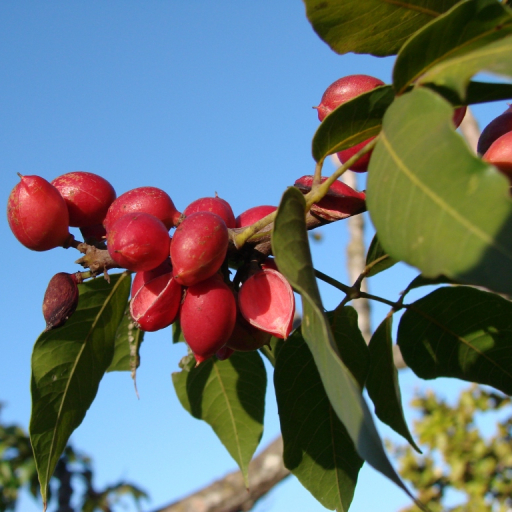
Plant Overview
Known as the "Breu Branco" or the "Incense Tree of the Amazon," Protium heptaphyllum is a sacred staple of South American forests. It is legendary for its fragrant, medicinal resin that "bleeds" from the trunk when the bark is damaged, hardening into white, crystalline tears. For centuries, it has been used by indigenous communities as a spiritual purifier and a natural remedy for everything from headaches to respiratory issues.
🔍 How to Identify
- 🌿 The Leaf Count: The species name heptaphyllum hints at its secret—its compound leaves typically feature seven distinct leaflets arranged in a feather-like pattern.
- 💧 Aromatic Resin: If the bark is slightly nicked, it releases a sticky, milky-white resin that quickly hardens. It smells like a refreshing blend of pine, citrus, and earth.
- 🌳 Growth Habit: This is a medium-sized tree with a greyish-brown bark and a dense, rounded canopy that provides deep shade in tropical environments.
🏡 In Your Garden
- 🌱 Humidity is Key: As a child of the Amazon, this tree craves high humidity and warmth. If you are growing it outside its native range, it needs a spot protected from dry winds and frost.
- 🪵 Resin Production: In its natural habitat, the tree produces resin as a defense mechanism against insects. While beautiful and fragrant, over-harvesting the resin can stress the tree, so it’s best enjoyed sparingly.
⚠️ Safety & Toxicity
- 🟢 General Safety: Protium heptaphyllum is considered non-toxic to humans and is widely used in traditional medicine and perfumery.
- 🧴 Skin Sensitivity: The raw, sticky resin can cause mild skin irritation or allergic contact dermatitis in sensitive individuals. Always wash your hands after handling the "tears" of the tree.
- 🐾 Pet Safety: While not specifically listed as a high-risk plant for pets, the high concentration of essential oils in the resin may cause stomach upset if a dog or cat decides to chew on the bark.
✨ Fun Fact
In the Amazon, the resin from this tree is often called "the vegetable soul." It is so flammable and waterproof that indigenous tribes use it both as a natural torch to light their way through the jungle and as a "forest glue" to caulk and seal their canoes.

Detailed Care Instructions
To grow Protium Heptaphyllum, also known as Brazilian Pepper Tree, you can follow these steps:
- Climate and soil requirements: Protium Heptaphyllum prefers warm tropical climates. It grows well in well-draining soil, such as sandy loam or clay-loam mixtures. The pH level of the soil should be between 6 and 7.
- Choose a suitable location: Select a spot that receives full sunlight and has enough space for the plant to grow. Make sure the area is protected from strong winds.
- Propagation: Protium Heptaphyllum can be propagated through seeds or cuttings. If using seeds, soak them in warm water for 24 hours before planting. For cuttings, take 6-8 inch long stem cuttings from healthy plants.
- Planting: Dig a hole slightly larger than the root ball of the plant. Place the plant in the hole, ensuring that it is planted at the same depth it was previously growing. Gently backfill the hole with soil and firm it around the plant.
- Watering: Water the plant thoroughly after planting and keep the soil evenly moist during the initial growth phase. Once established, it can tolerate some drought but will still benefit from regular watering.
- Fertilization: Use a balanced slow-release fertilizer during the growing season to provide essential nutrients to the plant. Follow the manufacturer's instructions for application rates.
- Pruning: Prune the plant to maintain its shape and remove any dead or damaged branches. Pruning can be done in early spring.
- Pest and disease control: Keep an eye out for common pests like aphids, scale insects, and mealybugs. If an infestation occurs, use an appropriate insecticide or try natural pest control methods. Additionally, ensure good air circulation around the plant to prevent fungal diseases.
- Mulching: Apply a layer of organic mulch around the plant to help retain moisture, control weeds, and provide extra nutrients to the soil.
- Regular care: Monitor the plant's growth and health regularly. Keep an eye out for any signs of stress, such as wilting or yellowing leaves, and take appropriate action to address any issues.
Remember to always research and verify specific growing requirements for the Protium Heptaphyllum species you have, as there may be variations or specific considerations depending on the variety or cultivar.
Protium heptaphyllum is a tropical evergreen tree that requires a consistent watering routine to thrive. Here is a guide on how to water this plant effectively:
- Understand the water needs: Protium heptaphyllum prefers a moderate amount of water. It is essential to strike a balance as overwatering or underwatering can both be detrimental to its health. Ensuring proper drainage is crucial to prevent waterlogged soil.
- Use the right watering technique: When watering Protium heptaphyllum, it is advisable to use a gentle, steady stream rather than a heavy flow. This allows the water to penetrate deeply into the soil without causing erosion or compacting the root zone.
- Consider the soil type: Protium heptaphyllum thrives in well-draining soil with good moisture retention. If your soil is heavy or clay-like, it might be necessary to amend it with organic matter to improve drainage and prevent water from pooling.
- Monitor moisture levels: Before watering, assess the moisture levels of the soil. Stick your finger about an inch deep into the soil near the root zone to check if it feels dry. If the soil is still slightly damp, hold off watering until it dries out a bit to avoid overwatering.
- Water thoroughly: When you do water Protium heptaphyllum, make sure to soak the root ball completely. This encourages deep root growth and prevents shallow-rooted growth, making the tree more robust and resilient. Water until you see it start to drain out of the pot's drainage holes.
- Frequency of watering: The required frequency will depend on various factors such as climate, humidity, and season. As a general guideline, water Protium heptaphyllum every 7-10 days during dry periods, reducing the frequency during cooler months or when the plant enters dormancy.
- Adjust watering based on environmental factors: During hot summers or in arid climates, Protium heptaphyllum may require more frequent watering. On the other hand, reduce watering during rainy seasons or high humidity to prevent waterlogging.
- Observe the plant's response: Pay attention to any signs of overwatering or underwatering. Wilting, yellowing leaves, or root rot indicate overwatering, while dry, brittle leaves might suggest underwatering. Adjust your watering schedule accordingly based on the plant's response.
Remember, individual plant care can vary, so it's always beneficial to monitor your Protium heptaphyllum closely and adjust the watering routine as needed.
To fertilize the Protium Heptaphyllum plant, you can follow these instructions:
- Use a balanced, slow-release fertilizer with an N-P-K ratio of around 10-10-10 or similar. This will provide a good mix of essential nutrients without causing excessive growth.
- Apply the fertilizer during the growing season, which is typically spring and summer. Avoid fertilizing during the plant's dormant period if it has one.
- Dilute the fertilizer according to the package instructions, or use a half-strength solution to prevent overfeeding. Always err on the side of caution when it comes to fertilizing.
- Water the plant thoroughly before applying the fertilizer. This helps prevent root burn and ensures the nutrients can be absorbed effectively.
- Pour the diluted fertilizer solution around the base of the plant, avoiding direct contact with the leaves. This allows the roots to absorb the nutrients gradually and evenly.
- Repeat the fertilization process every 4-6 weeks during the growing season. However, avoid excessive fertilization, as overfeeding can be detrimental to the plant's health.
- Monitor the plant closely for any signs of nutrient deficiency or excess. Yellowing or stunted growth may indicate a need for more fertilization, while burnt or drooping leaves could suggest overfeeding. Adjust the fertilization routine accordingly.
Remember, every plant has different fertilization needs, so it's essential to observe your Protium Heptaphyllum plant closely and make adjustments as necessary.
When cultivating Protium Heptaphyllum, it is recommended to use a specific type of soil that provides optimal growing conditions for the plant. This soil should have certain characteristics to support the plant's growth and development.
Firstly, the soil used for Protium Heptaphyllum should have a well-draining texture. The soil should not retain excessive moisture as it can lead to root rot or other fungal diseases. Instead, it should allow water to pass through easily while still retaining enough moisture to keep the plant hydrated.
Secondly, the soil should be rich in organic matter. This helps improve the overall fertility and nutrient content of the soil, providing essential elements for the plant's growth. Organic matter also helps with moisture retention, which is beneficial for Protium Heptaphyllum.
Ideally, the pH of the soil should be slightly acidic to mildly alkaline. A pH range between 6.0 and 7.5 is generally suitable for the plant. This pH range allows for proper nutrient availability, which is necessary for healthy growth.
Furthermore, the soil should be well-aerated to ensure oxygen reaches the plant's roots. This can be achieved by incorporating coarse sand or perlite into the soil mix. Adequate oxygenation promotes healthy root development and prevents issues such as root suffocation or rot.
Lastly, it is recommended to avoid using heavy clay soils for Protium Heptaphyllum. Clay soils tend to retain water and can become compacted, leading to poor drainage and potentially causing root problems. However, if clay soil is the only option, it can be improved by amending it with organic matter, sand, or other materials to enhance drainage and promote healthier root growth.
In summary, using well-draining, nutrient-rich soil that is slightly acidic to mildly alkaline, with a good amount of organic matter, will provide an ideal growing environment for Protium Heptaphyllum.
To propagate Protium Heptaphyllum plant, you can follow these steps:
- Start by selecting a healthy, mature parent plant from which to take cuttings. Look for a plant that has well-developed stems and leaves.
- Prepare a clean and sharp pruning shear or pair of scissors to take the cuttings. It is essential to ensure that the cutting tool is sterilized to prevent the spread of diseases.
- Identify suitable sections on the parent plant for the cuttings. Look for sections of stem that have at least two to three sets of fully grown leaves.
- Make a clean cut just below a node using the sterilized cutting tool. A node is the part of the stem where leaves emerge. The cut should be at a 45-degree angle to maximize the surface area for rooting.
- Remove any leaves that are present on the lower two-thirds of the cutting. Leave only a few leaves at the top to reduce water loss during the propagation process.
- Dip the cut end of the cutting into a rooting hormone. This step is optional but can promote faster root development.
- Prepare a well-draining potting mix or a propagation medium using a combination of peat moss, perlite, or vermiculite. Ensure that the medium is lightly moist but not soggy.
- Create a small hole in the medium using a pencil or a finger. Insert the cut end of the cutting into the hole, gently pressing the medium around it to provide stability.
- Water the cutting lightly, ensuring the soil is adequately moist but not excessively wet. Overwatering can lead to rotting or fungal problems.
- Place the propagation container in a warm and bright location, but away from direct sunlight. A temperature of around 70-75°F (21-24°C) is ideal for the rooting process.
- Mist the cutting regularly to maintain humidity levels and prevent dehydration. Use a spray bottle to lightly mist the leaves and the medium without soaking them.
- After a few weeks, check for root development by gently tugging on the cutting. If you feel resistance, it indicates that roots have formed. Alternatively, you can also check by gently lifting the cutting and looking for any visible roots.
- Once the cutting has developed a sufficient root system, you can transplant it to a larger container or directly into the garden, depending on your desired location.
Following these steps should help you successfully propagate Protium Heptaphyllum plant.








