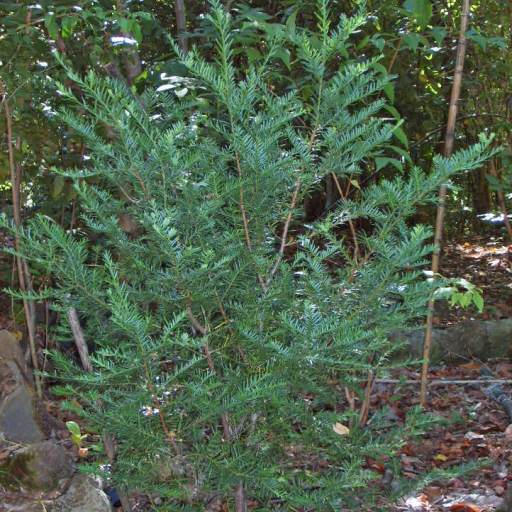
Plant Overview
Known as the "Lleuque" in its native Chile, this rare evergreen is a living fossil from the ancient forests of the Andes. While it looks strikingly similar to the common Yew, it carries a sweet secret—edible, grape-like fruits that have been harvested by indigenous communities for centuries. It is a slow-growing, sophisticated choice for gardeners looking to add a touch of prehistoric elegance to their landscape.
🔍 How to Identify
- 🍃 Foliage: Linear, flat needles that are soft to the touch. They are a deep, lustrous green on top with two pale stomatal bands underneath, giving the plant a subtle blue-green shimmer in the wind.
- 🫐 The "Plum": The plant produces a fleshy, aromatic seed coat (aril) that resembles a small green plum or olive. As it matures, it turns a yellowish-green and emits a sweet, resinous scent.
- 🌲 Growth Habit: It typically grows as a dense, multi-stemmed shrub in its youth, eventually maturing into a stately, rounded tree with a thick, textured trunk.
🏡 In Your Garden
- 🏔️ Climate Nuance: This plant is a "Gondwanan" relic, meaning it thrives in cool, moist, and temperate environments. It struggles in extreme desert heat or harsh, drying winds, preferring the sheltered, humid corners of a garden.
- ⏳ Patience is Key: The Plum-fruited Yew is famously slow-growing. It invests its energy into a deep root system before putting on height. Because of this, it makes an exceptional, low-maintenance formal hedge for those willing to wait for it to fill in.
- 💧 Drainage Needs: It hates "wet feet." While it loves consistent moisture, the soil must be well-draining and rich in organic matter to prevent root rot.
⚠️ Safety & Toxicity
- ✅ The Fruit: Unlike the "True Yew" (Taxus), which is highly toxic, the fleshy part of the Prumnopitys andina fruit is edible and quite sweet.
- 🐾 General Precaution: While the fruit pulp is safe, the internal seeds and the foliage contain small amounts of diterpenes. They aren't considered deadly, but they can cause mild stomach upset in pets or small children if ingested in large quantities.
✨ Fun Fact
In its native Chile, the fruit is so beloved that it is used to make a traditional marmalade known as "Mermelada de Lleuque." It is described as having a unique flavor profile that sits somewhere between a grape and a pine tree!

Detailed Care Instructions
To grow Prumnopitys Andina, also known as the Chilean Plum Yew, you can follow these steps:
- Climate and location: Ensure that you live in a climate similar to its native habitat. The Prumnopitys Andina plant thrives in cool and moist conditions. It is best suited for USDA hardiness zones 7 to 10. Choose a location in your garden that receives partial shade.
- Soil preparation: Prumnopitys Andina prefers well-draining soil with a slightly acidic pH. The soil should be rich in organic matter. Prior to planting, amend the soil with compost or organic matter to improve its fertility and drainage.
- Planting: Dig a hole in the prepared soil that is large enough to accommodate the root ball of the Prumnopitys Andina plant. Gently remove the plant from its container and place it into the hole. Ensure that the top of the root ball is level with the surrounding soil. Backfill the hole with soil, gently firming it around the roots.
- Watering: After planting, water the Prumnopitys Andina thoroughly. Keep the soil consistently moist, especially during the plant's establishment period. Water deeply when the top inch of soil feels dry, but avoid overwatering as it can lead to root rot.
- Mulching: Apply a layer of organic mulch, such as wood chips or pine needles, around the base of the plant. Mulching helps retain moisture and suppress weed growth. It also keeps the soil cool, which is beneficial for the Prumnopitys Andina plant.
- Pruning: Prune the Prumnopitys Andina plant sparingly to maintain its shape and remove any dead or damaged branches. However, this plant naturally has a dense and compact growth habit, so excessive pruning is not necessary.
- Fertilization: Prumnopitys Andina generally does not require heavy fertilization. However, you can apply a slow-release balanced fertilizer in spring to promote healthy growth. Follow the instructions on the fertilizer packaging for the correct application rate.
- Pest and disease control: Prumnopitys Andina is relatively resistant to pests and diseases. However, you should monitor the plant regularly for any signs of common issues, such as powdery mildew or scale insects. Treat any problems promptly using organic or suitable pest control methods.
By following these steps, you can successfully grow Prumnopitys Andina and enjoy its lush foliage and interesting texture in your garden. Remember to provide adequate care and maintenance to ensure its long-term health and growth.

Place in a bright room that is sun drenched almost all day. Or directly in a south-facing window.

To water this plant, it is important to ensure that the soil is moist but not waterlogged. One way to determine if the plant needs watering is to stick your finger into the soil and feel for moisture. If the soil feels dry, it is time to water.
When watering, it is best to use a watering can or hose with a gentle spray nozzle to avoid damaging the plant's delicate foliage. Water the soil around the base of the plant, rather than directly onto the leaves.
Avoid overwatering, as this can lead to root rot and other issues. It is also important to ensure that the pot has good drainage to allow excess water to escape.
During the growing season, this plant may require more frequent watering, especially if it is in a warm, sunny location. In cooler weather or during dormancy, less frequent watering may be necessary.
To fertilize this plant, you should apply a balanced fertilizer that contains equal amounts of nitrogen, phosphorus, and potassium. Apply the fertilizer in the early spring and again in the mid-summer. Use a slow-release fertilizer and apply it according to the instructions on the packaging. Be careful not to over-fertilize, as this can lead to burning or damaging the plant. Always water the plant before and after fertilizing to help the nutrients absorb into the soil.
When growing Prumnopitys Andina plants, the ideal soil should be porous and well-draining with good moisture retention capacity. It is recommended to use a mixture of organic matter such as compost, peat moss or leaf mold along with a sandy or loamy soil. The soil pH should be slightly acidic to neutral, ranging from 5.5 to 7.0. Avoid using heavy clay soil, which can lead to poor drainage and root rot. Additionally, ensure that the soil is free of any weeds and pests that can harm the plant.
To propagate this plant, you can start by collecting the seeds from matured fruits. Soak the seeds in water for a few hours before sowing them in a well-draining soil mix. Keep the soil moist and place it in a warm area, with indirect sunlight.
Another propagation method is by taking stem cuttings from healthy and matured plants. Cut the stems into 6-inch sections and remove the lower leaves, leaving only a few on the top. Dip the cuttings in rooting hormone and plant them in a moist soil mix. Cover the container with plastic to create a humid environment and keep the soil moist. In a few weeks, roots should start to form and the plant will be ready to be transplanted into a larger pot or garden bed.
You can also try air layering, which involves wounding a stem and wrapping it with moist sphagnum moss and plastic wrap, allowing roots to form in the moss before cutting and planting the newly propagated stem.








