Plant Overview
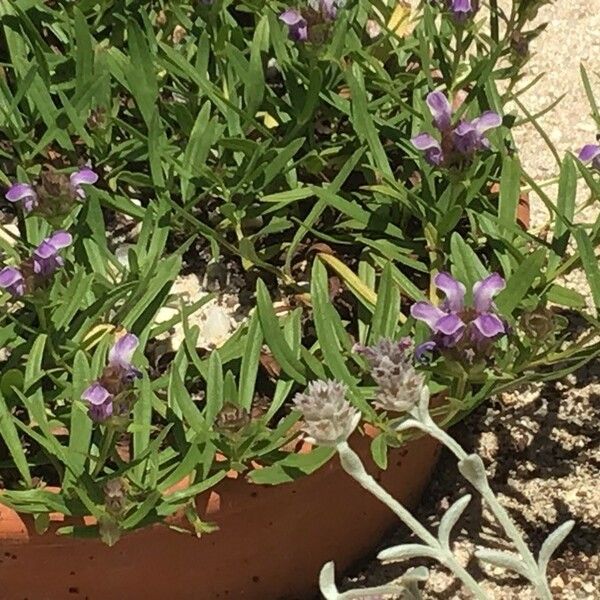
Often overlooked in favor of its more common cousin, Prunella vulgaris, the Hyssop-leaved Self-heal is a Mediterranean gem that brings a touch of wild elegance to rocky gardens. Its name, "Hyssopifolia," hints at its specialized foliage, which mimics the narrow, aromatic leaves of the Hyssop herb. This hardy perennial is a master of survival, thriving in sun-drenched, dry soils where other plants might wither.
🔍 How to Identify
- 🌿 Narrow Foliage: Unlike other Self-heals with broad, oval leaves, this species features slender, linear leaves that are much longer than they are wide, giving it a delicate, airy texture.
- 🟣 Hooded Flowers: It produces dense, terminal spikes of purplish-blue or violet flowers. Each individual bloom has a distinct "hood" shape typical of the Mint family, designed to perfectly accommodate visiting bees.
- 📐 Square Stems: True to its botanical family, the stems are noticeably square to the touch and grow in a semi-prostrate habit, sending up vertical flower spikes during the summer months.
🏡 In Your Garden
- ☀️ Drought Resilience: This plant is an excellent candidate for xeriscaping or rock gardens. Because it originates from dry, stony Mediterranean hillsides, it has evolved to handle heat and water scarcity with ease.
- 🐝 Pollinator Magnet: While it may look humble, it is a high-value nectar source. You will often see bumblebees and butterflies hovering around the flower spikes, making it a "must-have" for biodiversity-focused gardeners.
- 🌱 Low Maintenance: It is far less aggressive than the common Self-heal and won't take over your lawn. It prefers well-drained, even poor-quality soil, as overly rich soil can make the stems grow "leggy" and flop over.
⚠️ Safety & Toxicity
- ✅ Generally Safe: Prunella hyssopifolia is not known to be toxic to humans, cats, or dogs. In fact, many members of the Prunella genus have a long history of folk medicinal use.
- 🧤 Skin Sensitivity: While not poisonous, some individuals with sensitive skin might experience mild irritation from the fine hairs on the stems. It is always a good practice to wear gloves when pruning in bulk.
✨ Fun Fact
The genus name Prunella is actually a Latinized version of the German word die Bräune, which refers to "the quinsy" (a type of throat infection). In medieval times, the plant was believed to be a "signature" cure for throat ailments because its flower head looks vaguely like a throat!

Detailed Care Instructions
Prunella Hyssopifolia, also known as self-heal, is a low-growing perennial plant that is native to North America. Here are some tips on how to grow Prunella Hyssopifolia:
- Location: Prunella Hyssopifolia prefers to grow in full sun to partial shade. Choose a location in your garden that receives at least 6 hours of sunlight per day.
- Soil: This plant prefers well-draining soil that is rich in organic matter. Amend the soil with compost before planting to improve drainage and fertility.
- Planting: Prunella Hyssopifolia can be grown from seeds or transplanted as young plants. Plant seeds or transplants in early spring after the last frost date.
- Watering: Keep the soil consistently moist but not waterlogged. Water the plant regularly, especially during hot and dry weather.
- Fertilizing: Fertilize Prunella Hyssopifolia with a balanced fertilizer once a month during the growing season to promote healthy growth.
- Pruning: Prune the plant back after it has finished blooming to promote new growth and prevent it from becoming too leggy.
- Propagation: Prunella Hyssopifolia can be propagated by division or by taking stem cuttings. Divide the plant in early spring or take stem cuttings in late spring or early summer.
By following these tips, you should be able to successfully grow Prunella Hyssopifolia in your garden. Enjoy the beautiful purple blooms and the low-maintenance nature of this lovely plant!

Place in a window with dappled sun or a spot in the middle of a room. Or directly in a window facing west or east.

The plant should be watered deeply once a week or as needed based on the moisture levels of the soil. It prefers consistently moist soil but make sure not to overwater it as it can lead to root rot. Watering from the base of the plant is recommended to avoid getting water on the foliage, which can lead to disease and pest issues. Use a watering can or hose with a gentle stream to ensure the water penetrates the soil well. Allow the soil to dry slightly between watering, but not too much. Check the soil frequently to determine when the plant requires watering.
To fertilize the Prunella Hyssopifolia plant, apply a balanced liquid fertilizer once a month during the growing season from spring to fall. Dilute the fertilizer to half the recommended strength and water the plant thoroughly after application. Avoid fertilizing in the winter when the plant is dormant.
Prunella Hyssopifolia is a flowering plant that belongs to the mint family. It is commonly grown for its attractive blooms and foliage. For optimal growth and health of this plant, it requires a well-draining soil that is rich in nutrients.
The soil for Prunella Hyssopifolia should have a pH range of 6.0 to 7.5. It should also be porous to allow good aeration and drainage. Sandy loam soil is the best choice, or a mix of sand, silt, and clay to get a balanced soil texture.
To improve the soil quality, it is recommended to add organic matter such as compost, peat moss or aged manure. This would help to promote good soil structure and water retention. Additionally, nitrogen-rich fertilizers can be added during planting and thereafter.
However, it is important to avoid over-fertilizing as this can lead to excessive foliage growth and fewer blooms. It is crucial to test the soil frequently to determine its nutrient needs and adjust fertilization and pH levels as necessary.
To propagate this plant, you can start by collecting seeds from mature plants in the fall. Sow the seeds in a well-draining potting mix and keep them lightly moist until they germinate. You can also propagate Prunella hyssopifolia through division, by separating the root ball into smaller sections and replanting them in individual pots. Another method is to take stem cuttings in the spring or summer, dip them in a rooting hormone, and place them in a mix of perlite and peat moss until they develop roots. Keep the cuttings in a warm and humid environment until they are established and ready to be transplanted.








