Plant Overview
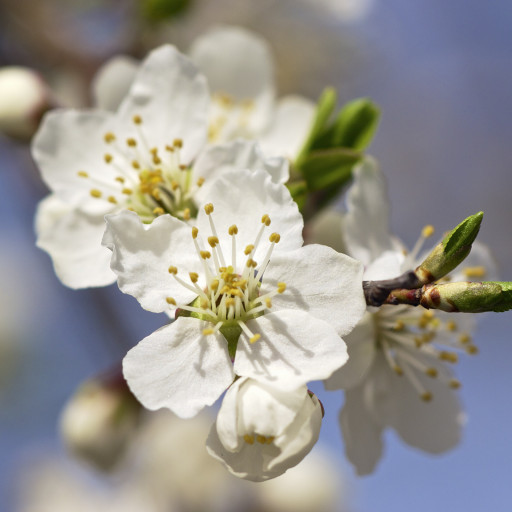
Often called the "Myrobalan Plum," Prunus cerasifera is the brave herald of spring, often bursting into snowy white or pale pink blossoms while other trees are still dormant. It is one of the most popular ornamental trees in suburban landscapes, prized for its clouds of flowers and, in some varieties, its deep mahogany foliage. Whether found as a wild hedge or a manicured specimen, it signals the end of winter with a dramatic floral display.
🔍 How to Identify
- 🌸 Early Blossoms: Small, five-petaled flowers (about 2cm wide) that appear on bare branches in late winter or very early spring, often before the leaves emerge.
- 🍃 Foliage Variety: The leaves are oval with finely serrated edges; while the wild type is green, the popular "Atropurpurea" cultivars feature striking dark purple or reddish leaves.
- 🍒 The Fruit: Produces small, smooth-skinned globes (2–3 cm) that look like oversized cherries. They can range from yellow to deep red when ripe.
🏡 In Your Garden
- 🌳 Resilient Growth: This tree is exceptionally hardy and adaptable to various soil types, though it prefers a sunny spot to maximize its floral display and fruit production.
- ✂️ Pruning Nuance: Because it blooms on the previous year's wood, avoid heavy winter pruning if you want a full floral show. It is best to prune lightly just after the flowers have faded.
- 🕊️ Wildlife Magnet: It serves as a vital early-season nectar source for bees waking up from hibernation, while its dense branches provide excellent nesting sites for small birds.
⚠️ Safety & Toxicity
- 🐾 Pet Warning: Like many members of the Prunus family, the leaves, stems, and pits contain cyanogenic glycosides. This makes them toxic to dogs, cats, and horses if chewed or swallowed.
- 😋 Human Edibility: The fruit flesh is edible and often used in Eastern European "Tkhemali" sauces or sweet jams. However, never consume the pits, as they contain toxic compounds.
✨ Fun Fact
- 🧬 The Parent Plant: The Cherry Plum is actually one of the ancient ancestors of the common domestic plum (Prunus domestica). It is believed to have naturally hybridized with the Blackthorn (Prunus spinosa) thousands of years ago to create the plums we eat today!

Detailed Care Instructions
Purpleleaf plum is grown for its ornamental qualities rather than its fruit. The fruits are edible but not very palatable and the seeds are toxic.
Is purpleleaf plum self-pollinating?
The trees are self-pollinating and they can be pollinated by other plum trees nearby so you only need one tree for fruit production. Note though that this is an ornamental tree. If you want to grow a plum tree for its fruit, it is better to select a plum species that was bred for its fruit.
What's the difference between purpleleaf plum and purple leaf sand cherry?
Purple leaf sand cherry is a shrub, not a tree like the purpleleaf plum. The sand cherry is also more hardy than the purpleleaf plum.
| Color | White, Pink |
| Lighting | Full Sun |
| Bloom Time | Spring |
| Plant Type | Deciduous Tree |
| Mature Size | 400 To 800 Cm |
| Native Area | Asia And Southeastern Europe |
| Sun Exposure | Full Sun |
| Hardiness Zones | 4-9 |
To grow a Prunus cerasifera plant, also known as a flowering plum or cherry plum, you can follow these steps:
- Choose the right location: Select a spot that receives full sun (at least 6 hours of direct sunlight per day) and has well-draining soil. Prunus cerasifera plants can tolerate a variety of soil types but prefer slightly acidic soil.
- Prepare the soil: Clear the planting area of any weeds or grass. Loosen the soil with a garden fork or tiller and mix in organic matter such as compost or well-rotted manure to improve drainage and fertility.
- Planting: Dig a hole that is twice as wide and as deep as the plant's root ball. Gently remove the plant from its container and place it in the hole, making sure it sits at the same level as it did in the container. Backfill the hole with soil and pat it down gently to remove air pockets.
- Watering: Water the plant thoroughly after planting to settle the soil and ensure proper hydration. Afterward, water regularly to keep the soil evenly moist, especially during the plant's first year of growth. Avoid overwatering, as wet feet can cause root rot.
- Mulching: Apply a layer of organic mulch, such as wood chips or shredded bark, around the base of the plant. Mulch helps retain moisture, suppresses weed growth, and regulates soil temperature.
- Pruning: Prune Prunus cerasifera plants in late winter or early spring before new growth begins. Remove any damaged, diseased, or crossing branches. You can also shape the plant during pruning to maintain a desired size or form.
- Fertilizing: Apply a balanced, slow-release fertilizer in early spring to promote healthy growth. Follow the package instructions for the appropriate dosage and frequency.
- Pest and disease control: Watch for common pests like aphids, plum curculio, and borers. Treat any infestations promptly with organic or chemical insecticides. Prunus cerasifera is generally resistant to many diseases but may occasionally suffer from fungal infections such as brown rot, so proper sanitation and good air circulation are important.
Remember to consult local gardening resources or seek advice from a horticulturist or nursery professional familiar with your specific region for additional guidance on growing Prunus cerasifera successfully.

Place in a bright room that is sun drenched almost all day. Or directly in a south-facing window.

To properly water this plant, you should first check the soil moisture in the pot or garden bed. Stick your finger into the soil up to your second knuckle and feel for moisture. If the soil feels dry, it's time to water.
Slowly pour water onto the soil around the base of the plant, avoiding getting water on the leaves or stems. Water until you see it start to come out of the drainage holes in the bottom of the pot or until the soil is evenly moist all the way through in the garden bed.
Avoid overwatering, as this can lead to root rot and other problems. It's better to allow the soil to dry out a bit between waterings and to provide deep, thorough watering less frequently than to give frequent shallow waterings.
In hot or dry weather, you may need to water more frequently, and in colder or cloudier weather, you may need to water less frequently. Keep an eye on the soil moisture and adjust your watering frequency as needed.
To fertilize this plant, begin by selecting a fertilizer that is specifically designed for fruit trees or ornamental trees. It should have a balanced ratio of nitrogen, phosphorus, and potassium. Apply the fertilizer to the soil around the base of the plant, being careful not to get any on the leaves or stems. Water the plant thoroughly after fertilizing to help the nutrients soak into the soil. Fertilize the plant in early spring, just before the growing season begins, and again in late summer or early fall. Avoid fertilizing during periods of drought or extreme heat.
When choosing the soil for the Prunus Cerasifera plant, it is important to consider its specific needs and growing conditions. The ideal soil type for this plant should be well-draining, slightly acidic, and rich in organic matter. A mix of loam, peat moss, and perlite can be used as a basic soil mix. It is also important to maintain consistent moisture levels in the soil, as both drought and over-watering can be detrimental to the plant's health. Adding a layer of mulch to the surface of the soil can help to conserve moisture and regulate temperature fluctuations around the roots. Additionally, regular fertilization with a balanced fertilizer can help to promote healthy growth and blooming. Overall, the key to success with this plant is to provide it with the proper soil, light, and care it requires to thrive and flourish.
Propagation of this plant can be done through several methods such as seed propagation, cutting propagation, and grafting. Seed propagation involves collecting the seeds from the matured fruit and then planting them in a well-draining soil mix. Cutting propagation involves taking a stem cutting from a matured plant and rooting it in soil or water. Grafting involves joining a stem of the plant onto the rootstock of another related species, which is usually done in a controlled environment by experienced horticulturists. After propagation, the plants need to be kept in a warm, moist and well-lit area until they develop roots and can be transplanted to their permanent location.
Common pests of the cherry plum, myrobalan include Scale insect, aphids, larvae. Make a habit of checking your cherry plum, myrobalan frequently for pests so that any infestations can be caught and managed early.








