Plant Overview
Often called the "Pie Cherry," Prunus cerasus is the spirited, tangy relative of the common sweet cherry. While its fruits might make you pucker when eaten raw, they are the undisputed kings of the culinary world, holding their shape and flavor perfectly during baking. These trees are beloved by northern gardeners for their resilience and spectacular spring floral displays.
🔍 How to Identify
- 🍃 Foliage: The leaves are dark green, oval-shaped, and possess finely serrated (toothed) edges. They are typically stiffer and smaller than those of sweet cherry trees.
- 🌸 Blossoms: In early spring, the tree is smothered in delicate white flowers that grow in small clusters called umbels. Each flower has five petals and a cluster of yellow-tipped stamens.
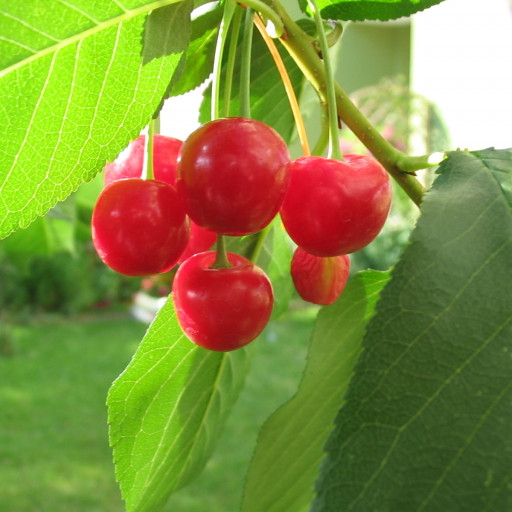
- 🍒 The Fruit: The cherries are smaller and rounder than sweet varieties. They transition from a bright scarlet to a deep, translucent red, and unlike sweet cherries, they are quite soft when ripe.
🏡 In Your Garden
- ❄️ Cold Hardiness: Unlike their sweet cousins which can be finicky, sour cherries are incredibly cold-tolerant. They actually require a specific amount of "chill hours" during the winter to trigger their magnificent spring bloom.
- 🌳 Self-Fertility: One of the best perks for home gardeners is that most sour cherry varieties are self-fertile. This means you only need to plant one tree to get a heavy harvest, making them perfect for smaller backyards.
- 🥧 Harvest Nuance: These trees have a "taproot" tendency when young, meaning they dislike being moved once established. Pick a permanent spot with well-draining soil to keep them happy for decades.
⚠️ Safety & Toxicity
- 🐾 Pet Warning: While the fleshy fruit is safe and healthy, the pits, leaves, and stems contain amygdalin, which can release cyanide if chewed or crushed. Keep curious dogs and horses away from fallen leaves and pits.
- 👶 Choking Hazard: The small, hard pits are a significant choking hazard for toddlers. Always pit the cherries before serving them to children.
✨ Fun Fact
Sour cherries are one of the few natural food sources of melatonin! Many people drink tart cherry juice before bed as a natural remedy to help regulate their sleep cycles and improve rest quality.

Detailed Care Instructions
To grow a Prunus cerasus plant, also known as sour cherry or Morello cherry, follow these steps:
- Select a suitable location: Sour cherry plants prefer full sun, so choose a spot in your garden with at least 6-8 hours of direct sunlight per day. The soil should be well-draining and slightly acidic.
- Prepare the soil: Before planting, ensure that the soil is adequately prepared. Loosen the soil and add organic matter like compost or well-rotted manure to improve its quality and drainage.
- Planting: Dig a hole that is slightly larger and deeper than the root ball of the plant. Place the plant in the hole, making sure that the top of the root ball is level with or just above the soil surface. Backfill the hole with soil and firm it gently around the roots.
- Watering: After planting, thoroughly water the plant to settle the soil around the roots. To establish a strong root system, provide regular watering throughout the first year, keeping the soil consistently moist but not waterlogged.
- Mulching: Apply a layer of organic mulch, such as wood chips or bark, around the base of the plant. This helps to conserve moisture, suppress weeds, and regulate soil temperature.
- Pruning: Prune the sour cherry plant during the dormant season, which is usually in late winter or early spring. Remove any dead or broken branches, as well as any crossing or inward-growing branches. This will help maintain the plant's shape, promote air circulation, and improve fruit production.
- Fertilizing: In general, sour cherry plants do not require frequent fertilization. However, if soil tests indicate nutrient deficiencies, you can apply a balanced fertilizer, such as a 10-10-10 formulation, in early spring before new growth starts.
- Pest and disease control: Monitor your plant regularly for signs of pests or diseases, such as aphids, cherry fruit fly, or fungal infections. Use organic or conventional controls as necessary to prevent or treat infestations.
- Harvesting: Sour cherry fruits are ready to harvest when they are firm, dark red or black in color, and easily detach from the stem. Pick the ripe fruits carefully to avoid damaging the branches.
By following these steps, you can successfully grow a Prunus cerasus plant and enjoy the delicious fruits it produces.

Place in a window with dappled sun or a spot in the middle of a room. Or directly in a window facing west or east.

To effectively water this plant, first ensure that the soil around the plant is dry at a depth of about 2-3 inches. Then, using a watering can or hose, slowly and evenly water the soil around the base of the plant until the top few inches of soil are moist. Avoid overwatering as this can lead to root rot. Watering frequency will depend on factors such as temperature, humidity, and rainfall, but generally, this plant prefers moderate moisture levels. It is important to note that proper drainage is essential for the health of this plant, so make sure the soil has adequate drainage to prevent water from pooling at the base of the plant.
To fertilize this plant, use a balanced fertilizer high in nitrogen in the early spring before the leaves start to grow. Use a slow-release fertilizer to avoid over-fertilization. Apply the fertilizer evenly around the base of the plant, avoiding the stem and leaves. Water the plant thoroughly after fertilization. Avoid fertilizing during the summer months, as this can cause excessive growth and weaken the plant.
The ideal soil for the Prunus Cerasus plant should be well-draining and fertile. It should have a pH level between 6.0 to 7.0. The soil should be able to hold moisture but not have standing water as this can lead to root rot. It is recommended to amend the soil with organic matter such as compost, peat moss, or aged manure to improve the soil structure and nutrient content. Avoid using heavy clay soils or soils that are too sandy as they do not retain moisture or nutrients well. Test the soil regularly to ensure that it remains within the recommended pH range.
To propagate this plant, you will need to take hardwood cuttings in the late winter or early spring. Select healthy branches that are about 8-10 inches long and have no signs of disease or damage. Make clean cuts at the base of each cutting, just below a node. Remove the leaves from the bottom half of each cutting and dip the base in rooting hormone.
Prepare the soil by mixing equal parts of peat moss and perlite. Moisten the soil and insert the cuttings about 2 inches deep. Cover the pot with a plastic bag to create a humid environment and place it in a warm, bright location.
Check the cuttings regularly and mist the soil if it becomes dry. After 4-6 weeks, roots should start to develop. Once the cuttings have rooted, remove the plastic bag and transfer each cutting to its own pot.
Keep the young plants in a protected area until they are strong enough to be planted outside. When planting outside, choose a location with well-draining soil and full sun. Water the young plants regularly until they become established.








