Plant Overview
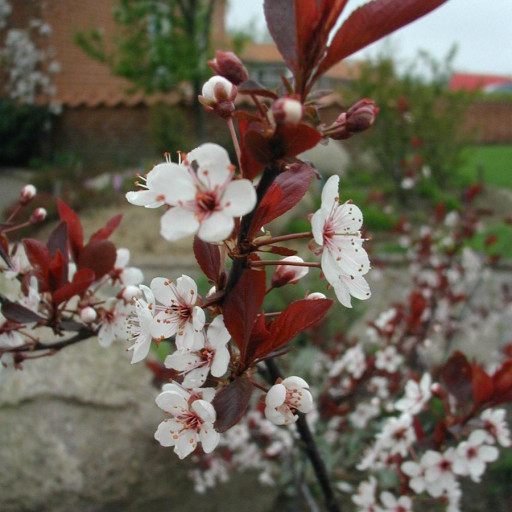
Known as the Purple Leaf Sand Cherry, this striking deciduous shrub is a hybrid masterpiece designed for garden drama. It is a cross between the prostrate Sand Cherry and the upright Purple-leaf Plum, offering a "moody" centerpiece with its deep wine-colored foliage. It is a favorite for those who want the sophisticated look of a plum tree but have a smaller landscape to fill.
🔍 How to Identify
- 🍃 Dramatic Foliage: The leaves are ovoid and serrated, emerging as a bright reddish-purple in spring and deepening into a rich, dark maroon or bronze-purple by midsummer.
- 🌸 Spring Blossoms: In early spring, the branches are smothered in small, fragrant, five-petaled flowers that range from pale pink to snowy white.
- 🌳 Growth Habit: It typically grows as an upright, multi-stemmed shrub with a rounded shape, reaching about 7 to 10 feet in height.
🏡 In Your Garden
- ☀️ Sun for Color: To keep that signature purple hue, this plant demands full sun. If tucked away in the shade, the leaves will lose their intensity and turn a muddy greenish-bronze.
- ⏳ A Short, Bright Life: This shrub is often considered a "fast burner." While it grows quickly and looks stunning, it is relatively short-lived (often 10–15 years) due to its susceptibility to pests like borers and aphids.
- ✂️ Pruning Strategy: Since it blooms on "old wood," any major pruning should be done immediately after the spring flowers fade to ensure you don't cut off next year's display.
⚠️ Safety & Toxicity
- 🐾 Toxic to Pets: Like many members of the Prunus genus, the leaves, stems, and pits contain cyanogenic glycosides. If chewed or ingested, they can be highly toxic to dogs, cats, and horses.
- 🍒 The Fruit: It occasionally produces small, blackish-purple fruits. While not strictly "poisonous" to humans in small amounts, they are bitter, seedy, and can cause significant stomach upset in children.
✨ Fun Fact
- 📜 The "Baby" Plum: The name "Cistena" comes from the Sioux word for "baby," a reference to the plant’s compact, shrubby stature compared to its much larger plum tree ancestors.

Detailed Care Instructions
| Humidity | High |
| Lighting | Full Sun |
| Difficulty | Medium |
| Hibernation | Cold Period |
| Hardiness Zones | 7 - 10 |
To grow Prunus × Cistena plant, also known as the purple-leaf sand cherry, you can follow these steps:
- Choose a suitable location: Prunus × Cistena prefers a sunny location with well-draining soil. Ensure that the soil pH is slightly acidic to neutral (around 6.0 to 7.5) for optimal growth.
- Prepare the soil: Till the soil to loosen it and remove any weeds or grass. Adding organic matter like compost or aged manure can improve soil fertility and drainage.
- Dig the planting hole: Dig a hole that is about twice the size of the plant's root ball and deep enough to accommodate its entire root system. Gently roughen the sides of the hole to promote root penetration into the surrounding soil.
- Plant the Prunus × Cistena: Place the plant in the hole, ensuring that the top of the root ball is level with or slightly above the soil surface. Backfill the hole with soil, gently tamping it down to eliminate air pockets.
- Water thoroughly: After planting, give the plant a deep water soaking to settle the soil around the roots. Water regularly during the first year of growth, especially during dry periods, to establish a strong root system.
- Mulch the area: Apply a 2-3 inch layer of organic mulch around the base of the plant, but keep it a few inches away from the trunk. Mulching helps retain moisture, suppress weeds, and regulate soil temperature.
- Prune as needed: Prunus × Cistena benefits from regular pruning to maintain its shape and promote healthy growth. Prune in late winter or early spring before new growth emerges. Remove any dead, damaged, or crossing branches, and thin out crowded areas to improve air circulation.
- Fertilize appropriately: Prunus × Cistena generally does not require heavy fertilization. However, a balanced slow-release fertilizer, applied in early spring, can provide additional nutrients if necessary.
- Protect from pests and diseases: Keep an eye out for common issues like aphids, scale insects, or disease infestations. Promptly treat any pests or diseases that you notice to prevent damage to the plant.
- Monitor watering: While Prunus × Cistena is moderately drought-tolerant once established, it still benefits from regular watering, especially during hot and dry periods.
By following these steps and providing proper care, your Prunus × Cistena plant should grow and thrive.

Place in a bright room that is sun drenched almost all day. Or directly in a south-facing window.

When watering Prunus × Cistena, it is important to monitor the soil moisture level and only water when the top inch of soil feels dry to the touch. Over-watering can lead to root rot and other plant diseases. It is also important to avoid getting water on the foliage, as this can lead to fungal infections. Water at the base of the plant, using a slow and steady stream to ensure the water penetrates deeply into the soil. In general, Prunus × Cistena prefers moderate watering, with more frequent watering during periods of hot and dry weather.
To fertilize this plant, apply a balanced fertilizer in the early spring, just as growth begins. Repeat the application once a month until mid-summer. Avoid fertilizing in late summer or fall, as this can stimulate new growth that may not have time to harden off before winter. Apply the fertilizer evenly around the drip line of the plant, and water in well after application. Follow the fertilizer manufacturer's instructions for application rates and timing.
When planting Prunus × Cistena, it is important to use well-draining soil that is enriched with organic matter. The soil should be slightly acidic with a pH range of 6.0 to 6.5. A soil pH test can be conducted to determine the acidity levels of the soil in the planting area. The soil should also be loamy, which means it should contain a mix of sand, silt, and clay. This will help the soil retain moisture without becoming waterlogged. It is recommended to mix the soil with compost or other organic fertilizer before planting the Prunus × Cistena to improve soil structure and nutrient availability. Avoid using heavy, clay soil or soils with high levels of salts or alkaline.
Prunus × Cistena is a deciduous shrub that belongs to the Rosaceae family. It can be propagated by taking semi-hardwood cuttings from the plant during the summer months.
To start, select a healthy stem that has not yet flowered, and cut a 6-8 inch long branch from it. Remove any leaves that will be below the soil line, leaving two to three leaves at the top of the cutting.
Dip the bottom inch of the cutting in rooting hormone and place it in a pot filled with moistened potting soil or vermiculite. You can cover the pot with a plastic bag to keep the moisture in.
Place the pot in a warm and brightly lit area, but avoid direct sunlight. Keep the soil moist but not waterlogged. After six to eight weeks, gently tug on the cutting to see if it has rooted. If it resists your tug, it has rooted successfully.
Once the cutting has rooted, you can transplant it into a larger container or out into the garden. Make sure to water it regularly and protect it from strong winds and direct sunlight for the first few weeks to help it adjust.
Common pests of the dwarf red-leaf plum include Scale insect, aphids, larvae. Make a habit of checking your dwarf red-leaf plum frequently for pests so that any infestations can be caught and managed early.








