Plant Overview
Often called the Japanese Bird Cherry or Gray's Chokecherry, this elegant deciduous tree is a hidden gem of East Asian forests. While its famous "Sakura" cousins steal the spotlight with their pink petals, Prunus grayana offers a more delicate, wild beauty. In Japan, it is known as Uwa-mizu-zakura, where it has been celebrated for centuries not just for its looks, but for its unique place in traditional cuisine.
🔍 How to Identify
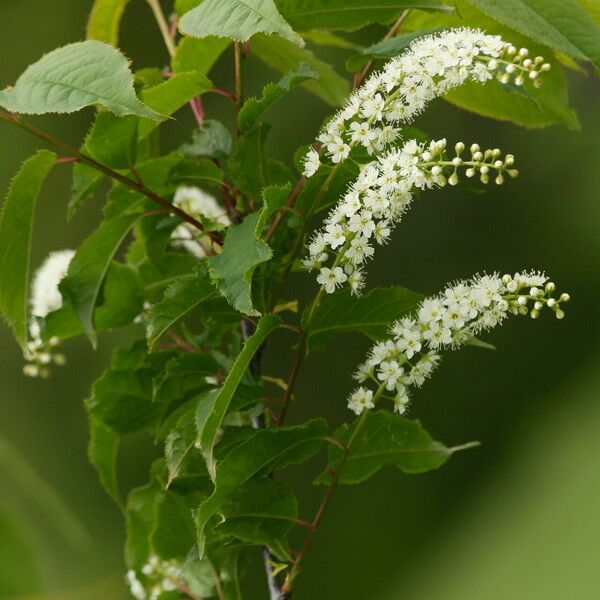
- 🌬️ Bottle-brush Flowers: Unlike the typical "cup-shaped" cherry blossom, this tree produces long, fuzzy white spikes (racemes) that look like tiny bottle-brushes swaying in the breeze.
- 🍃 Bristly Leaves: The foliage is oblong and bright green, featuring very fine, hair-like "teeth" along the edges that feel slightly rough to the touch.
- 🪵 Lenticels on Bark: The grayish-brown bark is relatively smooth but marked with prominent horizontal slits called lenticels, which help the tree "breathe."
🏡 In Your Garden
- 💧 Moisture Lover: In its native habitat, this tree thrives along mountain streams. In a garden setting, it hates "hot feet"—ensure the soil stays cool and moist, especially during peak summer.
- 🦋 Pollinator Paradise: Because the flowers are rich in nectar and bloom in late spring, they act as a vital refueling station for bees and butterflies after the early-season blossoms have faded.
- 🏗️ Space Planning: It has a graceful, spreading habit. Avoid planting it too close to structures, as it appreciates "elbow room" to show off its arching branches and airy silhouette.
⚠️ Safety & Toxicity
- 🚫 Cyanogenic Glycosides: Like almost all members of the Prunus genus, the leaves, bark, and 특히 (especially) the pits of the fruit contain compounds that can release cyanide if crushed or ingested.
- 🐾 Pet Warning: Keep fallen, wilted leaves away from curious pets or livestock. Interestingly, the toxins can become more concentrated as the leaves wilt, making them more dangerous than fresh green ones.
✨ Fun Fact
In Japan, the young, unopened flower buds are harvested and pickled in salt and vinegar to create a traditional delicacy called Anna-nin-go. It is said to have a unique, spicy kick similar to wasabi or mustard!

Detailed Care Instructions

Place in a bright room that is sun drenched almost all day. Or directly in a south-facing window.

When the top few inches of soil dry out, water your plants. If the top few inches of soil are still moist, do not water your plant. Wait a few days, then poke your finger into the soil to see if anything has changed. Overwatering poses a disease risk, such as the development of fungal diseases in the roots. These plants have adaptations in there leaves that allow them to survive in low water supply.







