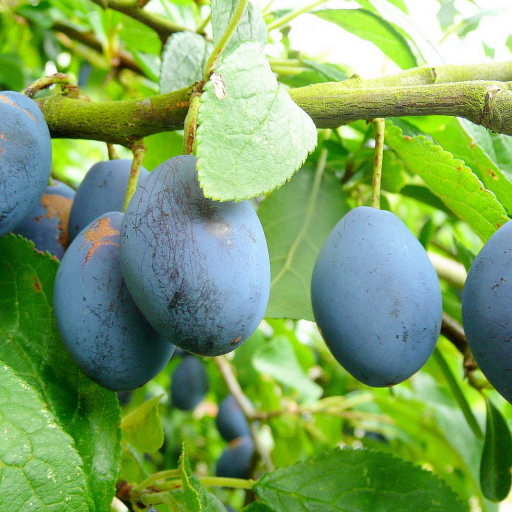
Plant Overview
Often called the Damson Plum or Bullace, Prunus insititia is the rugged, tart cousin of the common dessert plum. Historically linked to the ancient city of Damascus, these hardy trees have been a staple of European hedgerows and orchards for centuries. While the fruit is famously "mouth-puckering" when raw, it transforms into deep, rich preserves and gins that are highly prized by foragers and home cooks alike.
🔍 How to Identify
- 🌸 Spring Blossoms: In early spring, the tree is smothered in small, creamy-white flowers that usually appear in pairs or small clusters just before or with the leaves.
- 🍃 The Foliage: Leaves are small, oval, and finely toothed along the edges. If you flip them over, you’ll often find a soft, velvety down on the underside.
- 🍇 The Fruit: Unlike the large, round plums found in supermarkets, Damsons are small, oval-shaped, and usually a deep "Damson-blue" or purple with a distinct waxy, dusty coating known as a "bloom."
- 🌳 Growth Habit: It typically grows as a large, twiggy shrub or a small, compact tree. Older specimens may develop subtle, thorn-like spurs on the branches, giving it a wilder appearance.
🏡 In Your Garden
- 🛡️ Natural Windbreaks: Because of its dense, twiggy growth, this plant is an excellent choice for a fruiting hedge. It provides privacy and acts as a sturdy windbreak while offering a harvest.
- 💪 Hardy Nature: Damsons are significantly tougher than most stone fruits. They can tolerate damp soils and colder, windier sites where more delicate plum varieties might fail to set fruit.
- 🐝 Pollination Power: They are generally self-fertile and are absolute magnets for early-season pollinators like bumblebees, making them a "hero plant" for a wildlife-friendly garden.
⚠️ Safety & Toxicity
- 🐾 Pet Warning: Like all members of the Prunus genus, the leaves, stems, and especially the pits (stones) contain cyanogenic glycosides. If chewed or crushed, these can be toxic to dogs, cats, and livestock.
- 👶 Kid Safety: The fruit is edible and delicious when cooked, but ensure children do not swallow or crack open the pits. The raw fruit is extremely tart, which usually discourages children from eating too many!
✨ Fun Fact
[Damson trees were once a secret weapon of the British textile industry! The skins of the fruit were used to create a rich purple dye, and the trees were often planted near carpet-weaving factories so the fruit could be used for coloring the wool.]

Detailed Care Instructions
Prunus insititia, also known as the damson tree, is a type of plum tree that produces small, tart fruits. Here are some tips on how to successfully grow Prunus insititia plants:
- Choose a suitable location: Prunus insititia plants prefer full sun and well-draining soil. Make sure to select a location that receives at least 6-8 hours of sunlight each day.
- Planting: Plant your Prunus insititia tree in the spring or fall, when the soil is still warm. Dig a hole that is twice as wide and deep as the root ball of the tree. Place the tree in the hole and backfill with soil, making sure the tree is at the same level as it was in its pot.
- Watering: Water newly planted trees regularly to help establish their root systems. Once established, Prunus insititia trees are drought tolerant, but they will still benefit from regular watering during dry periods.
- Fertilizing: Fertilize your Prunus insititia tree in the spring with a balanced fertilizer. Be careful not to over-fertilize, as this can lead to excessive vegetative growth at the expense of fruit production.
- Pruning: Prune your Prunus insititia tree in the late winter or early spring to remove dead or damaged branches, improve air circulation, and shape the tree. This will help promote healthy growth and fruit production.
- Pest and disease control: Keep an eye out for common pests such as aphids, plum moths, and plum sawflies, and treat them promptly if necessary. Fungal diseases such as brown rot can also affect Prunus insititia trees, so be sure to practice good sanitation and proper watering techniques to prevent these issues.
By following these tips, you can successfully grow and enjoy the fruits of your Prunus insititia tree. Happy gardening!
Prunus Insititia plants should be watered regularly, especially during the growing season. The soil should be kept consistently moist but not waterlogged. Water deeply to encourage the roots to grow deeper into the soil. The frequency of watering will depend on the weather and soil conditions, so it is important to monitor the moisture levels regularly. Watering in the morning is recommended to allow the plant to absorb moisture before the heat of the day. Avoid watering the foliage to prevent diseases. Adding a layer of mulch around the base of the plant can help retain moisture in the soil.
To fertilize the Prunus Insititia plant, apply a balanced fertilizer with an NPK ratio of 10-10-10 in early spring before new growth appears. Follow the manufacturer's instructions for dilution and application rates, and be sure to water the plant thoroughly after fertilizing to help the nutrients penetrate the soil. Repeat this fertilization process every 4-6 weeks during the growing season to promote healthy growth and fruit production. Avoid over-fertilizing, as this can lead to nutrient imbalances and potentially harm the plant.
When choosing soil for your Prunus Insititia plant, it is important to select a well-draining mix that is slightly acidic to neutral in pH. A loamy soil with good fertility and organic content is ideal for promoting healthy growth and fruit production. Avoid heavy clay soils that can lead to waterlogged conditions, as well as sandy soils that may not retain enough moisture. Adding compost or well-rotted manure to the soil before planting can help improve its quality and provide essential nutrients for the plant. It is also advisable to periodically test the soil pH and adjust as needed to ensure optimal growing conditions for your Prunus Insititia plant.
Prunus Insititia plants can be propagated through both seeds and cuttings. To propagate using seeds, collect ripe fruit from a mature plant and remove the seeds from the fruit pulp. Clean the seeds by washing them and then sow them in a container filled with a well-draining potting mix. Press the seeds lightly into the soil and keep the container in a warm, sunny location. Water the seeds regularly to keep the soil moist but not waterlogged.
To propagate using cuttings, select a healthy, young stem from a mature plant and cut a 5-6 inch section just below a leaf node. Remove any leaves from the lower half of the cutting and dip the cut end in rooting hormone. Plant the cutting in a small pot filled with a well-draining potting mix and place the pot in a warm, sunny location. Water the cutting regularly and mist it occasionally to keep the humidity high.
Both methods of propagation may take several weeks to months for the new plants to establish roots and grow. Once the new plants have developed a strong root system, they can be transplanted into larger pots or directly into the garden.








