Plant Overview
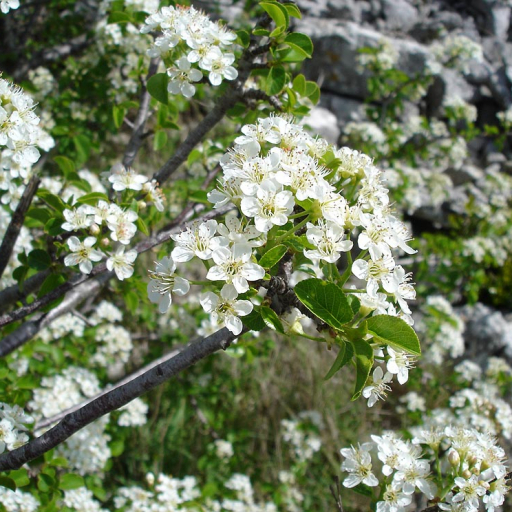
Known as the Mahaleb Cherry or the St. Lucie Cherry, this elegant deciduous tree is a hidden gem of the Mediterranean and Western Asia. While it is often used as a hardy "rootstock" for commercial cherry trees, it stands beautifully on its own, famous for its clouds of fragrant white blossoms and its aromatic wood. In many cultures, its ground seed kernels are prized as a spice called Mahlab, which lends a unique almond-and-vanilla scent to traditional holiday breads.
🔍 How to Identify
- 🍃 Glossy Foliage: The leaves are relatively small, rounded to heart-shaped, and boast a brilliant, shiny green finish with finely serrated edges.
- 🌸 Fragrant Clusters: Unlike many cherries that bloom in pairs, the Mahaleb produces small, white, highly scented flowers in upright clusters (racemes) of 3 to 10.
- 🍒 The Fruit: It bears tiny, pea-sized cherries that transition from green to a deep, polished black when fully ripe; they are bitter to humans but a magnet for songbirds.
🏡 In Your Garden
- 🌱 The Hardy Backbone: Because it is incredibly drought-tolerant and adaptable to poor, rocky, or alkaline soils, it is frequently used by gardeners as a sturdy base for grafting more delicate cherry varieties.
- 🌳 Growth Habit: It typically grows as a large shrub or a small, spreading tree. It requires very little "pampering" once established, making it perfect for low-maintenance landscapes or windbreaks.
- ✂️ Aromatic Wood: The bark and wood have a distinct, pleasant scent. Historically, the straight young branches were so valued for their fragrance that they were used to craft high-end tobacco pipes and walking sticks.
⚠️ Safety & Toxicity
- 🐾 Mildly Toxic: Like many members of the Prunus genus, the leaves, stems, and especially the pits contain cyanogenic glycosides.
- 🚫 Keep Away from Pets: While birds eat the flesh of the fruit safely, the seeds and wilted leaves can be toxic to dogs, cats, and horses if ingested in significant quantities.
- 🍞 Culinary Note: Only the inner kernel of the pit is used for the Mahlab spice, and it is processed specifically for consumption; do not attempt to eat raw pits from the tree.
✨ Fun Fact
The spice made from this tree is so potent that just a teaspoon of ground Mahaleb pits can perfume an entire kitchen. It has been used for centuries in Middle Eastern and Greek baking to give "Choreg" or "Vasilopita" breads their signature, intoxicating aroma.

Detailed Care Instructions
To grow Prunus mahaleb, also known as Mahaleb cherry or St. Lucie cherry, you can follow these steps:
- Obtain seeds or young seedlings: You can purchase Prunus mahaleb seeds or young seedlings from a local nursery or online supplier. Alternatively, you can collect seeds from mature fruit if available.
- Choose a suitable location: Prunus mahaleb prefers well-draining soil and full sun to partial shade. Select a spot in your garden with these conditions.
- Prepare the soil: Ensure the soil is well-draining by removing any weeds or debris. You can amend the soil with organic matter like compost or manure if needed.
- Plant the seeds or seedlings:
- Seeds: Soak the seeds in water for 24 hours before planting to soften the outer shell. Plant the seeds in pots or directly in the ground, about 1 inch deep. Water well after planting.
- Seedlings: Dig a hole slightly larger than the root ball of the seedling. Place the seedling in the hole and backfill with soil. Water thoroughly.
- Seeds: Soak the seeds in water for 24 hours before planting to soften the outer shell. Plant the seeds in pots or directly in the ground, about 1 inch deep. Water well after planting.
- Watering: Keep the soil evenly moist, but not waterlogged. Water the plant regularly, especially during dry or hot periods. Avoid overwatering, as it can lead to root rot.
- Fertilization: Prunus mahaleb generally does not require regular fertilization. However, you can provide a balanced, slow-release fertilizer once a year during the growing season to promote healthier growth.
- Mulching: Apply a layer of mulch around the base of the plant to help retain moisture, suppress weed growth, and insulate the roots. Use organic mulch like wood chips or bark.
- Pruning: Prune Prunus mahaleb during its dormant season to remove any dead, damaged, or crossing branches. This will help maintain its shape and overall health.
- Pests and diseases: Prunus mahaleb is generally resistant to pests and diseases. However, keep an eye out for common fruit tree pests like aphids, scale insects, or cherry fruit flies. Treat any issues with appropriate organic or chemical controls if necessary.
- Harvesting: Prunus mahaleb produces small cherries that are not typically consumed by humans. The cherries can be left on the tree for birds or wildlife to enjoy.
Remember to research and follow any specific care instructions for Prunus mahaleb in your particular region or climate, as individual growing conditions may vary.

Place in a bright room that is sun drenched almost all day. Or directly in a south-facing window.

Prunus Mahaleb is a plant that requires regular watering to survive. To water this plant, you should first check the soil to ensure it is dry before watering. You should water deeply, making sure the water reaches the roots of the plant. After watering, you should let the soil drain thoroughly and avoid saturating the soil as it can cause root rot. During hotter months, you may need to water the plant more frequently to prevent the soil from drying out completely. It's also important to avoid getting water on the leaves as it can cause fungal infections.
Prunus Mahaleb should be fertilized in early spring before new growth appears. Use a balanced fertilizer with equal parts nitrogen, phosphorus, and potassium, applied at a rate of 1 pound per 100 square feet. Avoid over-fertilizing, as this can lead to excessive vegetative growth and decreased fruit production. Water thoroughly after fertilizing.
Prunus Mahaleb plants prefer a well-draining soil that is rich in organic matter. It is important to avoid using heavy, clay soils that can hold onto excess moisture and lead to root rot. The ideal soil pH for these plants is slightly acidic, ranging from 5.5 to 6.5. It is recommended to use a mixture of topsoil, compost, and sand to create a well-draining soil that will support healthy root growth. Adding a layer of mulch on top of the soil will also help to retain moisture and regulate soil temperature. When planting, ensure that the soil is evenly moist but not waterlogged to prevent waterlogging and promote healthy growth.
There are a few ways to propagate this plant. One common method is through seed propagation. The seeds should be collected from ripe fruit and sown in a well-draining soil mix. The seeds should be lightly covered and kept moist until they germinate. It may take some time for the seeds to germinate, up to several months.
Another method of propagation is through hardwood cuttings. Cuttings should be taken in the late fall or early winter when the plant is dormant. Cuttings should be approximately six to eight inches long and should include a few nodes. The cuttings should be placed in a rooting hormone and inserted into a well-draining soil mix. The cuttings should be kept moist and in a cool, shady area until roots have developed.
Layering is also a possible method of propagation. In the spring or early summer, a lower branch of the plant can be gently bent to the ground and partially buried. The branch should be secured in place and kept moist. Over time, roots should develop at the point where the branch contacts the soil. Once the roots are established, the new plant can be separated from the parent plant.
Common pests of the mahaleb cherry include Scale insect, aphids, larvae. Make a habit of checking your mahaleb cherry frequently for pests so that any infestations can be caught and managed early.








