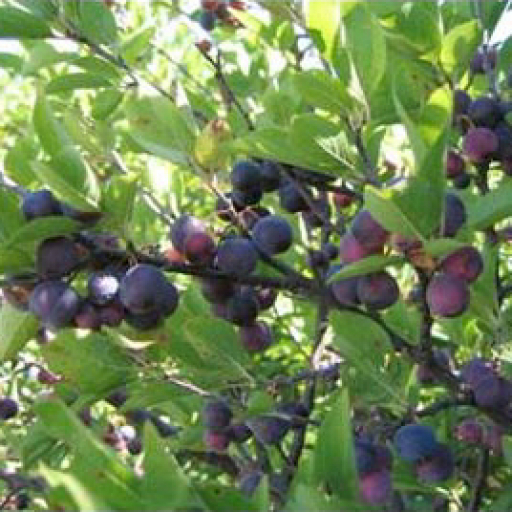
Plant Overview
Known affectionately as the "Beach Plum," this rugged North American native is a true survivor of the Atlantic coastline. Often found clinging to sand dunes from Maine to Maryland, it transforms from a gnarled, wind-swept shrub into a cloud of snowy white blossoms every spring. It is celebrated by foragers and gardeners alike for its tart, jewel-like fruits that embody the flavor of a coastal summer.
🔍 How to Identify
- 🌸 Spring Blooms: Masses of small, five-petaled white flowers cluster densely along the dark branches in mid-spring, often appearing before the leaves.
- 🍃 The Foliage: Simple, oval-shaped leaves with finely serrated (toothed) edges and a slightly fuzzy texture on the underside.
- 🍇 The Fruit: Round, marble-sized plums that ripen in late summer. They are typically a deep, dusty purple or indigo, though rare yellow-fruited variants occasionally appear.
🏡 In Your Garden
- 🏖️ Coastal Champion: This is one of the few fruiting shrubs that thrives in salt spray and poor, sandy soils. It is an excellent choice for erosion control or for seaside gardens where other plants might wither.
- ☀️ Sun & Drainage: To get a bounty of fruit, it requires full sun. While it is incredibly drought-tolerant once established, it cannot handle "wet feet"—the soil must drain quickly to prevent root rot.
- 🐝 Pollination Partner: While some beach plums are self-fertile, you will get a significantly larger harvest if you plant two or more different individuals to allow for cross-pollination by bees.
⚠️ Safety & Toxicity
- 🐾 Selective Toxicity: The fleshy part of the ripened fruit is perfectly safe (and tasty!) for humans and wildlife.
- 🚫 Hidden Danger: Like many members of the Prunus genus (including cherries and peaches), the leaves, stems, and especially the pits contain cyanogenic glycosides. If chewed or ingested, these can be toxic to pets and humans. Always pit the fruit before making preserves.
✨ Fun Fact
🌊 A Pioneer’s Pantry: In the 19th century, the Beach Plum was so highly valued for its intense flavor that early settlers would travel for miles to "the shore" to harvest the wild fruit for winter jellies. Today, "Beach Plum Jelly" remains a prized artisanal souvenir in Cape Cod and the Jersey Shore.

Detailed Care Instructions
To grow the Prunus maritima plant, also known as beach plum or wild plum, follow these steps:
- Location: Choose a planting location that receives full sun, as it requires at least 6 hours of direct sunlight daily. The soil should be well-draining and slightly acidic.
- Soil Preparation: Prepare the soil by removing any weeds or grass. Dig the soil to a depth of around 12 inches and incorporate organic matter, such as compost, to improve drainage and fertility.
- Planting: Obtain young beach plum plants from a reputable nursery or online seller. Dig a hole that is wide and deep enough to accommodate the plant's root ball. Place the root ball into the hole and gently backfill with soil, ensuring that the plant is at the same level it was in the container. Firmly tamp down the soil around the base of the plant.
- Watering: Immediately after planting, water the beach plum thoroughly to settle the soil. Afterward, water the plant regularly but avoid overwatering, as it may cause root rot. Ensure the soil is moist but not waterlogged.
- Mulching: Apply a layer of organic mulch, such as wood chips or straw, around the base of the plant to help retain moisture, suppress weed growth, and maintain soil temperature.
- Fertilizing: Initially, the beach plum plant does not require much fertilizer. However, during the growing season, you can apply a balanced slow-release fertilizer according to the manufacturer's instructions.
- Pruning: Prune the beach plum plant in early spring before new growth emerges to remove dead, damaged, or diseased branches. Additionally, thin out crowded branches to improve air circulation. Regular pruning will help maintain the plant's shape and encourage more productive growth.
- Pest and Disease Control: Monitor the plant regularly for common pests such as aphids, plum curculios, and borers. If detected, treat with appropriate insecticides or insecticidal soaps. Likewise, watch out for diseases like powdery mildew or black knot and take necessary steps to control their spread.
- Harvesting: Beach plum fruits typically ripen from late summer to early fall. Monitor the fruit's color change from green to red-purple. Harvest them when they are fully colored and slightly soft to the touch. Gently twist or cut the fruit from the plant. Be sure to leave some fruit on the plant for wildlife and to support future growth.
By following these steps, you can successfully grow and enjoy Prunus maritima plants in your garden.

Place in a bright room that is sun drenched almost all day. Or directly in a south-facing window.

To water this plant, first check the moisture level of the soil with a moisture meter or by inserting your finger into the soil about an inch deep. If the soil feels dry to the touch, it is time to water. When watering, pour water slowly and evenly around the base of the plant, making sure to soak all of the roots. Avoid getting water on the leaves or flowers as this may cause damage or disease. Check the soil again after watering to ensure that it is moist but not waterlogged. Watering should be done regularly, but be mindful not to overwater as this can lead to root rot or other issues.
To fertilize this plant, you will need to use a balanced slow-release fertilizer in the early spring. Apply the fertilizer around the base of the plant, being careful not to get it on the leaves or stem. Water the plant after fertilizing to help the nutrients soak in. Avoid fertilizing during the summer months, as this can cause excessive growth and make the plant more susceptible to damage from pests and diseases.
The best type of soil to use with this particular plant is a well-draining soil that is rich in organic matter. The pH level of the soil should be slightly acidic to neutral, with a range of around 5.5 to 7.5. It should also be moist but not waterlogged, as the plant does not thrive in soggy conditions. In terms of texture, a sandy loam soil is ideal. It allows for adequate drainage while also retaining some moisture and nutrients. When planting, it is important to ensure that the soil is properly amended with compost or other organic matter to provide the plant with the necessary nutrients for healthy growth.
Prunus Maritima is a deciduous plant that belongs to the Rosaceae family. It is usually propagated by taking semi-ripe cuttings during late summer. Here is how to propagate Prunus Maritima plant:
- Choose a healthy, vigorous, and disease-free parent plant.
- Make a sharp, clean cut on a healthy branch of the plant. The cutting should be around 6-8 inches long and should have at least 2-3 nodes.
- Remove all the leaves from the bottom 2 inches of the cutting.
- Dip the cut end of the cutting in rooting hormone powder. This will help the cutting to grow roots.
- Fill a pot with soilless mix and make a hole in the center.
- Insert the cutting into the hole, and then gently press the soil around the cutting to ensure it is upright and has good contact with the soil.
- Water the cutting, and then cover the pot with a plastic bag to create a humid environment.
- Place the pot in bright, indirect sunlight. Avoid exposing it to direct sunlight as this may cause the cutting to wilt.
- After 2-3 weeks, check the cutting for signs of rooting. You can do this by gently tugging on the cutting. If you feel resistance, roots have started to grow.
- Once the cutting has rooted, remove the plastic bag, and water the cutting regularly.
- After 2-3 months, the cutting should have grown enough roots and can be transplanted into a larger container or in the garden.
Remember to keep the cutting moist and protected from direct sunlight until it has grown an established root system.








