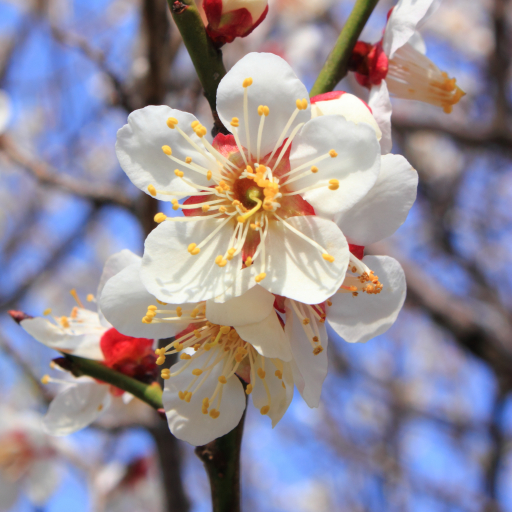
Plant Overview
Known as the "Harbinger of Spring," the Prunus mume is a botanical celebrity in East Asia, celebrated for thousands of years in poetry and ink wash paintings. Unlike its cousins that wait for the warmth of May, this resilient tree often bursts into bloom while snow still clings to its branches. It represents hope, perseverance, and the transition from the bitter cold of winter to the promise of spring.
🔍 How to Identify
- 🌸 Early Blooms: The most striking feature is the blossoms that appear on bare, leafless branches in late winter or very early spring. They are intensely fragrant, with a spicy-sweet scent similar to cloves or almonds.
- 🎋 Zig-Zag Stems: Young branches often have a distinct green color and may grow in a slightly "zig-zag" pattern, which is a favorite feature for bonsai enthusiasts.
- 🍃 Ovate Leaves: After the flowers fade, small, finely serrated, oval-shaped leaves emerge with a pointed tip, typically a soft green color.
- 🍑 Velvety Fruit: The fruit resembles a small, yellow apricot. It is fuzzy to the touch and quite tart, unlike the smooth skin of a typical plum.
🏡 In Your Garden
- ☀️ Sun for Blooms: While it can tolerate partial shade, a lack of sunlight will lead to "leggy" growth and fewer flowers. If you want that iconic cloud of pink or white in February, give it the sunniest spot in the yard.
- ✂️ Pruning Strategy: This tree produces flower buds on "old wood" (growth from the previous year). Prune it immediately after the flowers drop to encourage new growth for next year’s display, but avoid heavy hacking in late summer.
- 🪴 Drainage is Key: Prunus mume hates "wet feet." It thrives in well-draining soil and can be quite sensitive to root rot if left in standing water during the rainy season.
⚠️ Safety & Toxicity
- 🐾 Pet Warning: Like many members of the Prunus family, the leaves, stems, and especially the pits of the fruit contain cyanogenic glycosides. They are toxic to dogs, cats, and horses if ingested in significant amounts.
- 👶 Child Safety: While the processed fruit (like Umeboshi) is a culinary staple, the raw seeds inside the pits are toxic. Ensure children do not crack open the pits to eat the "nut" inside.
✨ Fun Fact
In East Asian culture, the Prunus mume is part of the "Three Friends of Winter," alongside Pine and Bamboo. These three plants are grouped together because they do not wither during the coldest months, symbolizing a steadfast friendship that survives through difficult times.

Detailed Care Instructions
To grow Prunus Mume, also known as the Chinese plum or Japanese apricot, you can follow these steps:
- Obtain a Prunus Mume plant: You can purchase a Prunus Mume plant from a local nursery or order it online. Make sure to choose a healthy plant with well-developed roots.
- Select a suitable location: Prunus Mume thrives in full sun, so choose a spot in your garden that receives at least six hours of direct sunlight daily. Ensure the soil is well-draining to prevent waterlogging.
- Prepare the soil: Prunus Mume prefers slightly acidic soil with a pH level between 6.0 and 6.5. If needed, amend the soil with organic matter such as compost to improve drainage and fertility.
- Planting: Dig a hole slightly wider and deeper than the root ball of your Prunus Mume plant. Place the plant in the hole, ensuring it is at the same depth as it was in the container. Backfill the hole with soil, gently firming it around the plant.
- Watering: After planting, water the plant thoroughly to settle the soil and ensure proper moisture levels. Keep the soil consistently moist but not waterlogged, especially during the plant's first year of growth. Reduce watering during the dormant season.
- Fertilizing: Prunus Mume benefits from regular fertilization. Apply a balanced, slow-release fertilizer in early spring and early fall, following the package instructions for the correct dosage. Additionally, you can apply a layer of compost in early spring to enhance soil fertility.
- Pruning: Prunus Mume generally requires minimal pruning. However, you can remove any dead, damaged, or diseased branches to maintain plant health and appearance. Prune after flowering to shape the plant if desired.
- Protect from pests and diseases: Prunus Mume can be susceptible to pests like aphids, scale insects, and borers. Regularly inspect the plant for signs of infestation and take appropriate measures such as insecticidal soap or horticultural oil, if necessary.
- Overwintering: Prunus Mume is hardy in USDA zones 6-9. However, in colder regions, providing winter protection by mulching around the plant or wrapping it with burlap can help prevent damage from extreme temperatures.
Remember to regularly monitor your Prunus Mume plant for signs of stress or issues and address them promptly. With proper care and attention, your plant should thrive and provide beautiful blossoms in late winter or early spring.

Place in a bright room that is sun drenched almost all day. Or directly in a south-facing window.

To water this plant, it is important to first consider the soil type and drainage. The soil should be well-draining and not too moist to avoid root rot.
When watering, use a watering can or hose with a gentle shower nozzle to avoid damaging the delicate roots. Water at the base of the plant, avoiding the leaves, and water thoroughly until water begins to drain from the bottom of the pot.
It is important to not let the soil completely dry out between watering, but also not to overwater and allow the soil to become waterlogged. It is ideal to check the moisture levels in the soil by sticking your finger about an inch deep into the soil. If it feels dry, it's time to water.
In the winter, reduce watering frequency as the plant goes dormant. In the summer months, the plant may need to be watered more frequently due to increased evaporation.
Regularly check for signs of overwatering such as yellowing leaves or fungal growth. If these signs occur, adjust watering practices accordingly.
To fertilize this plant, use a balanced, slow-release fertilizer in the early spring before new growth appears. Apply the fertilizer at the base of the plant, avoiding contact with the trunk or leaves. Water the plant thoroughly after fertilizing. Do not over-fertilize, as this can lead to excessive growth and weaken the plant's overall health.
The ideal soil for this plant should be well-draining and fertile. It should have a pH level of 6.0 to 7.5, which is slightly acidic to neutral. A mixture of granular soil, peat moss, and sand can be a good option.
The soil should also be rich in organic matter and nutrients such as nitrogen, phosphorus, and potassium. It should be able to retain moisture without getting waterlogged or soggy, and should also allow air to circulate freely.
It's important to avoid using heavy clay soils, as they tend to hold onto water for too long, which can lead to root rot and other fungal infections. Additionally, the soil should be well-aerated and free of any rocks or debris that could interfere with root growth and development.
Overall, the key is to choose a soil that is well-balanced and suitable for the specific needs of this plant, including its nutrient requirements, drainage needs, and pH preferences.
Prunus Mume can be propagated through several methods, including cuttings and seed propagation.
Cuttings should be taken in the spring or early summer from semi-hardwood growth. The cutting should be around 8-10cm in length and should have 2-3 leaves. Dip the cutting in rooting hormone and place it in a well-draining soil mix. Keep the cutting moist and warm in a bright, indirect light location. Once the cutting has rooted, it can be transplanted to its own pot.
Seed propagation can also be done in the fall. The seed should be soaked in water for 24 hours and then stratified for 90-120 days in a cool, dark location. After stratification, the seeds can be planted in a pot with well-draining soil mix and placed in a bright, indirect light location. Keep the soil moist and warm until the seeds germinate. Once the seedlings have grown several sets of true leaves, they can be transplanted to their own pots.
Regardless of the propagation method used, it is important to keep the young plants in a warm, bright, and well-lit location to ensure their healthy growth.
Common pests of the japanese apricot include Scale insect, aphids, larvae. Make a habit of checking your japanese apricot frequently for pests so that any infestations can be caught and managed early.








