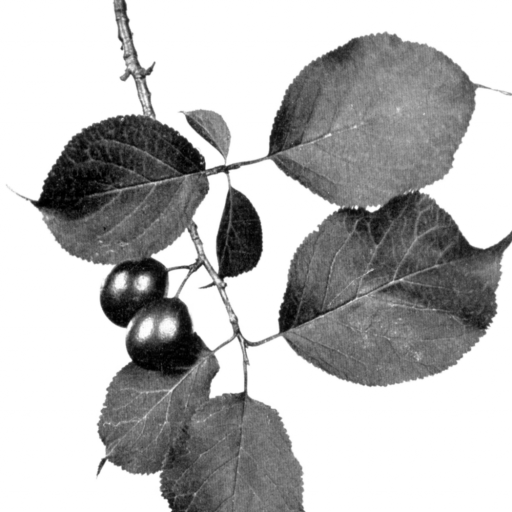
Plant Overview
Known affectionately as the Canada Plum, Prunus nigra is a hardy pioneer of the North American landscape. It is famous for its "moody" aesthetic transformation; it begins spring draped in ethereal white blossoms that blush pink as they age, providing a stunning contrast against a bark so dark it appears charcoal-black after a spring rain.
🔍 How to Identify
- 🌳 The Bark: The most striking feature is its dark, grey-black bark that develops thin, papery scales as the tree matures, often revealing "lenticels" (horizontal breathing pores).
- 🌸 The Flowers: Unlike many other plums, these white five-petaled flowers have sepals (the small leaves at the base of the flower) that are tinged with red and lack the glands found on similar species.
- 🍃 The Leaves: Broadly oval with a "double-toothed" edge, the leaves end in a sudden, sharp point, making them look slightly more aggressive than the common garden plum.
🏡 In Your Garden
- 🧤 The Thicket Factor: This tree is a "wanderer." It naturally produces suckers from its roots, meaning it will try to form a dense thicket over time. This makes it a fantastic choice for a privacy screen or a windbreak, but less ideal for a tiny, manicured flower bed.
- 🦋 Pollinator Paradise: Because it blooms so early in the spring, it is a critical "first meal" for honeybees and emerging butterflies. It serves as a primary host plant for the larvae of the stunning Tiger Swallowtail butterfly.
⚠️ Safety & Toxicity
- 🍒 Fruit Edibility: The fruit is safe for human consumption and is prized for making tart jellies and preserves, though the skin is quite thick and the flesh is sour compared to grocery store plums.
- 🚫 Toxic Parts: While the fruit flesh is safe, the pits, leaves, and stems contain cyanogenic glycosides (which break down into cyanide). Ensure children do not swallow the pits and keep browsing pets, like dogs or horses, away from the foliage.
✨ Fun Fact
Early settlers used the Canada Plum not just for food, but for its "iron-like" qualities. The wood is surprisingly heavy and hard, leading it to be used historically for crafting sturdy tool handles and even the teeth of wooden rakes.

Detailed Care Instructions
To grow a Prunus Nigra plant, also known as Canada red cherry or purple-leaf sand cherry, you can follow these steps:
- Choose a suitable location: Prunus Nigra prefers full sun exposure but can also tolerate partial shade. Ensure the location has well-drained soil and adequate space for the plant to grow.
- Prepare the soil: Before planting, prepare the soil by removing any weeds, rocks, or debris. Prunus Nigra prefers slightly acidic soil with a pH between 6.0 and 7.0. If the soil is too alkaline, you can amend it by adding organic matter like compost or peat moss.
- Dig a hole: Dig a hole slightly larger than the plant's root ball. The depth of the hole should be equal to the height of the root ball. This will help prevent the plant from sinking too deep or protruding above the ground.
- Plant the Prunus Nigra: Place the plant in the hole and backfill with soil, gently firming it around the roots. Water the plant thoroughly after planting to settle the soil.
- Watering and maintenance: Prunus Nigra requires regular watering, especially during its first year of growth. Water deeply but less frequently, allowing the soil to dry out slightly between waterings. Avoid overwatering, as it can lead to root rot.
- Mulching: Apply a layer of organic mulch around the base of the plant to retain moisture, suppress weed growth, and regulate soil temperature. Keep the mulch a few inches away from the trunk to prevent rot.
- Pruning: Prunus Nigra may benefit from regular pruning to maintain its shape and remove any dead, damaged, or diseased branches. Pruning is best done during late winter or early spring before new growth begins.
- Fertilization: Prunus Nigra generally does not require heavy fertilization. However, you can apply a slow-release balanced fertilizer in early spring to provide essential nutrients.
- Pest and disease control: Prunus Nigra can be susceptible to pests like aphids, caterpillars, and fungal diseases like leaf spot. Monitor the plant regularly and take appropriate measures, such as handpicking insects or using organic insecticides when necessary.
By following these steps and providing proper care, your Prunus Nigra plant should grow and thrive.

Place in a bright room that is sun drenched almost all day. Or directly in a south-facing window.

1. Prunus Nigra (scientific name) belongs to the Rosaceae family and is a deciduous tree native to North America.
2. When watering a Prunus Nigra plant, it is important to consider its specific water requirements to promote healthy growth.
3. The frequency of watering depends on various factors such as temperature, weather, soil moisture levels, and stage of growth.
4. One effective method to determine if your Prunus Nigra plant requires watering is to check the moisture content of the soil.
5. Insert your finger about 1-2 inches into the soil near the base of the tree to assess if it feels dry. If it does, then the plant may need watering.
6. Use a gentle, slow watering method to avoid waterlogging the soil, which can be detrimental to the plant's health.
7. Direct the water at the base of the tree, aiming to moisten the soil evenly around the root zone.
8. Keep an eye on the soil after watering. If it becomes saturated or water starts pooling around the tree, reduce the frequency and amount of water given to prevent overwatering.
9. During hot and dry periods, Prunus Nigra plants may require more frequent watering to compensate for increased evaporation rates.
10. It is beneficial to apply mulch around the base of the tree to help retain soil moisture and regulate temperature, reducing water loss through evaporation.
11. Conduct regular inspections of the tree's leaves and overall appearance to identify signs of drought stress, such as wilting or yellowing leaves. Adjust your watering routine accordingly if needed.
12. Avoid watering Prunus Nigra plants during the evening hours, as this can contribute to the development of fungal diseases. Instead, water in the early morning to allow foliage to dry out during the day.
13. Adjust your watering schedule according to the seasons. Reduce watering in late autumn and winter when the tree is dormant, as it requires less moisture during this time.
14. Consider the specific soil conditions of your garden and adapt your watering practices accordingly. Prunus Nigra trees generally prefer well-draining soil that retains some moisture but does not become waterlogged.
To fertilize Prunus Nigra, follow these instructions:
- Apply the fertilizer during the plant's active growing season, preferably in early spring or late winter.
- Use a balanced, slow-release fertilizer specifically formulated for flowering or fruiting trees. Check the label for the recommended dosage and nutrient content.
- Before applying the fertilizer, ensure the soil is moist. Water the plant thoroughly a day or two before fertilizing.
- Sprinkle the fertilizer evenly around the base of the plant, starting from the trunk and extending beyond the drip line (outer edge of the canopy).
- Avoid piling the fertilizer directly against the trunk to prevent burning or damage.
- Gently work the fertilizer into the top inch or two of soil using a garden fork or rake, being careful not to disturb the tree's roots.
- After fertilizing, water the plant deeply to help dissolve and distribute the nutrients into the root zone.
- Monitor the plant's response to fertilization, such as foliage growth and overall health. Adjust the fertilizer application rate or frequency accordingly, following the manufacturer's guidelines.
- Repeat the fertilization process annually or as recommended based on the specific fertilizer and the plant's needs.
- Dispose of any excess or unused fertilizer properly to protect the environment and prevent contamination.
Prunus Nigra, a species of plant, thrives in a specific type of soil that provides the necessary nutrients, drainage, and pH levels for optimal growth. The recommended soil for Prunus Nigra should have the following characteristics:
- Well-Draining: Prunus Nigra requires soil that allows excess water to drain away easily. It should not retain water or become waterlogged, as this can lead to root rot and other issues. A well-draining soil promotes healthy root growth and prevents water-related problems.
- Loamy Texture: The ideal soil for Prunus Nigra is typically loamy, which means it has a balance of sand, silt, and clay particles. This texture allows for both water retention and proper drainage while providing a conducive environment for root development.
- Nutrient-Rich: Prunus Nigra thrives in soil that is rich in organic matter and essential nutrients. Organic matter, such as compost or well-rotted manure, improves soil fertility, promotes beneficial microbial activity, and aids in moisture retention. Additionally, a balanced supply of nutrients like nitrogen, phosphorus, and potassium is crucial for the plant's overall health and growth.
- pH Level: Prunus Nigra prefers slightly acidic to neutral soil conditions. A pH range of 5.5 to 7.5 is generally considered suitable, as extreme acidity or alkalinity can impact the plant's ability to absorb nutrients efficiently. Regular monitoring of soil pH helps ensure the pH remains within the desired range.
- Soil Structure: Prunus Nigra benefits from soil that has a loose, crumbly structure. This allows for good root penetration, aeration, and overall plant development. Compacted or heavy clay soils should be amended with organic matter or treated to improve their structure.
It is essential to consider these soil characteristics when cultivating Prunus Nigra to promote healthy growth, vigor, and vitality in the plant. By providing the appropriate soil conditions, you can help ensure optimal performance and a thriving Prunus Nigra.
Prunus Nigra, a plant of the Rosaceae family, can be propagated through various methods such as seed germination, softwood stem cuttings, and budding or grafting onto compatible rootstock. Each method has its own requirements and steps for successful propagation. Here are some detailed instructions on how to propagate Prunus Nigra using different techniques:
- Seed Germination:
- Collect ripe fruits from a healthy Prunus Nigra plant, ensuring they are fully mature.
- Remove the fleshy pulp surrounding the seed by washing it off gently.
- Stratify the seeds by mixing them with moist vermiculite or peat moss in a sealed plastic bag. Keep them in a refrigerator at a temperature of around 4°C (39°F) for 60-90 days. This cold stratification mimics natural winter conditions.
- After stratification, sow the seeds in a well-draining potting mix or seed-starting tray, lightly covering them with the growing medium.
- Give the seeds consistent moisture and place them in a warm location with temperatures around 20-25°C (68-77°F). Provide indirect light to promote germination.
- Germination usually occurs within 2-3 weeks, but it can take longer. Once the seedlings are a few inches tall, transplant them into individual containers or a suitable planting location in your garden.
- Collect ripe fruits from a healthy Prunus Nigra plant, ensuring they are fully mature.
- Softwood Stem Cuttings:
- Take softwood cuttings in late spring or early summer, when the current year's growth is still green and flexible.
- Cut a 4-6 inch (10-15 cm) section of a healthy stem from the Prunus Nigra plant just below a leaf node.
- Remove the lower leaves, leaving only two or three pairs at the top.
- Dip the cut end of the stem in a rooting hormone powder to encourage root development.
- Insert the cutting into a well-draining rooting medium or a mix of perlite and peat moss, making sure at least half of the stem is submerged.
- Place the cuttings in a warm and humid environment, ideally inside a plastic bag or under a propagator with misting capabilities to maintain moisture levels.
- Provide bright, indirect light and maintain a temperature of around 20-25°C (68-77°F).
- Rooting may take 4-8 weeks. Once the roots have developed, transfer the rooted cuttings into individual pots filled with suitable potting soil.
- Take softwood cuttings in late spring or early summer, when the current year's growth is still green and flexible.
- Budding or Grafting:
- Choose a compatible rootstock (another Prunus species) that is vigorous and disease-resistant to graft or bud the Prunus Nigra onto.
- Collect scion wood from a healthy Prunus Nigra tree during winter dormancy. This should consist of 1-year-old stems with several buds.
- Prepare the rootstock by making a clean, slanted cut just above the soil line.
- Cut the scion wood into suitable sections, ensuring each section has at least one healthy bud.
- Make a "T" or shield-shaped incision on the rootstock, gently lifting the bark at the base of the cut.
- Insert the prepared scion into the incision on the rootstock, aligning the cambium layers of both.
- Secure the union by tightly wrapping a grafting tape or rubber band around the graft area, leaving the bud exposed.
- Cover the entire graft union with grafting wax or a grafting compound to provide protection and prevent desiccation.
- Place the grafted plant in a warm and humid environment, such as a greenhouse, until the graft union has successfully healed and new growth appears.
Remember, propagating plants can be challenging, and success rates may vary. It is essential to follow appropriate horticultural practices, maintain proper hygiene, and provide appropriate care during the propagation process.
- Choose a compatible rootstock (another Prunus species) that is vigorous and disease-resistant to graft or bud the Prunus Nigra onto.








