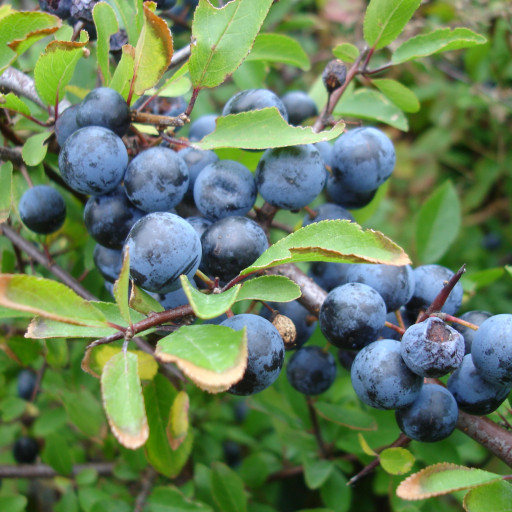
Plant Overview
Known as the "Blackthorn" or simply "Sloe," this rugged, deciduous shrub is a legendary figure in European folklore. Often called the "Mother of the Woods," it is one of the first plants to announce spring by draping its dark, twisted branches in a snowy veil of white blossoms. Historically, it was feared as a plant of "dark magic" due to its formidable thorns, but today it is cherished as a vital sanctuary for birds and insects.
🔍 How to Identify
- 🌸 Early Bloom: Five-petaled, creamy white flowers that appear in early spring, uniquely blossoming before the leaves even begin to bud.
- 🗡️ Vicious Thorns: The bark is dark, almost black, and the branches end in long, needle-sharp thorns that grow at right angles to the stem.
- 🫐 Waxy Fruits: Small, round, blue-black fruits known as "sloes." They look like tiny, dusty plums but have a famously tart, mouth-puckering flavor until the first frost.
🏡 In Your Garden
- 🌳 The Wildlife Fortress: Blackthorn is a premier choice for a "living fence." Its dense, thorny thicket provides an impenetrable nesting site for small birds like nightingales and serves as the primary food source for the rare Black Hairstreak butterfly.
- 🍂 Patience for Harvest: If you are growing it for its fruit, remember the "Frost Rule." The berries are high in tannins and very bitter; waiting for the first frost of autumn helps break down these compounds, making them perfect for jams or sloe gin.
⚠️ Safety & Toxicity
- 🩹 Physical Hazard: The thorns are the primary danger. They are incredibly sharp and can easily penetrate skin; always wear thick, heavy-duty gardening gloves when handling this plant to avoid deep punctures which can easily become infected.
- 🐕 Internal Toxicity: Like most members of the Prunus family, the pits (seeds), leaves, and stems contain cyanogenic glycosides. While the fruit flesh is safe when processed, the seeds should never be crushed or swallowed, as they are toxic to humans, dogs, and livestock.
✨ Fun Fact
In Ireland, the exceptionally hard and durable wood of the Blackthorn is the traditional material used to craft the "Shillelagh"—a famous walking stick and defensive club prized for its natural, knobby texture.

Detailed Care Instructions
| Color | White |
| Soil Ph | Neutral |
| Lighting | Full Sun |
| Soil Type | Moist, Well-Drained Soil, Sandy Soil |
| Bloom Time | Spring |
| Plant Type | Shrub |
| Mature Size | 9-12 Ft. Tall |
| Native Area | Europe And Western Asia |
| Sun Exposure | Full Sun |
| Hardiness Zones | 4-8 |
To successfully grow Prunus spinosa, also known as blackthorn or sloe, follow these steps:
- Choose the right location: Blackthorn prefers full sun to partial shade and well-draining soil. It can tolerate various soil types but prefers neutral to slightly alkaline soil.
- Prepare the soil: Prior to planting, add well-rotted organic matter, such as compost or aged manure, to the soil. This will improve drainage and fertility.
- Planting: Dig a hole twice the size of the rootball. Place the plant in the hole, ensuring that the root crown (where the roots meet the stem) is level with or slightly above the soil surface. Backfill the hole with soil, gently firming it around the plant.
- Watering: After planting, water thoroughly to settle the soil and help the plant establish. Water regularly during dry spells, particularly in the first year or two until the plant becomes established.
- Mulching: Apply a layer of organic mulch, such as wood chips or straw, around the base of the plant. This will help retain moisture, suppress weeds, and improve soil structure over time.
- Pruning: Prune blackthorn in early spring or late winter while it is still dormant. Remove any dead, damaged, or crossing branches to maintain an open and balanced shape. Prune lightly to avoid excessive regrowth. Always use clean and sharp tools to prevent the spread of diseases.
- Fertilization: In most cases, blackthorn does not require intensive fertilization. However, if your soil is poor or lacking nutrients, you can apply a balanced slow-release fertilizer in early spring.
- Pest and disease management: Blackthorn is relatively resistant to pests and diseases. However, it can be susceptible to blackthorn rust and black knot disease. Regularly inspect the plant for any signs of disease or pests and take appropriate measures if needed.
- Propagation: Blackthorn can be propagated from seeds, rooted hardwood cuttings, or by grafting. If collecting seeds, sow them in autumn, and they will germinate naturally in spring. Hardwood cuttings can be taken in late autumn or winter and planted in a suitable medium.
Remember to check local regulations and restrictions before planting blackthorn, as it may be an invasive species in some areas.

Place in a window with dappled sun or a spot in the middle of a room. Or directly in a window facing west or east.

To properly water the plant in question, you should begin by evaluating the soil moisture content. Stick your finger into the soil about an inch deep to feel for moisture. If the soil feels dry, it's time to water.
When watering, make sure to water slowly and deeply. It's best to water at the base of the plant to avoid wetting the leaves. Water until the soil feels moist about 6 inches deep.
Be careful not to overwater the plant, as this can lead to root rot and other issues. It's better to water deeply once a week than to give frequent shallow waterings.
In addition to watering, it's essential to mulch the plant to help retain moisture in the soil. Apply a layer of organic mulch such as wood chips or bark around the base of the plant, being sure not to let the mulch touch the stem.
Monitor the plant regularly and adjust watering as needed based on the weather and the plant's moisture needs.
To fertilize this plant, choose a balanced fertilizer with equal parts nitrogen, phosphorus, and potassium. Apply the fertilizer in the spring before new growth appear, and then again in mid-summer. Sprinkle the fertilizer around the base of the plant, but avoid touching the stem. Water the plant deeply after fertilizing to help the nutrients reach the roots. Be careful not to over-fertilize, as this can damage the plant.
The Prunus Spinosa plant prefers well-draining loamy soil that is rich in organic matter and slightly acidic with a pH of 5.0 to 6.5. It also requires soil that is fertile, moist, and has good water retention capacity. A mixture of peat moss, sand, and perlite can be added to improve soil texture and drainage. The plant is sensitive to salt and heavy metal content, so it is essential to use soil that is free from these elements. Overall, the best soil composition for Prunus Spinosa is one that is rich in nutrients and organic matter, drains well, and has a slightly acidic pH.
To propagate this plant, one can collect mature seeds from the fruit after it ripens and plant them in a well-draining soil in the fall. The seeds need a period of cold stratification, so it is best to sow them outside rather than indoors. Another method is through softwood cuttings taken in early summer from the tips of healthy branches. These cuttings should be dipped in rooting hormone and planted in a potting mix that is kept moist in a shaded area until roots develop. The new plants can be transplanted to their permanent location in the fall. It is also possible to divide established plants in the spring by gently separating the root system and replanting the divisions.








