Plant Overview
Known affectionately as the Klamath Plum or Sierra Plum, this rugged native of the Western United States is a true survivor of the Pacific hillsides. Unlike its pampered orchard cousins, this deciduous shrub offers a wild, tart beauty that transitions from snowy spring blossoms to deep crimson fruits. It has long been a staple for indigenous peoples and early settlers, who prized it for its ability to thrive where other fruit trees might fail.
🔍 How to Identify
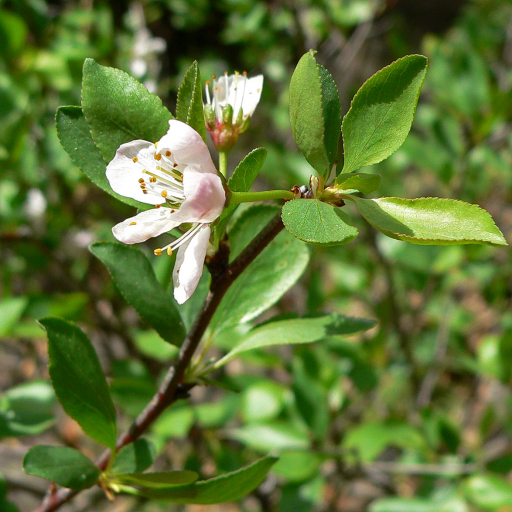
- 🍃 The Foliage: Look for small, rounded to heart-shaped leaves with finely "toothed" or serrated edges. The base of the leaf is often slightly notched, which is where it gets its Latin name subcordata.
- 🌸 The Blooms: In early spring, the branches are smothered in clusters of white five-petaled flowers that often blush to a soft pink as they age.
- 🍒 The Fruit: The plums are small (about an inch long) and vary wildly in color, ranging from bright yellow and orange to a deep, dusky purple-red when fully ripe.
- 🌳 Growth Habit: It typically grows as a dense, twiggy shrub but can reach the height of a small tree in ideal conditions, often forming protective thickets.
🏡 In Your Garden
- 🌱 Thicket Formations: Be aware that the Klamath Plum loves to "sucker," meaning it sends up new shoots from its roots. This makes it fantastic for erosion control or natural privacy screens, but you’ll need to prune it back if you want a single-trunk tree look.
- 🦋 Wildlife Magnet: This plant is an ecological powerhouse. It provides critical nectar for early-season pollinators and serves as a high-energy food source for migratory birds and small mammals in late summer.
- 🏔️ Hardy Nature: Because it evolved in rocky, mountainous soils, it is exceptionally drought-tolerant once established and prefers well-draining soil over "wet feet."
⚠️ Safety & Toxicity
- 🟢 Fruit Status: The fleshy part of the fruit is edible and highly prized for making tart jams, jellies, and wines.
- 🚫 The Danger: Like many members of the Prunus genus (including cherries and apricots), the seeds (pits), leaves, and stems contain cyanogenic glycosides.
- 🐾 Pets & Livestock: If wilted leaves or crushed pits are ingested in large quantities, they can be toxic to dogs, cats, and especially horses/livestock. Always pit the fruit before processing.
✨ Fun Fact
The Klamath Plum was so vital to early pioneers in the Oregon territory that they would hold "Plum Sundays," where entire communities would head into the hills together to harvest the wild fruit for winter preserves!

Detailed Care Instructions
To grow Prunus subcordata, also known as the Klamath plum or Sierra plum, you can follow these steps:
- Climate and Soil Requirements: Prunus subcordata thrives in cool temperate climates. It prefers well-draining soil that is rich in organic matter. The soil should have a pH level between 6.0 and 7.0.
- Planting Location: Choose a spot in your garden that receives full sun to partial shade. The area should have good air circulation and protection from strong winds.
- Propagation: Prunus subcordata can be propagated from seeds or by grafting. If using seeds, gather fresh fruits from a mature and healthy tree in late summer or early autumn. Clean the pulp from the seeds, sow them in a seedling tray filled with moistened seed-starting mix, and cover them with a thin layer of soil. Keep the tray in a cool location (around 40-50°F or 5-10°C) for stratification for 2-4 months. After stratification, move the tray to a warm location (60-70°F or 15-20°C) to encourage germination.
- Transplanting: Once the seedlings have grown to about 6 inches (15 cm) in height and are 1-2 years old, they can be transplanted into their permanent location outdoors. Dig a hole with dimensions slightly larger than the root ball of the sapling. Place the plant in the hole, ensuring that the soil line on the stem stays at the same level as the surrounding soil. Fill the hole with soil, tamp it gently, and water the plant.
- Watering and Fertilizing: Prunus subcordata requires regular watering, especially during the first few years of growth. Keep the soil moist but not waterlogged. Provide a layer of mulch around the base of the plant to retain moisture and suppress weed growth. Fertilize the plant in spring with a balanced slow-release fertilizer according to package instructions.
- Pruning and Maintenance: Prunus subcordata usually forms a multi-stemmed shrub or small tree with a spreading habit. You can shape and prune the plant in late winter or early spring to maintain its desired size and form. Remove any dead, diseased, or crossing branches to improve air circulation and reduce the risk of pest and disease problems.
- Care for Pests and Diseases: Monitor the plant for common pests like aphids, leafhoppers, and plum curculio beetles. Treat any infestations promptly using organic or chemical solutions if necessary. Prunus subcordata can also be susceptible to various diseases such as plum pox virus, brown rot, and bacterial canker. Regularly inspect the plant for signs of disease and promptly remove any infected branches or fruits to prevent the spread.
By following these steps, you should be able to successfully grow Prunus subcordata and enjoy its beautiful blooms and delicious fruits.

Place in a bright room that is sun drenched almost all day. Or directly in a south-facing window.

The best way to water this particular plant is to closely monitor the soil moisture levels and water it only when the top few inches of soil feel dry to the touch. When watering, it is important to avoid getting water on the leaves or flowers, as this can lead to fungal growth or damage. Instead, aim to water directly at the base of the plant, allowing the water to soak deeply into the soil. During periods of drought or hot weather, it may be necessary to water more frequently, but be careful not to overwater, as this can lead to root rot and other issues. It is also a good idea to provide some form of mulch around the base of the plant to help retain moisture and protect the roots from extreme temperatures.
To fertilize this plant, use a balanced slow-release fertilizer in early spring before new growth appears. Apply fertilizer evenly around the base of the plant and lightly work into the soil. Water thoroughly after fertilizing. Avoid over-fertilizing, as this can damage the plant and lead to excessive growth or poor fruit production.
Prunus Subcordata plant thrives in well-drained soil that is rich in organic matter. A sandy loam soil is preferable, but the plant can grow in other soil types too. The soil should have good drainage and not be prone to waterlogging. The pH of the soil should be neutral to slightly acidic, with a range of 5.5 to 7.5. It is important to make sure the plant receives adequate water, but the soil should not be saturated as this can lead to root rot. Adding organic matter such as compost or well-rotted manure can help improve the soil structure and fertility. It is also recommended to add a balanced fertilizer that is low in nitrogen but high in phosphorus and potassium to encourage healthy growth and flowering.
There are several methods to propagate the Prunus Subcordata plant, also known as the plant with small white flowers and edible fruit. One common method is through taking softwood cuttings. Cut a 4-6 inch branch from the tip of the plant, just below a node, and remove the lower leaves. Dip the cut end in rooting hormone and then plant it in a pot with well-draining soil. Keep the soil moist and in a warm, bright location until roots form.
Another method is through seed propagation. Collect seeds from ripe fruit and soak them in water for 24 hours. Plant the seeds in a pot of well-draining soil, burying them about 1 inch deep. Keep the soil moist and in a warm, bright location until seedlings emerge.
Propagation can also be done through layering, where a low branch is bent to the ground and covered with soil. Roots will form at the point where the branch touches the soil. Once roots have formed, cut the branch from the parent plant and transplant the new plant.
Regardless of the propagation method chosen, it is important to keep the new plant in a well-draining soil, water regularly, and provide adequate sunlight and nutrients.








