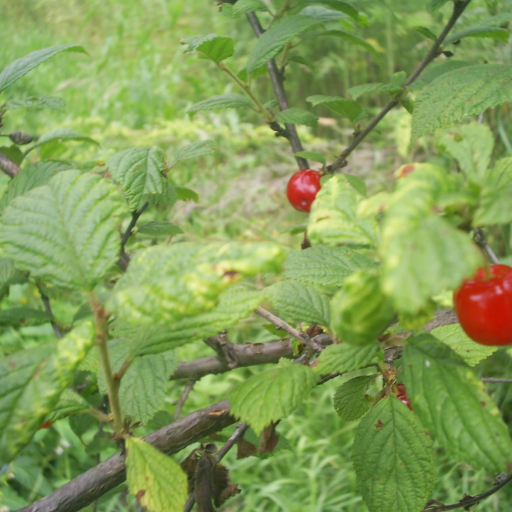
Plant Overview
Known as the Nanking Cherry, this charming shrub is a favorite for those who want the beauty of a cherry blossom tree in a compact, hedge-friendly form. In early spring, it transforms into a "snowball" of white-to-pink flowers before producing a bounty of translucent red berries. It is a tough survivor originally from the cold regions of East Asia, prized by gardeners for its ability to thrive in harsh climates where traditional cherry trees might struggle.
🔍 How to Identify
- 🌸 The Blossoms: Masses of white to pale pink flowers emerge in early spring before the leaves, often covering the entire branch in a dense, fragrant floral cloud.
- 🍃 Velvety Foliage: The leaves are oval and "tomentose," meaning they are covered in soft, downy hairs that give them a uniquely fuzzy texture and a soft green glow.
- 🍒 The Fruit: It produces small, bright red, marble-sized berries that sit directly against the stems rather than hanging from long stalks like grocery store cherries.
🏡 In Your Garden
- 🌳 Edible Hedges: Because it grows as a multi-stemmed shrub rather than a single-trunk tree, it is the perfect candidate for a "fruiting fence" or a privacy screen that provides both flowers and food.
- ❄️ Winter Warrior: This plant is exceptionally cold-hardy and wind-resistant. It actually requires a period of winter chill to produce its best fruit, making it ideal for temperate and northern gardens.
- 🕊️ Wildlife Magnet: If you enjoy birdwatching, this is the plant for you. The dense branching provides excellent nesting cover, and songbirds will flock to your yard to feast on the summer berries.
⚠️ Safety & Toxicity
- 🍒 Fruit Status: The fleshy fruit is entirely safe and delicious for humans, often described as a perfect balance of sweet and tart.
- 🚫 The Hidden Danger: Like all members of the Prunus genus (such as peaches and apricots), the pits, leaves, and bark contain cyanogenic glycosides.
- 🐾 Pet & Child Safety: While the berries are fine to eat, ensure children don't swallow the pits. Pet owners should prevent dogs from chewing on the branches or eating large amounts of fallen, crushed seeds, as they can be toxic if ingested in volume.
✨ Fun Fact
The "Tomentosa" in its botanical name literally translates to "covered with matted woolly hairs." This isn't just for looks; the fuzz on the leaves helps the plant reduce water loss and protects it from drying out in the cold, whistling winds of its native Manchurian highlands.

Detailed Care Instructions
To grow Prunus tomentosa, also known as Nanking cherry, follow these steps:
- Select a suitable location: Prunus tomentosa prefers full sun, although it can tolerate partial shade. Ensure the soil is well-draining and slightly acidic.
- Prepare the soil: Prior to planting, loosen the soil and remove any weeds or grass. If the soil is heavy or compacted, add organic matter such as compost or well-rotted manure to improve its structure and fertility.
- Planting: Dig a hole that is wide and deep enough to accommodate the root ball of the plant. Place the seedling in the hole, ensuring that it is planted at the same level as it was in the nursery pot. Backfill the hole with soil, gently firming it around the seedling.
- Watering: Give the newly planted seedling a thorough watering to settle the soil around the roots. Water regularly, especially during the first growing season, to help establish a strong root system.
- Mulching: Apply a layer of organic mulch, such as wood chips or straw, around the base of the plant. This helps retain soil moisture, suppress weeds, and regulate soil temperature.
- Pruning: Prunus tomentosa does not generally require extensive pruning. However, to maintain a desirable shape or remove damaged or crossing branches, prune during the dormant season (late winter or early spring) before new growth appears.
- Fertilizing: Prunus tomentosa typically does not require heavy fertilization. However, a balanced slow-release fertilizer can be applied in early spring to provide essential nutrients for healthy growth.
- Pest and disease control: Prunus tomentosa is generally resistant to many pests and diseases. However, occasional pests such as aphids or mites may appear. Monitor the plant regularly and take appropriate measures if necessary, such as using organic insecticides or introducing beneficial insects.
- Harvesting: Nanking cherries usually bear fruit in mid-summer to early fall. The fruits are small, tart, and bright red. Harvest the cherries when they are fully ripe and enjoy them fresh, or use them for making jams, jellies, or pies.
- Maintenance: Regularly monitor the plant for any signs of stress, disease, or pest infestations. Water as needed and provide any necessary care to ensure the plant's health and vigor.
By following these steps, you can successfully grow Prunus tomentosa and enjoy its beautiful blooms and tasty fruits.

Place in a window with dappled sun or a spot in the middle of a room. Or directly in a window facing west or east.

To water this particular plant, you should first check the moisture level of its soil. This can be done by sticking your finger an inch or two into the soil and feeling for moisture. If the soil is dry, it's time to water.
When watering, do so deeply but infrequently. This means that you should water until the soil is moist several inches below the surface, but then wait until the top layer of soil has dried out before watering again.
It's also important to avoid getting water on the leaves and branches of the plant, as this can increase the chance of disease. Instead, aim to water at the base of the plant.
Finally, keep in mind that the amount and frequency of watering will depend on factors like the plant's age, size, and location. Be sure to monitor the soil regularly and adjust your watering schedule as needed.
To fertilize this plant, use a balanced fertilizer with equal parts nitrogen, phosphorus, and potassium. Apply the fertilizer in the spring, just before new growth begins. Make sure to follow the package instructions for application rates and frequency. Avoid over-fertilization, as this can lead to weak growth and other problems. Water the plant thoroughly after fertilizing to ensure that the nutrients are absorbed properly.
It is recommended to use soil that is well-draining and rich in organic matter for this particular plant. The soil pH should be slightly acidic, with a range between 6.0-6.5. It is best to avoid heavy clay soils or those that are prone to waterlogging, as this can cause root rot. A good soil mixture for Prunus Tomentosa would consist of loam soil, sand, and compost or aged manure. It is also important to ensure proper drainage by adding gravel or perlite to the bottom of the planting hole.
Prunus tomentosa is a woody plant that can be propagated from stem cuttings. To do this, select a healthy stem that is at least 3 inches long with no leaves at the base. Cut it at an angle just below a node, remove any lower leaves, and dust the cut end with a rooting hormone. Then, place the cutting in a pot filled with a mix of sterile soil and perlite, and keep it moist but not waterlogged. Within a few weeks, roots should begin to form. Once the cutting has developed a good root system, it can be transplanted into a larger container or outdoors in a prepared bed. It's important to keep the new plant well-watered and protected from strong sun or wind until it becomes established.
Common pests of the nanking cherry include Scale insect, aphids, larvae. Make a habit of checking your nanking cherry frequently for pests so that any infestations can be caught and managed early.








