Plant Overview
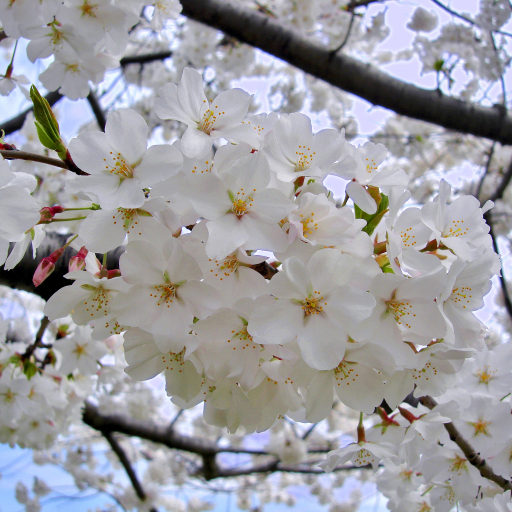
Known as the Yoshino Cherry, this tree is the undisputed star of spring festivals from Tokyo to Washington, D.C. A graceful hybrid between the Oshima and Edo-higan cherries, it is famous for its "snowstorm" effect when the petals fall. In Japanese culture, it represents the Sakura spirit—a beautiful reminder of the fleeting nature of life.
🔍 How to Identify
- 🌸 The Blooms: Its flowers appear in clusters of three to six before the leaves emerge. They start as pale pink buds and open into delicate, five-petaled white blossoms with a faint almond scent.
- 🍃 The Foliage: The leaves are dark green and oval with sharply serrated (toothed) edges. In the autumn, they transform into a warm palette of bronze, gold, and soft red.
- 🌳 The Bark: The trunk is a smooth, elegant gray-brown, marked by prominent horizontal slits called lenticels, which help the tree breathe.
🏡 In Your Garden
- ☀️ Sun Seeker: To get that iconic "cloud of white" look, this tree needs full sun. Shady spots will lead to fewer flowers and a higher risk of fungal diseases.
- 💧 Root Sensitivity: While it loves moist soil, it absolutely hates "wet feet." Ensure your soil drains well, as sitting in water can cause root rot. It is also a relatively short-lived tree (often 40–50 years), so it appreciates being planted where it won't be disturbed by heavy construction or soil compaction.
⚠️ Safety & Toxicity
- 🛑 Toxic to Pets: Like many members of the Prunus genus, the leaves, stems, and seeds (pits) contain cyanogenic glycosides.
- 🐾 The Danger: If chewed or swallowed by dogs, cats, or horses, these parts can release cyanide. While the flower petals themselves are generally considered low-risk, it is best to keep curious pets away from fallen branches or fruit pits.
✨ Fun Fact
🎁 In 1912, the Mayor of Tokyo gifted 3,000 Yoshino Cherry trees to Washington, D.C., as a symbol of friendship. Most of the iconic trees you see surrounding the Tidal Basin today are descendants of those original Prunus × yedoensis saplings!

Detailed Care Instructions
To grow Prunus × Yedoensis, commonly known as Yoshino cherry or Japanese flowering cherry, you can follow these steps:
- Climate: Yoshino cherries thrive in USDA hardiness zones 5 to 8. Ensure that your climate matches these requirements.
- Sunlight: Select a location that receives full sun to partial shade. Yoshino cherries prefer at least 6 hours of direct sunlight per day.
- Soil: The plant prefers well-draining soil, preferably a loamy or sandy soil. If necessary, improve the soil by adding organic matter such as compost or aged manure to enhance drainage.
- Planting: Dig a planting hole, slightly larger than the root ball of the plant. Place the tree in the hole, ensuring that the soil line on the trunk remains at the same level or slightly above ground level. Fill the hole with soil, gently firming it around the roots.
- Watering: Water the tree thoroughly after planting and continue watering regularly, especially during the first year. Keep the soil consistently moist but not waterlogged. Water deeply rather than shallowly to encourage deep root growth.
- Fertilizing: Apply a balanced, slow-release fertilizer in early spring or late fall. Follow the manufacturer's instructions for application rates. Yoshino cherries typically do not require excessive amounts of fertilizer.
- Pruning: Prune the tree in late winter or early spring to remove any dead or diseased branches. Additionally, you can shape the tree by selectively removing branches or creating an open and balanced structure.
- Mulching: Apply a layer of organic mulch around the base of the tree to conserve moisture, suppress weed growth, and moderate soil temperature. Leave a gap around the trunk to prevent moisture accumulation and potential rotting.
- Protection: Protect the tree from extreme weather conditions, such as heavy winds or frost, by providing appropriate shelter or cover during vulnerable periods.
- Disease and pest control: Monitor the tree for signs of common cherry pests and diseases, such as aphids, cherry fungus, or leaf spot. If necessary, treat with appropriate organic or chemical controls following the instructions provided.
- Maintenance: Regularly monitor the tree's health, water it adequately, and provide support (such as staking) if needed. Also, remove any competing weeds around the base to minimize resource competition.
By following these guidelines, you can successfully grow Prunus × Yedoensis and enjoy its beautiful blossoms in spring.

Place in a bright room that is sun drenched almost all day. Or directly in a south-facing window.

To properly water this particular plant, you should ensure that the soil is moist but not waterlogged. It is important to avoid overwatering as this can cause root rot. Check the top inch of soil regularly and water when the soil feels dry to the touch. When watering, aim for the soil around the base of the plant, rather than the leaves or flowers, to avoid wetting the foliage which can lead to fungal diseases. Use a watering can or hose with a gentle flow to avoid disturbing the soil. During periods of high temperature or drought, it may be necessary to water more frequently, but be sure to monitor the soil moisture to avoid excessive watering.
- Choose a balanced fertilizer with equal amounts of nitrogen, phosphorus, and potassium.
- Apply the fertilizer in early spring before new growth begins.
- Measure out the recommended amount of fertilizer according to the package instructions.
- Spread the fertilizer evenly around the base of the plant.
- Use a garden fork or cultivator to gently work the fertilizer into the soil surface.
- Water the plant thoroughly after fertilizing to help the nutrients penetrate the soil.
- Repeat the fertilization process annually in early spring to ensure healthy growth and blooming.
A well-draining soil with a neutral pH is recommended for the Prunus × Yedoensis plant. A mixture of loam, sand, and organic matter is ideal. The soil should be moist but not waterlogged, as excessive moisture can lead to root rot. It is important to use a high-quality, nutrient-rich soil to ensure healthy growth and flowering. Regular fertilization with a balanced, slow-release fertilizer can also help promote optimal growth and overall plant health. It is recommended to avoid using heavy clay soils or soils that are prone to compaction, as these can restrict root growth and nutrient uptake.
To propagate the Prunus × Yedoensis plant, you will need to start by taking cuttings from the mother plant. Cuttings should be taken from healthy, disease-free branches that are at least 6 inches long. Remove any leaves or twigs from the bottom third of the cutting, leaving only the top leaves intact.
Next, mix a rooting hormone powder with water according to the manufacturer's instructions and dip the bottom of the cutting into the solution. This will encourage the growth of new roots.
Plant the cutting into well-draining soil, with the bottom third buried below the surface. Keep the soil moist but not waterlogged and place the cutting in an area with bright, indirect light.
It may take several weeks for the cutting to begin to form roots. Once roots have formed and the cutting has established itself, it can be transplanted to a larger pot or into the ground. Be sure to keep the soil around the new plant moist as it continues to grow.
Common pests of the yoshino cherry include Scale insect, aphids, larvae. Make a habit of checking your yoshino cherry frequently for pests so that any infestations can be caught and managed early.








