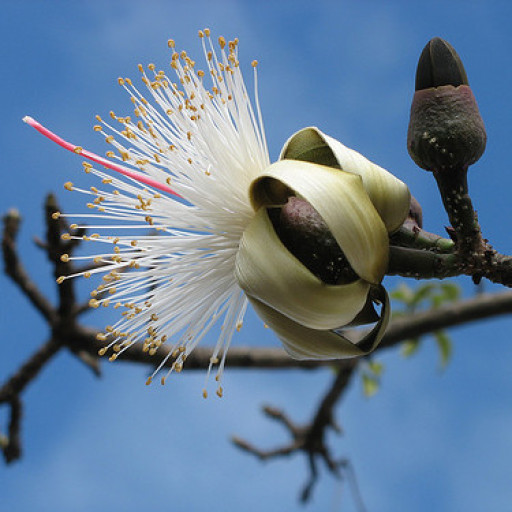
Plant Overview
Often referred to as the Shaving Brush Tree or "Amapola," this spectacular deciduous tree is a living work of art from the dry forests of Mexico and Central America. It is famous for its "explosion" of flowers that appear on bare branches in early spring, looking exactly like an old-fashioned shaving brush dipped in neon pink or white paint.
🔍 How to Identify
- 🌸 The "Brush" Bloom: Large, spectacular flowers featuring hundreds of long, silky, pink or white stamens that burst out from a woody, cup-like base.
- 🍃 Hand-Shaped Foliage: The leaves are palmate (hand-shaped) with 5 to 7 leaflets. When they first emerge, they have a striking bronze or burgundy tint before maturing into a deep, glossy green.
- 🌳 Sculptural Trunk: The bark is smooth and often marked with green and gray stripes. At its base, the trunk tends to swell into a "caudex," which stores water and makes it a favorite for bonsai enthusiasts.
🏡 In Your Garden
- 💧 Succulent Nature: Because it stores water in its thick trunk, this tree is highly drought-tolerant. In fact, the most common mistake is overwatering during its winter dormancy period when it has no leaves.
- ☀️ Sun & Space: It thrives in full sun, which encourages the most prolific blooming. If grown in a pot, it needs a fast-draining gritty soil mix to prevent "wet feet" and root rot.
- ✂️ Bonsai Potential: Due to its unique trunk shape and ability to handle heavy pruning, it is one of the most popular tropical trees for creating large-scale "fat trunk" bonsai.
⚠️ Safety & Toxicity
- ✅ Generally Safe: Pseudobombax ellipticum is considered non-toxic to humans and common household pets like cats and dogs.
- 🧤 Brittle Wood: While not chemically toxic, the wood is relatively soft and brittle. Large outdoor specimens can drop branches during high winds, so they shouldn't be planted too close to structures.
✨ Fun Fact
In its native habitat, the fine, silky fibers found inside the seed pods (similar to Kapok) were historically used as a stuffing material for pillows and cushions!

Detailed Care Instructions
| Lighting | Full Sun |
| Hardiness Zones | Min 10A |
To grow a Pseudobombax ellipticum plant, also known as the shaving brush tree or pink trumpet tree, follow these steps:
- Climate: Ensure you can provide the plant with the right climate conditions. Pseudobombax ellipticum is native to tropical regions, so it thrives in full sun and requires warm temperatures between 60-80°F (15-27°C). Temperatures below 55°F (13°C) can harm the plant.
- Soil: Use well-draining soil with good organic content. A mixture of sandy soil, perlite, and peat moss or compost works well. The pH level should be slightly acidic to neutral (around 6-7).
- Planting: Choose a location that receives full sun and transplant the Pseudobombax ellipticum in the spring. Dig a hole twice the size of the root ball and slightly wider. Place the plant in the hole, ensuring it sits at the same depth or slightly higher than its previous container. Fill the hole with soil and gently tamp it down to remove air pockets.
- Watering: Initially, water the plant well after transplanting, and then water it consistently to keep the soil moist but not soggy. During hot summer months, water it more frequently, allowing the top inch of soil to dry out slightly between waterings. Reduce watering in cooler weather.
- Fertilizer: Feed the Pseudobombax ellipticum plant regularly during the growing season using a balanced slow-release fertilizer. Follow the manufacturer's instructions for the appropriate dosage and application method. However, avoid fertilizing during the winter months when the plant is dormant.
- Pruning: Prune the plant during the dormant season, usually in late winter or early spring. Remove dead or damaged branches, maintain a desired shape, and promote airflow within the canopy. It can also be beneficial to remove suckers or basal shoots growing around the base of the plant.
- Pests and diseases: Pseudobombax ellipticum is generally resistant to pests and diseases. However, keep an eye out for common garden pests such as aphids, scale insects, or mealybugs. If any infestations occur, treat them appropriately using organic pest control methods or insecticidal soap.
- Support: Depending on the growth habit of the plant, you might need to provide support such as stakes or ties to maintain a strong and upright structure.
Following these guidelines should help you successfully grow a Pseudobombax ellipticum plant. Remember to adapt your care routine according to your specific location and climate.

Place in a bright room that is sun drenched almost all day. Or directly in a south-facing window.

1. Determine the watering needs: Before watering the plant, it's essential to determine its watering needs. Pseudobombax Ellipticum plant requires moderate watering, and it's crucial not to overwater or underwater it.
2. Check the soil: Check the soil moisture level by poking your finger about an inch deep into it. If the soil feels dry, it's time to water the plant. If the soil feels damp, wait for a few more days before the next watering.
3. Water quality: Use fresh and clean water to water the plant. Avoid using hard or chlorinated water, as it can harm the roots and affect the overall health of the plant.
4. Watering method: Water the Pseudobombax Ellipticum plant slowly and evenly, ensuring that the water reaches the root zone. You can use a watering can or a hose with a gentle flow to water the plant.
5. Drainage: Ensure that the plant's pot has adequate drainage holes to prevent waterlogging, which can cause root rot. Wait for the excess water to drain out of the pot and discard it.
6. Frequency: Water the Pseudobombax Ellipticum plant once or twice a week, depending on the humidity and temperature levels. In winters, reduce the watering frequency.
7. Avoid overhead watering: Overhead watering can damage the leaves and flowers of the plant. Therefore, it's essential to water the plant from the base.
8. Monitor moisture levels: Keep an eye on the soil moisture levels and adjust the watering frequency accordingly. Dry soil requires more watering, while damp soil requires less watering.
To fertilize this particular plant, use a balanced fertilizer with equal parts nitrogen, phosphorus, and potassium. Apply the fertilizer sparingly during the growing season, as excessive fertilizer can cause damage. It is important to also ensure that the soil remains well-drained, as this can also impact the plant's growth and health.
Pseudobombax ellipticum plant prefers a well-draining soil that is enriched with organic matter. The recommended soil should have a pH range that is slightly acidic to neutral, between 6.0 and 7.0. The soil should also have good drainage as this plant does not tolerate waterlogging which can lead to root rot. It is best to use a porous soil mix that allows for air and water to flow through easily, to avoid soil compaction. The addition of peat moss, compost, and perlite or vermiculite to the soil mix can improve sponginess and drainage of the soil. This plant thrives in full sun to partial shade and the soil should be kept moist but not overly wet.
Pseudobombax Ellipticum plant can be propagated through several methods including seed germination and stem cuttings. To propagate via stem cuttings, select a healthy stem and remove a section of about 6-8 inches from the parent plant using a sharp, clean knife or shears. Remove any leaves from the lower half of the stem, leaving only a few leaves at the top. Dip the cut end in rooting hormone powder and plant the stem in a pot filled with a well-draining potting mix. Water the plant and keep it in a warm and bright location, but away from direct sunlight. Over time, the cutting will form roots and can be transplanted to a larger pot or directly into the ground. It is important to keep the potting mix moist but not waterlogged during the rooting process.
Common pests of the shaving-brush-tree include Scale insect, mealybugs, spider mites, thrips, whiteflies. Make a habit of checking your shaving-brush-tree frequently for pests so that any infestations can be caught and managed early.








