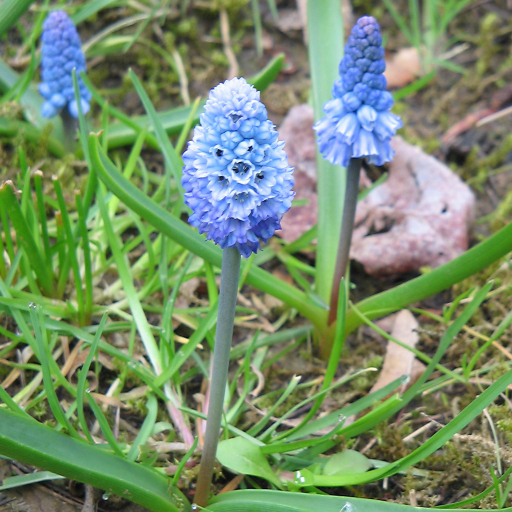
Plant Overview
Often called the Azure Grape Hyacinth, this Turkish native is like a piece of the Mediterranean sky fallen into your garden. Unlike its more common cousins that look like tightly closed bunches of grapes, this species features charming, open-mouthed bells in a striking shade of electric blue. It is a prized early-spring herald, often pushing through the last remnants of snow to signal the start of the growing season.
🔍 How to Identify
- 💙 The Blooms: Densely packed spikes of bell-shaped flowers. Unlike the "pinched" openings of standard Muscari, these bells stay wide open, revealing a delicate, darker blue stripe down the center of each petal.
- 🌿 The Foliage: Fleshy, strap-shaped leaves with a distinct grayish-green (glaucous) tint. They typically emerge just before the flowers to provide a soft, muted backdrop.
- 📏 The Stature: A true "pocket-sized" plant, it rarely grows taller than 6 inches, making it a perfect candidate for the front of borders or miniature container displays.
🏡 In Your Garden
- 🏔️ Alpine Roots: Originating from the mountains of Turkey, this plant craves "cool feet" and exceptional drainage. It is much less aggressive than the common Grape Hyacinth (Muscari armeniacum), so it won't take over your lawn or crowd out delicate neighbors.
- 💤 The Summer Vanishing Act: This is a spring ephemeral. Once the weather warms up, the foliage will yellow and disappear entirely. It isn't dying; it is simply retreating into its bulb to sleep through the summer heat. Mark the spot so you don't accidentally dig it up during summer weeding!
⚠️ Safety & Toxicity
- 🐾 Mildly Toxic: Like many spring bulbs, the Azure Grape Hyacinth contains small amounts of alkaloids.
- 👶 Precaution: Ingestion of the bulbs or flowers can cause stomach upset, nausea, or vomiting in pets and small children. The sap can also be a mild skin irritant for those with sensitive skin, so wearing gloves during planting is a good idea.
✨ Fun Fact
The genus name Pseudomuscari literally translates to "False Muscari." Botanists gave it this name to distinguish it from "true" Grape Hyacinths because its flower structure is open and airy, rather than "urn-shaped" and constricted at the top.

Detailed Care Instructions
To grow Pseudomuscari Azureum plants, follow these steps:
- Choose the right location: Pseudomuscari Azureum plants grow best in full sun to partial shade. Ensure that the location has well-draining soil.
- Prepare the soil: The soil should be well-draining and rich in organic matter. Amend the soil with compost or well-rotted manure to improve fertility.
- Planting: Plant the bulbs in the fall, about 2-3 inches deep and give them enough space for growth. The bulbs should be planted with their pointed ends facing upwards.
- Watering: Provide consistent moisture during the growing season, especially when they are actively growing. However, ensure that the soil is not waterlogged as it may cause the bulbs to rot.
- Fertilization: Pseudomuscari Azureum plants do not require heavy fertilization. However, you can apply a balanced slow-release fertilizer in early spring to provide additional nutrients.
- Mulching: Apply a layer of mulch around the plants to help conserve moisture, suppress weed growth, and insulate the bulbs against extreme temperatures.
- Maintenance: Remove any weeds that may compete with the plants for nutrients and water. Deadhead the flowers after they fade to encourage further blooming.
- Protection: Pseudomuscari Azureum plants are generally hardy, but if you live in a region with harsh winters, provide protection by covering the plants with a layer of straw or mulch.
- Division: After a few years, when the plants become overcrowded, you can divide the bulbs and replant them to encourage better growth and flowering.
By following these steps, you can successfully grow Pseudomuscari Azureum plants and enjoy their beautiful blue flowers.

Place in a bright room that is sun drenched almost all day. Or directly in a south-facing window.

Pseudomuscari Azureum is a type of plant that requires regular watering to thrive. To water this plant, you should make sure to check the soil moisture level regularly. Before watering, stick your finger into the soil up to the first knuckle to check for dryness. If the soil feels dry, you can water the plant.
When watering, make sure to pour water over the top of the soil until it starts to drain from the bottom of the pot. This ensures that the water penetrates deeply into the soil and reaches the roots of the plant. Make sure not to overwater the plant, as this can lead to root rot and other issues.
It's also important to note that this plant prefers well-draining soil, so make sure the soil is not waterlogged or too dense. You can add perlite or sand to the soil mix to improve drainage.
Overall, the key to watering Pseudomuscari Azureum is to maintain consistent moisture levels in the soil without overwatering. With proper care, this plant can thrive and produce beautiful blooms.
To fertilize this plant, use a balanced, water-soluble fertilizer every 2-3 weeks during the growing season. Dilute the fertilizer according to package instructions, and apply it directly to the soil around the base of the plant. Avoid getting any fertilizer on the foliage, and water the plant thoroughly after fertilizing. During the dormant season, reduce or suspend fertilization.
The ideal soil for this particular plant should have a loose and well-draining texture, with good water retention capacity. It is recommended to use a soil mixture that includes a balanced ratio of organic matter, sand, and loam. The soil should also have a pH range of 6.0 to 7.0, which is slightly acidic to neutral. It is important to avoid using heavy clay soil or soil that is prone to waterlogging, as this can lead to root rot and ultimately, the death of the plant. Additionally, incorporating a slow-release fertilizer into the soil can provide essential nutrients for the plant's growth and development.
To propagate this plant, you can start by obtaining a mature healthy specimen. You will need to gently remove any existing soil from the root system and divide it into small sections. It is important to ensure each section contains both roots and leaves.
Next, you will need to fill small pots with a well-draining soil mixture. Moisten the soil and make small holes in the center of each pot. Insert one section of the root system into each pot and cover with soil, ensuring the plant is stable and upright.
Place the pots in a warm, bright location, but without direct sunlight. Mist the plant occasionally to keep the leaves hydrated. Within a few weeks, new growth should appear from the soil, indicating successful propagation. Gradually acclimate the new plants to more light and less humidity over the next few weeks to ensure their long-term survival.








