Plant Overview
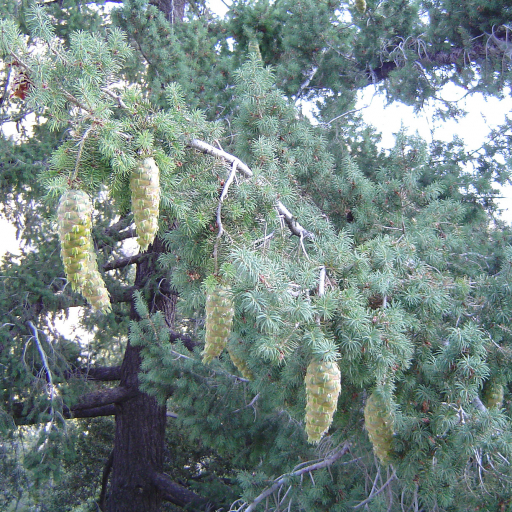
Known as the Bigcone Douglas-fir, this rugged evergreen is a true survivor of the Southern California mountains. While it shares a name with the famous timber giant of the Pacific Northwest, the Bigcone is a distinct species built for heat and fire. Often nicknamed "Bigcone Spruce" (despite not being a spruce), it is most famous for its massive, woody cones that look like they belong in a prehistoric forest.
🔍 How to Identify
- 🌲 The Cones: The most telling feature! They are massive (4–7 inches long) and heavy, featuring unique three-pointed "bracts" that stick out between the scales like small pitchforks.
- 🌿 The Needles: These are flat, flexible, and soft to the touch. They wrap around the twigs in a spiral pattern and usually have a slightly pointed tip, unlike the blunt tips of true firs.
- 🪵 The Bark: As the tree matures, its bark becomes incredibly thick, corky, and deeply furrowed with a dark reddish-brown hue—an evolutionary suit of armor against wildfires.
🏡 In Your Garden & Landscape
- 🏔️ Slope Specialist: In the wild, this tree thrives on steep, rocky slopes where other trees can't take root. In a garden setting, it requires excellent drainage and hates "wet feet" or standing water.
- 🔥 Fire Resilience: This is one of the few conifers in the world capable of epicormic sprouting. If a fire scorches its needles, the tree can actually grow new branches directly from its trunk and scorched limbs.
- ☀️ Drought Tolerance: Once established, it is much more drought-tolerant than the common Douglas-fir, making it a better choice for Mediterranean climates or xeriscaping in montane regions.
⚠️ Safety & Toxicity
- ✅ Non-Toxic: The Bigcone Douglas-fir is generally considered non-toxic to humans, dogs, and cats. It is not known to contain the toxic alkaloids found in Yew trees.
- 🛡️ Physical Hazards: The main "danger" comes from the cones! Because they are so heavy and woody, a falling cone from a tall tree can be a hazard. Additionally, the sharp bracts on the cones can scratch the skin if handled roughly.
✨ Fun Fact
The scientific name Pseudotsuga literally translates to "False Hemlock." Early botanists were so confused by this tree—which has features of hemlocks, firs, and spruces—that they eventually had to give it its own "false" genus name!

Detailed Care Instructions
To grow Pseudotsuga macrocarpa, also known as the bigcone Douglas-fir, you can follow these steps:
- Choose the right location: Pseudotsuga macrocarpa prefers full sun to partial shade. Make sure the location has well-draining soil and enough space for the tree to grow to its full size, as it can reach up to 100 feet in height.
- Prepare the soil: The soil should be slightly acidic to neutral with a pH between 5.5 and 7.5. If necessary, amend the soil with organic matter such as compost to improve drainage and nutrient content.
- Select healthy seedlings or saplings: Purchase Pseudotsuga macrocarpa seedlings or saplings from a reputable nursery or source. Choose plants that have a strong and healthy root system.
- Dig a hole: Dig a hole that is wider and slightly shallower than the root ball of the plant. Place the plant in the hole, making sure that the top of the root ball is level with or slightly above the soil surface.
- Backfill and water: Fill the hole with the soil you removed while digging, gently firming it around the roots. Water the plant thoroughly after planting to settle the soil and remove any air pockets.
- Mulch: Apply a layer of organic mulch, such as wood chips or shredded bark, around the base of the tree. This will help retain moisture, suppress weeds, and regulate soil temperature.
- Watering and maintenance: Water the plant regularly, especially during the first year to establish a strong root system. Pseudotsuga macrocarpa prefers moist but well-drained soil. As the tree grows, it will require less frequent watering. Prune any dead or damaged branches as needed.
- Provide ongoing care: Fertilize the tree with an appropriate slow-release organic fertilizer in early spring or early fall. Monitor for common pests and diseases, and take appropriate measures if necessary.
Remember that Pseudotsuga macrocarpa is slow-growing and may take many years to reach its full potential. Patience and consistent care are key to successfully growing this tree.

Place in a bright room that is sun drenched almost all day. Or directly in a south-facing window.

To water this particular plant, it is important to take note of the environmental conditions it is in. The amount and frequency of watering may vary depending on factors such as humidity, temperature, and soil moisture content. It is advisable to prepare a watering schedule based on these factors.
When watering, use a watering can or a hose with a sprinkler attached to avoid damaging the plant. Water thoroughly until the soil is moist to the touch. Do not overwater as this can cause root rot. It is recommended to water less frequently but thoroughly instead of watering lightly and frequently.
It is important to check the drainage of the plant's soil to prevent waterlogging. If the soil is not well-draining, consider repotting the plant or making amendments to the soil composition.
Regularly monitor the plant for signs of water deficiency such as wilting or yellowing leaves. If these symptoms persist even after regular watering, it may indicate a problem with the plant's roots or nutrient uptake.
In summary, watering this plant requires careful consideration of environmental factors, a consistent watering schedule, proper drainage, and regular monitoring for signs of water deficiency.
To fertilize this plant, it is best to use a balanced fertilizer with equal parts of nitrogen, phosphorus, and potassium. Apply the fertilizer during the plant's active growing season, which is typically in the spring or early summer. It is important to follow the package instructions for the proper amount of fertilizer to use. Avoid applying the fertilizer too close to the trunk of the plant, as this may cause damage to the roots. Instead, spread the fertilizer evenly around the outer drip line of the plant. Water the plant thoroughly after fertilizing to help the nutrients reach the roots.
The best soil for this plant is a well-draining soil that is rich in nutrients. It should be acidic to slightly acidic with a pH between 5.0 and 6.5. The soil should be moist but not waterlogged. A mix of organic matter such as compost and peat moss should be mixed into the soil to improve fertility and retain moisture. It is also important to ensure that the soil is aerated and has good drainage to prevent waterlogging and root rot. Additionally, adding slow-release fertilizers periodically can promote healthy growth and development of the plant.
Propagation of this plant can be done through several methods, including seed propagation and vegetative propagation. Seed propagation involves collecting mature seeds from the plant and sowing them in a suitable germination medium. The seeds should be sown at the appropriate depth and kept moist until they germinate.
Vegetative propagation involves taking cuttings from the parent plant and rooting them in a suitable rooting hormone. The cuttings should be taken from mature, healthy branches and should be treated with care to avoid any damage. Once the cuttings have been rooted, they can be planted in a suitable substrate and kept moist until they establish.
In both methods, it is important to provide the plant with appropriate growing conditions, including adequate sunlight, water, and nutrients. With proper care, the plant can grow and thrive, providing a beautiful addition to any landscape or garden.








