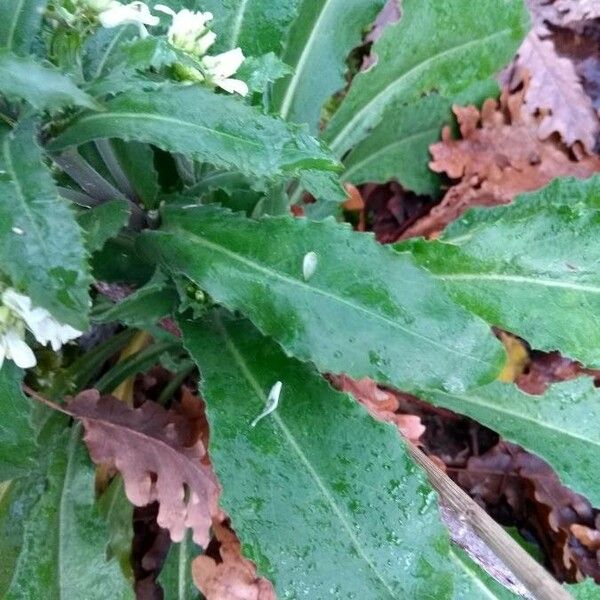
Plant Overview
Known as the Tower Rockcress, Pseudoturritis turrita is a master of vertical elegance. Often found clinging to rocky limestone outcrops or dry hillsides throughout Europe, it stands like a slender sentinel in the wild. Its name perfectly captures its habit—growing straight and tall like a miniature turret overlooking the landscape.
🔍 How to Identify
- 🏰 Stately Stature: It produces a single, typically unbranched stem that can reach up to 80cm tall, giving it a distinct architectural "tower" appearance.
- 🍃 Clasping Foliage: The grayish-green leaves have a unique "arrowhead" or heart-shaped base that completely wraps around the stem, a key feature for identifying it from other wild mustards.
- 🌸 Pale Blooms: In late spring, small, delicate clusters of four-petaled flowers appear at the top, usually in shades of cream or very pale, buttery yellow.
- 🥖 Linear Pods: After flowering, it develops long, thin seed pods (siliques) that can reach 10cm in length; these pods tend to hang slightly to one side as they mature.
🏡 In Your Garden
- 🪨 The Rock Specialist: This plant is a "lithophyte" at heart, meaning it thrives in the cracks of stone walls or gravelly beds. It is the perfect choice for a "vertical garden" or a rockery where soil is thin and drainage is sharp.
- ☀️ Drought Warrior: Because it evolved on sunny, exposed slopes, it has a deep taproot that makes it incredibly resilient to dry spells. However, this taproot makes it very difficult to transplant, so it is best to sow seeds exactly where you want them to stay.
- 🦋 Wildlife Support: Its nectar-rich flowers are a vital early-season food source for small solitary bees and hoverflies that emerge in the late spring.
⚠️ Safety & Toxicity
- ✅ Low Risk: Pseudoturritis turrita is generally considered non-toxic to humans and common household pets.
- 👅 Natural Deterrent: Like many members of the Brassicaceae (Mustard) family, its foliage contains glucosinolates, which give the plant a bitter, peppery taste that usually discourages curious pets or children from eating it.
✨ Fun Fact
[🧬] The Great Identity Crisis: For over a century, botanists grouped this plant with the common Rockcresses in the genus Arabis. However, modern DNA sequencing revealed it was unique enough to deserve its own genus, Pseudoturritis, which literally translates from Latin as "False Tower."

Detailed Care Instructions
To grow Pseudoturritis Turrita (also known as winter cress), follow these steps:
- Choose a suitable location: Pseudoturritis Turrita prefers well-draining soil and full sun or partial shade. Select a planting area that meets these requirements.
- Prepare the soil: Loosen the soil in the planting area to a depth of 6-8 inches. Remove any weeds or debris and level the soil surface.
- Sow the seeds: Scatter the Pseudoturritis Turrita seeds directly onto the surface of the prepared soil. The seeds are small, so a light scattering will suffice. Avoid burying the seeds too deep.
- Water the seeds: Gently water the area to ensure the seeds come into contact with the soil. Be careful not to wash away or drown the seeds. Keep the soil consistently moist until germination occurs.
- Germination and care: Pseudoturritis Turrita typically germinates in 2-4 weeks. Once the seedlings emerge, thin them out to maintain a distance of 6-12 inches between each plant. This will provide enough space for them to grow properly.
- Watering and maintenance: Water the plants regularly, keeping the soil evenly moist but not overly saturated. Monitor for pests or diseases and take appropriate action if necessary. Remove any weeds that appear near the plants.
- Harvesting: Pseudoturritis Turrita usually blooms in late spring or early summer. Once the flowers fade and small seedpods form, you can collect them for future planting or allow them to self-sow naturally.
Remember to check if Pseudoturritis Turrita is suitable for your specific climate and growing conditions, as some plants may have specific requirements.

Place in a bright room that is sun drenched almost all day. Or directly in a south-facing window.

To effectively water the Pseudoturritis Turrita plant, it is important to consider several factors. Begin by selecting an appropriate watering method for this particular plant. A gentle and precise watering technique, such as using a watering can or a hose with a gentle spray attachment, is recommended.
When determining the frequency of watering, it is essential to monitor the moisture level of the soil. Insert a finger about one inch into the soil to evaluate its dampness. If the soil feels dry at this depth, it is an indication that watering is required.
The Pseudoturritis Turrita plant should be watered consistently to ensure optimal growth. However, avoid overwatering, as this can lead to root rot and other issues. It is beneficial to water deeply, allowing water to penetrate the root zone. This encourages the roots to grow deeper and become more resilient.
Consider the environmental conditions surrounding the plant, as they can affect its watering needs. Factors such as temperature, humidity, and sunlight exposure influence the plant's water requirements. Higher temperatures and increased sunlight can increase evaporation rates, resulting in a greater need for water. In contrast, cooler temperatures and lower humidity levels may necessitate less frequent watering.
When watering, aim to wet the soil evenly around the plant without causing excessive water runoff. Watering the base of the plant directly helps to prevent moisture from accumulating on the foliage, reducing the risk of diseases.
It is important to ensure proper drainage to prevent water accumulation. Be sure that the plant is placed in a pot with drainage holes or in a well-draining soil mix. This allows excess water to escape, preventing waterlogging and potential harm to the plant.
Consider using room temperature or tepid water, as extreme temperature differences can shock the plant's roots. Ultimately, maintaining a consistent watering routine, monitoring soil moisture levels, and taking environmental factors into account will help provide the appropriate amount of water for the Pseudoturritis Turrita plant's growth and health.
To fertilize Pseudoturritis Turrita plant, you can follow these general instructions:
- Choose a balanced, water-soluble fertilizer with a ratio of nitrogen (N), phosphorus (P), and potassium (K) like 10-10-10.
- Dilute the fertilizer as per the instructions on the packaging.
- Apply the fertilizer during the growing season, typically from spring to early fall.
- Water the plant thoroughly before fertilizing to moisten the soil.
- Slowly pour the diluted fertilizer around the base of the plant, avoiding direct contact with the foliage.
- Use a watering can or a sprinkler attachment on a hose to ensure an even distribution.
- Avoid overfertilizing, as it can cause nutrient imbalances or burn the roots.
- Repeat the fertilizing process every 4-6 weeks throughout the growing season.
- Monitor the plant's response to the fertilizer and adjust the frequency accordingly.
- Always read and follow the instructions provided by the specific fertilizer brand you choose.
Pseudoturritis turrita plants prefer well-drained soils that are rich in organic matter. The soil should be loose and friable, allowing for proper root development and nutrient uptake. It is beneficial to provide a soil pH that is slightly acidic to slightly alkaline, ranging from 6.0 to 7.5. This range ensures optimal nutrient availability to the plant.
The soil should retain moisture well without becoming waterlogged, as excessive water retention can lead to root rot and other fungal diseases. However, it is important to avoid overly dry soil conditions, as Pseudoturritis turrita plants require consistent moisture to thrive.
Adding organic matter, such as compost or well-rotted manure, to the soil prior to planting can improve its fertility and overall structure. This enriches the soil with essential nutrients and improves water retention while promoting beneficial microbial activity.
Avoid using heavy clay soils or those with high levels of sand, as they have poor water-holding capacity and may not provide adequate support to the plant.
Furthermore, it is recommended to incorporate a layer of mulch around the plant to help conserve moisture, regulate soil temperature, and suppress weed growth. Regularly monitoring soil moisture levels and providing appropriate irrigation based on the plant's needs will promote healthy growth and blooming.
To propagate Pseudoturritis Turrita plants, you can follow these steps:
- Prepare a suitable growing medium: Fill a tray or pots with a well-draining soil mix. The soil should be rich in organic matter and have good water retention capabilities.
- Collect the seeds: Look for mature seed pods on the Pseudoturritis Turrita plant. These pods are cylindrical in shape and typically contain numerous small seeds. Harvest them when they turn brown and dry.
- Scarify the seeds (optional): Pseudoturritis Turrita seeds have a hard outer coating that may inhibit germination. To improve germination rates, you can scarify the seeds by gently rubbing them with sandpaper or using a nail file to create small scratches on the seed surface. This helps water penetrate the seed coat and triggers germination.
- Sow the seeds: Sprinkle the Pseudoturritis Turrita seeds evenly on the soil surface. Since the seeds are tiny, it's advisable to mix them with sand to achieve better coverage. Press them gently into the soil but avoid burying them too deep.
- Watering: Moisten the soil by spraying it with water or using a misting bottle. Ensure the soil remains consistently moist but not waterlogged throughout the germination process.
- Provide optimal conditions: Place the tray or pots in a location that receives indirect sunlight or partial shade. Pseudoturritis Turrita tends to prefer cooler temperatures, so keeping the seeds at around 60-70°F (15-20°C) can enhance germination rates.
- Germination: Pseudoturritis Turrita seeds usually take around two to four weeks to germinate. Be patient and continue providing the necessary moisture and suitable temperature conditions.
- Transplanting: Once the seedlings have developed a few sets of true leaves, they can be transplanted into individual pots. Gently separate the seedlings and transfer them to pots with well-draining soil.
- Care for the seedlings: Place the young plants in a location with bright, indirect light. Water them regularly, keeping the soil moist but not waterlogged. Fertilize the seedlings every two to three weeks using a diluted, balanced liquid fertilizer.
- Harden off and transplant outdoors: When the seedlings are strong enough and the risk of frost has passed, gradually expose them to outdoor conditions. Start by placing them outdoors for a few hours each day, gradually increasing the time over a week or two. Once hardened off, transplant them to a sunny or partially shaded spot in the garden.
By following these steps, you can successfully propagate Pseudoturritis Turrita plants from seeds.








