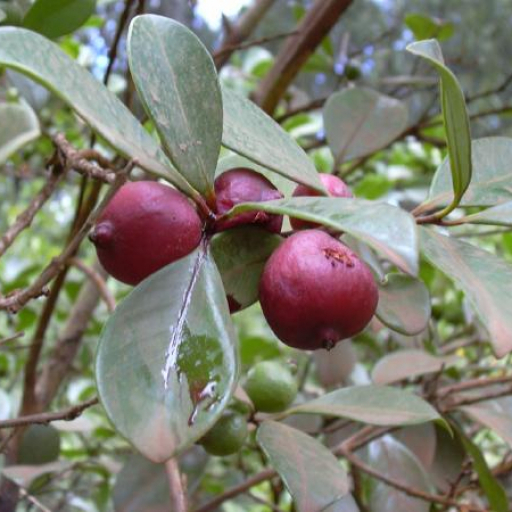
Plant Overview
Known affectionately as the Strawberry Guava or Cattleya Guava, this Brazilian native is a tropical gem that offers more than just beauty. It is celebrated for its juicy, cherry-sized fruits that taste like a delightful blend of traditional guava and sun-ripened strawberries. While it is a prized ornamental shrub for its glossy foliage and peeling bark, it is also known for its "rebellious" nature, as its hardy seeds allow it to spread rapidly in tropical climates.
🔍 How to Identify
- 🍃 Glossy Foliage: The leaves are thick, leathery, and dark green, with a shiny finish that looks almost polished.
- 🪵 Peeling Bark: As the plant matures, its smooth, reddish-brown bark begins to peel away in thin, parchment-like strips, revealing a lighter color underneath.
- 🍒 Ruby Fruits: In late summer, it produces small, round fruits that transition from green to a deep, purplish-maroon when fully ripe.
- 🌸 Delicate Blooms: It features white, brush-like flowers with a multitude of long, prominent stamens that give them a "fuzzy" appearance.
🏡 In Your Garden
- 🌱 Root Resilience: The Strawberry Guava is significantly hardier than the common tropical guava, showing a surprising tolerance for cooler temperatures and wind.
- ✂️ Shape Shifter: Because it naturally grows as a dense, multi-stemmed shrub, it is an excellent candidate for privacy hedges or can be pruned into a charming small specimen tree.
- 💧 Soil Flexibility: While it prefers rich, acidic soil, it is remarkably unfussy and can survive in sandy or rocky ground where other fruit trees might struggle.
⚠️ Safety & Toxicity
- ✅ Safe & Nutritious: The fruit is entirely edible and packed with Vitamin C—many enjoy it raw, skin and all, or processed into world-class jams and jellies.
- 🐾 Pet Friendly: Psidium cattleianum is generally considered non-toxic to dogs and cats, making it a safe addition to a backyard where pets roam.
- 🦷 Hard Seeds: While safe, the seeds inside the fruit are quite hard; take care when biting down to avoid any dental surprises!
✨ Fun Fact
In Hawaii, where the plant is known as Waiawī, it is considered a major ecological villain. Because it is so hardy and its seeds are spread easily by birds, it has become one of the most invasive species on the islands, often forming "monocultures" that crowd out rare native rainforest plants.

Detailed Care Instructions
To grow a Psidium cattleyanum plant, also known as strawberry guava or cattley guava, follow these steps:
- Choose a suitable location: Psidium cattleyanum prefers full sun but can tolerate partial shade. Select a well-draining area with fertile soil that is slightly acidic.
- Propagation: There are two primary methods of propagation for Psidium cattleyanum: seeds and cuttings.
- Seeds: Soak the seeds in water for 24 hours before planting. Use a well-draining potting mix and sow the seeds at a depth of 1/4 inch. Ensure the soil remains moist while germination takes place, usually within 2-4 weeks.
- Cuttings: Take 6-8 inch long cuttings from the tip of a healthy, mature plant. Remove the lower leaves and dip the cut end in rooting hormone. Plant the cutting in a pot with a mixture of soil and perlite, keeping it moist. After about 4-8 weeks, roots should develop.
- Seeds: Soak the seeds in water for 24 hours before planting. Use a well-draining potting mix and sow the seeds at a depth of 1/4 inch. Ensure the soil remains moist while germination takes place, usually within 2-4 weeks.
- Planting: Whether using seeds or cuttings, transplant the young Psidium cattleyanum to the desired planting location once they have grown to a suitable size (around 8-10 inches tall). Choose a spot where the plant can have ample space to grow and spread.
- Watering: Keep the soil consistently moist but avoid overwatering. The plant prefers evenly moist conditions and will suffer if allowed to dry out or sit in waterlogged soil.
- Fertilizing: Provide a balanced, slow-release fertilizer every three months during the growing season (spring and summer). Follow the manufacturer's instructions for application rates.
- Pruning: Psidium cattleyanum can be lightly pruned to maintain its desired shape and remove any dead or damaged branches. Pruning can be done in late winter or early spring.
- Pests and diseases: Monitor your plant for common pests such as aphids, scales, and fruit flies. Treat infestations with organic insecticides or insecticidal soaps. Watch for signs of fungal diseases like anthracnose, and treat with appropriate fungicides if necessary.
- Harvesting: Psidium cattleyanum typically begins producing fruit within 2-3 years of planting. The ripe fruit will have a pinkish coloration and a fragrant smell. Harvest the fruit by gently twisting or cutting it from the stem. The fruit can be eaten fresh or used in various culinary applications.
Remember to provide regular care, adequate watering, and protection from extreme temperatures to ensure healthy growth and fruit production.

Place in a bright room that is sun drenched almost all day. Or directly in a south-facing window.

The most important thing to consider when watering this plant is the frequency and amount of water it receives. It is important to keep the soil consistently moist but not overly saturated, as this can lead to root rot. One method is to water deeply once or twice a week, allowing the soil to dry out slightly between waterings. Another option is to use a drip irrigation system to slowly and steadily provide water directly to the roots. It is also important to avoid getting water on the leaves, as this can promote the growth of fungal diseases. Additionally, the type of soil and the container in which the plant is growing can affect its water needs, so it is important to consider these factors when determining the best watering schedule.
To fertilize this plant, use a balanced fertilizer with equal amounts of nitrogen, phosphorus, and potassium. Apply the fertilizer every 4-6 weeks during the growing season, which is typically from spring to fall. Use approximately 1/3 cup of fertilizer per foot of plant height and sprinkle it evenly around the base of the plant. Water the plant thoroughly after fertilizing to help the nutrients to penetrate the soil and reach the roots. Avoid over-fertilizing, as this can cause burning and damage to the plant.
The ideal soil for Psidium Cattleyanum is well-draining, loamy soil with a neutral to slightly acidic pH level. It should be rich in organic matter and have good water retention capacity. Adding compost or organic fertilizers to the soil can improve soil quality and provide necessary nutrients for the plant. It is recommended to avoid using heavy clay soils or soils with high salinity levels as they can have adverse effects on the growth and health of the plant. Proper soil preparation is essential for the successful growth of Psidium Cattleyanum.
To propagate this plant, you will need to obtain a stem cutting about four to six inches long. Be sure to make a clean cut with a sharp, sterile tool. Remove any leaves from the bottom of the cutting, leaving only one or two at the top. Dip the cut end of the stem in rooting hormone powder, and plant it in a well-draining soil mixture. Water the cutting sparingly, and keep it in a warm, humid environment with bright, indirect sunlight. After a few weeks, the cutting should root and begin to grow.







