Plant Overview
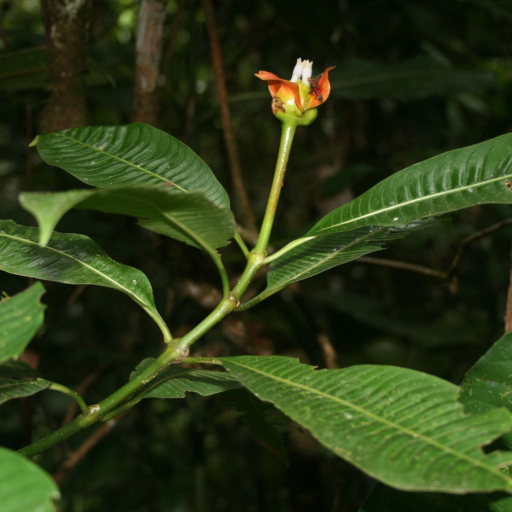
Commonly known as "Hooker’s Lips" or "Hot Lips," the Psychotria elata is perhaps the most flirtatious-looking plant in the tropical world. Native to the rain forests of Central and South America, this plant has become an internet sensation due to its bright red bracts that perfectly resemble a pair of luscious, lipstick-covered lips. This provocative look isn't for show; it’s a clever evolutionary tactic designed to scream for the attention of pollinators like hummingbirds and butterflies amidst the dense green canopy.
🔍 How to Identify
- 👄 The "Lips": The most iconic feature is the pair of waxy, bright red bracts (modified leaves) that form a pouty lip shape before the flowers bloom.
- 🌼 The True Flowers: Once the "lips" open further, small, star-shaped white flowers emerge from the center. These are the actual reproductive parts of the plant.
- 🍃 Foliage: It features large, dark green, elliptical leaves with prominent veining, typical of understory tropical shrubs.
- 📏 Growth Habit: In its natural habitat, it grows as a small understory tree or shrub, usually reaching heights of about 10 feet, though it stays much smaller in containers.
🏡 In Your Garden
- ☁️ Humidity is Vital: Coming from the cloud forests, this plant thrives on "soupy" air. If you are growing it indoors, a pebble tray or a dedicated humidifier is non-negotiable to prevent the lips from shriveling.
- 🌡️ Temperature Sensitivity: This species is incredibly sensitive to cold and drafts. It prefers a consistent, warm environment and will drop its leaves or fail to "pucker" if exposed to temperatures below 60°F (15°C).
- 💧 Drainage Context: While it loves moisture, it has delicate roots that are prone to rot in stagnant water. Use a chunky, orchid-like potting mix to ensure oxygen reaches the roots.
⚠️ Safety & Toxicity
- 🐾 Mildly Toxic: While not considered deadly, Psychotria elata contains chemicals that can cause digestive upset if ingested by curious pets or children.
- 🧪 Chemical Profile: Some species within the Psychotria genus contain bioactive alkaloids (like DMT). While P. elata is primarily grown for its looks, it should never be consumed and may cause skin irritation in sensitive individuals.
✨ Fun Fact
The "kissable" shape of the plant is fleeting! The plant only looks like a pair of lips for a short period before the bracts open up fully to reveal the tiny white flowers inside. Once the flowers are pollinated, the lips disappear entirely to make way for small, oval berries that eventually turn a deep blue color.

Detailed Care Instructions
| Humidity | Normal |
| Lighting | Part Sun |
| Difficulty | Medium |
| Temperature | Min 21°C |
| Hardiness Zones | 10B - 11B |

Place in a window with dappled sun or a spot in the middle of a room. Or directly in a window facing west or east.

Psychotria Elata is a flowering plant species that belongs to the Rubiaceae family. This plant requires a regular watering schedule, to keep its soil consistently moist. The plant should be watered when the top surface of its soil feels dry to the touch. Over-watering and under-watering the plant can cause damage to its roots and foliage. When watering, avoid getting water on the leaves as this may encourage fungal disease. Water the soil around the base of the plant to ensure that the roots receive adequate moisture. During the winter months, reduce the frequency of watering to prevent the soil from becoming waterlogged. A well-draining soil mix is essential to ensure that the plant does not sit in excess water. Proper watering will ensure that your Psychotria Elata plant thrives and grows healthy foliage.
These plant needs regular fertilizing during growing seasons. Fertilizing your plants in dormant state during the winter, might result in scorching or browning of the leaf tips. If mature plants display signs of nutrient insufficiency, fertilizer administration is necessary to restore the plant to its previous state.
You may use All Purpose Plant Food or Green Plant Food for your Hot Lips
The ideal soil to use for the Psychotria Elata plant is a well-draining, nutrient-rich soil that is slightly acidic to neutral in pH. The soil should not be overly compacted or waterlogged, as this can lead to root rot and other issues. To achieve these conditions, you may need to amend the soil with organic matter such as compost or peat moss, as well as additives like perlite or sand to improve drainage. It's also important to ensure that the soil is able to hold moisture, but not remain too wet. Regular watering and mulching can help maintain moisture levels and prevent the soil from drying out too quickly. Overall, choosing the right soil is crucial for the health and vitality of your Psychotria Elata plant, and can help to promote strong growth and beautiful blooms.








